Thread Lift in Seoul: 3 Thread Types and How They Differ
Lifting, supporting, and volume-supporting threads — three types designed for different purposes
"I booked a thread lift in Seoul but now I'm reading that there are different kinds and some of them don't even lift. Did I book the right one?"
It is something we hear often from people looking into lifting treatments in Seoul. Everything is called a thread lift, and yet the explanations contradict each other. Some threads genuinely do not lift. The clearest way to distinguish them is by their function — what each thread is designed to do once it is under the skin. Here are the three types first.
Why Does the Thread's Shape Decide What It Can Do?
Because a thread's design sets the limits of what it can do.
The three thread types covered here use materials designed to dissolve gradually inside the body — the same family of material as the surgical sutures that disappear on their own after an operation. That is where the similarities largely end. Change the surface and the shape of a thread, and what it does under the skin changes with it.
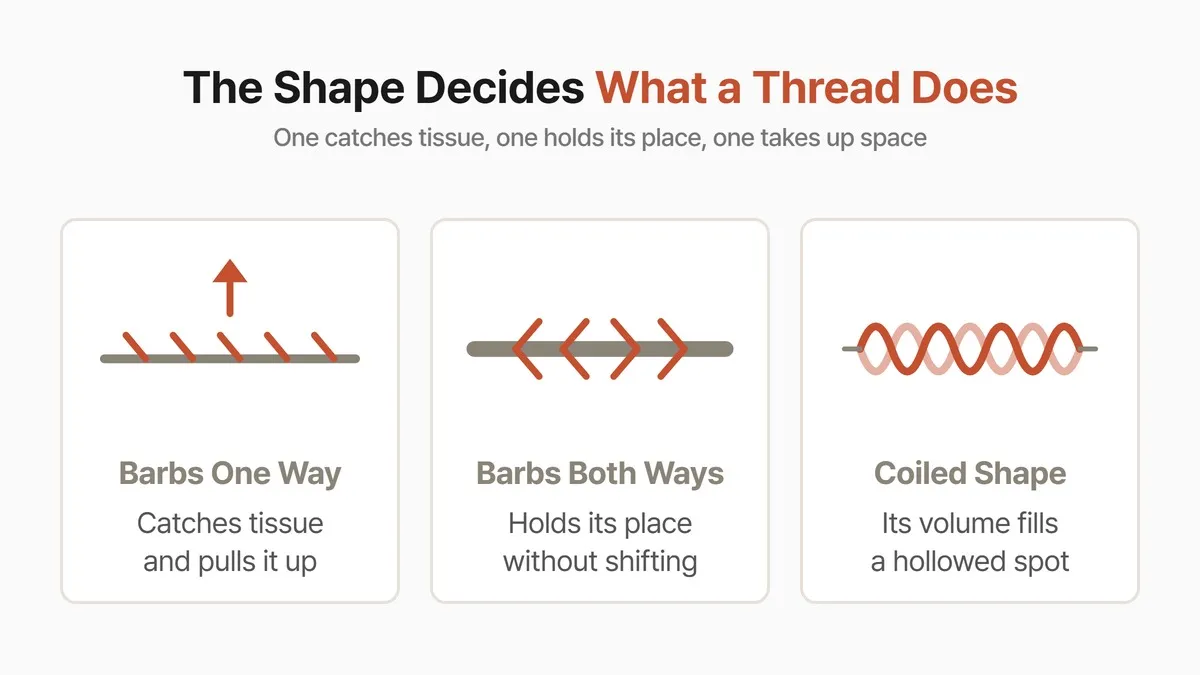
Barbed threads have small projections — barbs (cogs) — along their surface that help engage and reposition tissue. Drawing the thread in the planned direction brings the tissue caught on those barbs up with it. Bidirectional barbs, on a thicker thread, are designed to help anchor the thread and maintain its position, so it holds a shape rather than repositioning tissue. A spring-shaped thread has a coiled structure designed to provide support in areas where volume has been lost.
So the concern comes first and the thread comes second. Sagging cheeks that hang below the jawline and hollow-looking cheeks both get filed under "lifting," but the approach is not the same one.
What Is Different Between the Three Thread Types in Seoul?
They can be grouped by three functions: lifting, supporting, and adding volume.
| I-Thread Lift | Hi-ko Thread | Jamber Thread | |
|---|---|---|---|
| What it does | Repositions sagging tissue upward | Supports the shape of the nose from within | Provides support in areas affected by volume loss |
| Thread design | Barbs raised along the surface | A thicker thread with bidirectional barbs | A fine thread coiled into a spring |
| Where it goes | The fat layer beneath the skin | The nose bridge and the columella | The subcutaneous tissue beneath the area of concern |
| Areas treated | Face and jawline | Nose | Front and side cheeks, nasolabial folds, marionette lines |
| Concerns it suits | Sagging cheeks that hang below the jawline (jowls) | A low nasal bridge, or a low or drooping nasal tip | Hollow-looking cheeks, deep nasolabial folds, a sunken groove in the mid-cheek |
| Available thread options | Decided at the consultation | 2 or 6 threads (option to add 1) | 1, 4, or 8 threads |
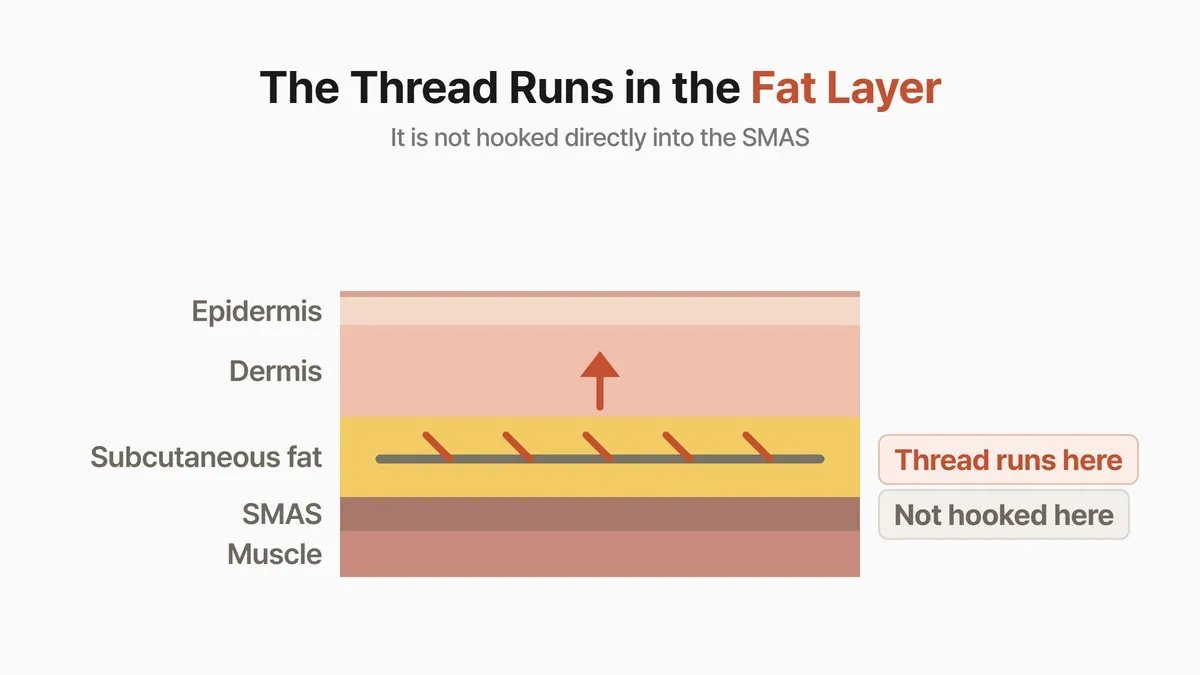
I-Thread Lift uses the barbs on its surface to engage tissue in the fat layer and reposition it upward. It goes in through a thin, blunt-tipped tube (cannula), so no incision is made with a scalpel. However, the thread does not directly anchor to the SMAS (a thin, tough layer that supports the skin and fat so they don't sag). It works on the tissue in the fat layer.
Hi-ko Thread is for the nose only. Its bidirectional barbs are designed to help secure the thread in place, and it supports the soft tissue of the nose bridge and the columella (the column that supports the nose tip — the vertical strip between the two nostrils) from within. The structure works much the way a tent pole holds up the fabric of a tent.
Jamber Thread is not a lifting thread. A fine thread is wound tightly into a spring, so the coil takes up space of its own and supports the area from below. Its coiled design also offers more surface for collagen to form on than a single strand placed straight.
Tightening with heat is a different approach altogether. How focused ultrasound converges to create thermal points beneath the skin, and what differs between the machines, is covered in HIFU in Seoul: How Ultherapy Prime and Shurink Universe Differ.
Why Are Different Threads Used for Sagging and Volume Loss?
Because adding volume and repositioning tissue address different changes.
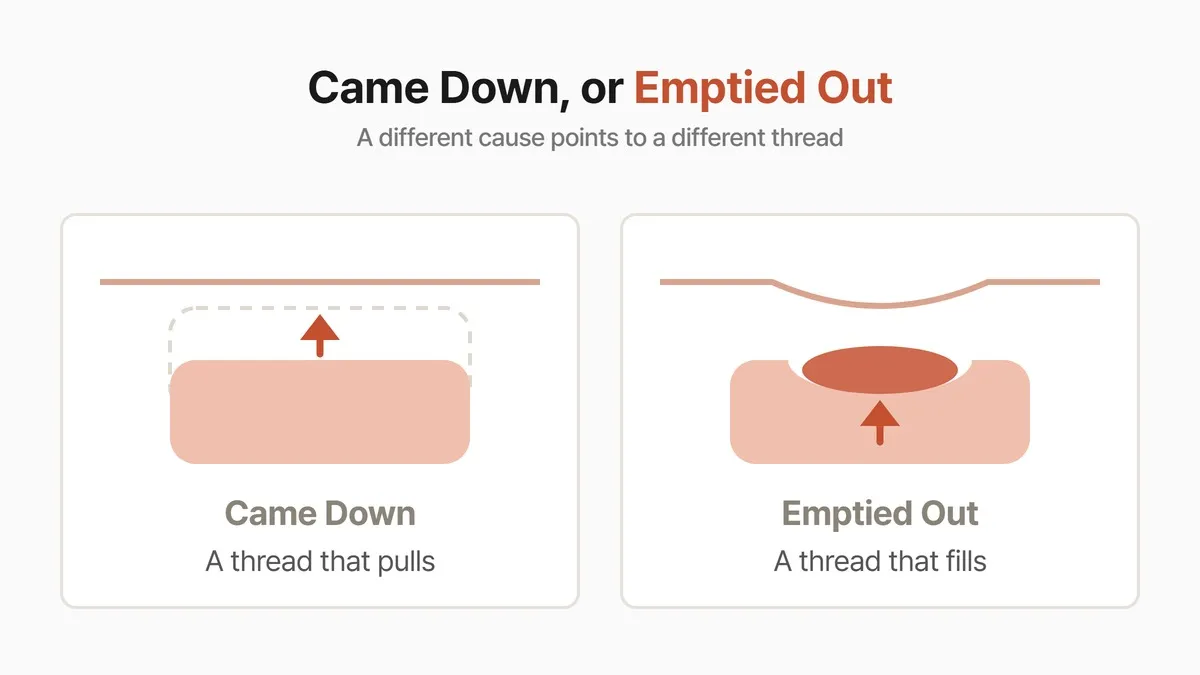
Hollow-looking cheeks can result from different changes in facial tissue. In some cases the appearance is related to volume loss in that spot. In others, tissue that has shifted downward leaves the area above it looking empty. The first may call for a volume-supporting approach, the second for a lifting one.
A lifting thread may not adequately address an area where volume loss is the main concern. Equally, adding volume where shifted tissue is the main concern places that volume over tissue that has already moved down. That is why identifying which of the two is driving the change comes first.
The two often appear together. In that case a combination is considered, though how much of it is done on one day depends on your skin condition and what else you are having that day. Tell us at the booking stage which treatments you want and we will confirm what can be combined and in what order.
Peche Clinic does not perform surgery. A thread lift is done with dissolvable threads and no incision, and the degree of lifting achievable is within what that approach allows.
What Happens Once the Threads Dissolve?
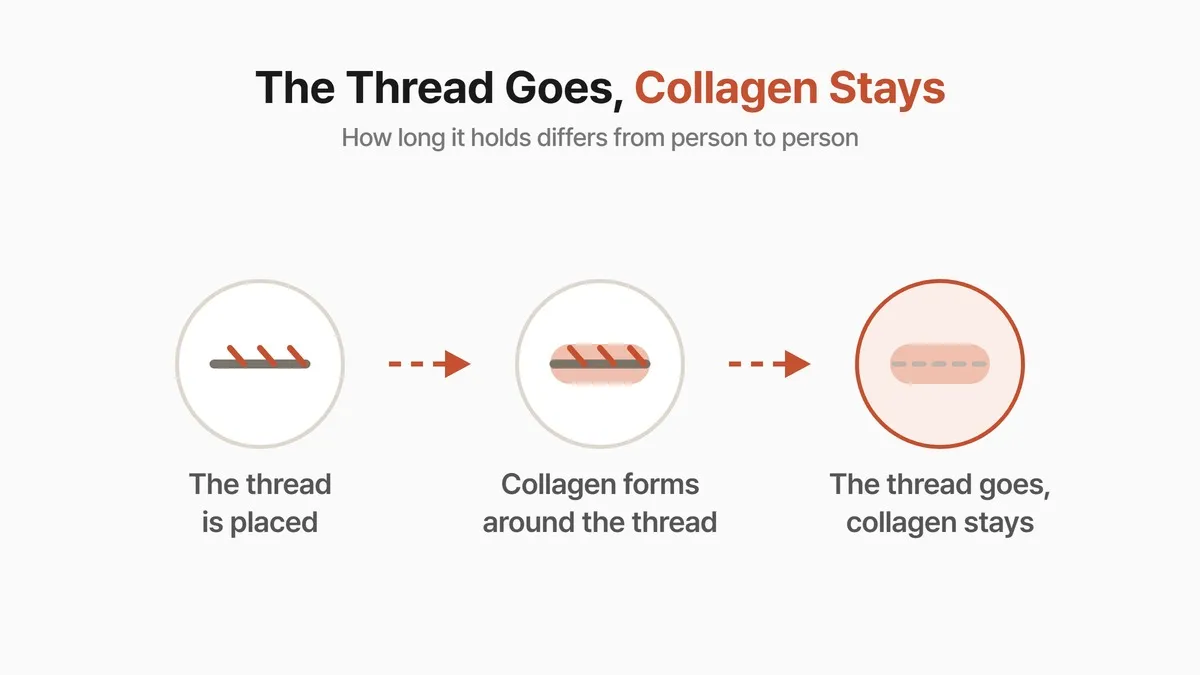
As the thread gradually dissolves, collagen formation around the treated area may contribute to continued tissue support.
PDO (polydioxanone) is a biodegradable material commonly used in absorbable surgical sutures (stitches that dissolve inside the body after surgery), and over time it breaks down into water and carbon dioxide. It is reported in the medical literature to take more than 6 months to break down, and how long that takes varies with the thread's thickness and design.
The presence of a thread can stimulate a local tissue response, including collagen formation. So even after the thread has dissolved, that collagen is understood to contribute to continued support for a time. How long the results last varies from person to person, and the effect is not permanent.
Recovery depends on the type of thread and how many are placed. Swelling and bruising may be most noticeable around days two to three and often settle within one to two weeks, although recovery varies. A heavy, dull pressure or a pulling sensation can also last a few days. The anesthetic is a spray that works only on the area treated, with no separate waiting time.
We plan your flight home together at the consultation. How much swelling and bruising you get depends on which threads are used and how many, so tell us in advance which treatments you want and when you fly, and we will advise around your schedule.
4 Things to Confirm Before a Thread Lift in Seoul
Preparing these four details can help make your consultation more efficient.
1. Identify whether your main concern is sagging or volume loss Cheeks that feel as though they hang below the jawline point to sagging; hollow-looking cheeks and nasolabial folds that have deepened point to volume loss. That distinction is the first thing that separates one thread from another.
2. Ask how many thread types the clinic offers A clinic offering several thread types may have more options for tailoring treatment to different concerns. Where there are options, you can be told why this thread and not another one.
3. Tell us if you have had threads placed before Sharing when and where you previously had threads placed, and how many were used, can help the doctor assess your treatment history. Sometimes threads from a previous treatment have not dissolved yet.
4. Tell us how long you are staying and when you fly home Swelling and bruising may be most noticeable around days two to three and often settle within one to two weeks, although recovery varies. Knowing your dates helps us work out what to do first on this trip.
Peche Clinic is a one-minute walk from Exit 4 of Gangnam Station, on Subway Line 2 and the Shinbundang Line. We are open until 9 PM on weekdays and 6 PM on weekends and public holidays. Payment is by card on the day of treatment, and we give you an itemized receipt afterwards. Staff who speak English are on site, and inquiries and bookings come through WhatsApp. Our consultations draw on more than 90,000 treatments performed here.
FAQ
Q: What are the different types of thread lifts? A: They are grouped by function. I-Thread Lift uses the barbs on its surface to reposition sagging tissue upward, Hi-ko Thread supports the soft tissue of the nose from within, and Jamber Thread provides support where volume has been lost with the volume of its spring-shaped coil. Understanding how each thread works before choosing a treatment makes the choice much easier.
Q: Which thread is used for hollow cheeks? A: If volume loss is the main concern, Jamber Thread — the volume-supporting type — is the one to look at. If tissue that has shifted downward leaves the area above it looking empty, a lifting thread is considered as well. The two often appear together, so the consultation starts by working out which factor is contributing more.
Q: If the thread dissolves, does the effect disappear with it? A: The thread dissolves and is gone, but the collagen that has formed around it is understood to contribute to continued support for a time. How long the results last varies from person to person, and the effect is not permanent. A PDO thread is reported in the medical literature to take more than 6 months to break down.
Q: Is an incision made with a scalpel? A: No. The thread goes in through a thin, blunt-tipped tube. Peche Clinic does not perform surgery, and the degree of lifting achievable depends on the thread type and your own anatomy.
Q: Does it hurt a lot? A: An anesthetic spray that works only on the area treated is used, with no separate waiting time. Let us know if you feel discomfort during the treatment so the doctor can adjust as appropriate. Afterwards, a heavy, dull pressure or a pulling sensation can last a few days.
Q: Can I fly home right after a thread lift in Seoul? A: How much swelling and bruising you get depends on which threads are used and how many. Swelling and bruising may be most noticeable around days two to three and often settle within one to two weeks, although recovery varies. Send us your flight date and the treatments you want on WhatsApp and we will advise around your schedule.
Q: How is a thread lift different from ultrasound lifting? A: A thread lift catches or supports tissue directly with a thread, while ultrasound lifting creates thermal points beneath the skin to tighten it. The approaches differ, so which one suits you depends on how much has sagged and where. What differs between the ultrasound machines is covered in HIFU in Seoul: How Ultherapy Prime and Shurink Universe Differ.
Q: Can one session be enough to notice a difference? A: With a lifting or supporting thread, changes in contour may be noticeable immediately after placement, and the collagen that forms around the thread shows over several weeks to several months. It is a treatment you can have on a single trip — discuss expected results and their duration during your consultation.