Hi-ko Thread — PECHE Clinic, Gangnam Station
Thick dissolvable threads barbed in both directions, placed like pillars along the nose bridge and tip to support the nose's contour without incisions · Nose · Right by Gangnam Station Exit 4
Hi-ko Thread
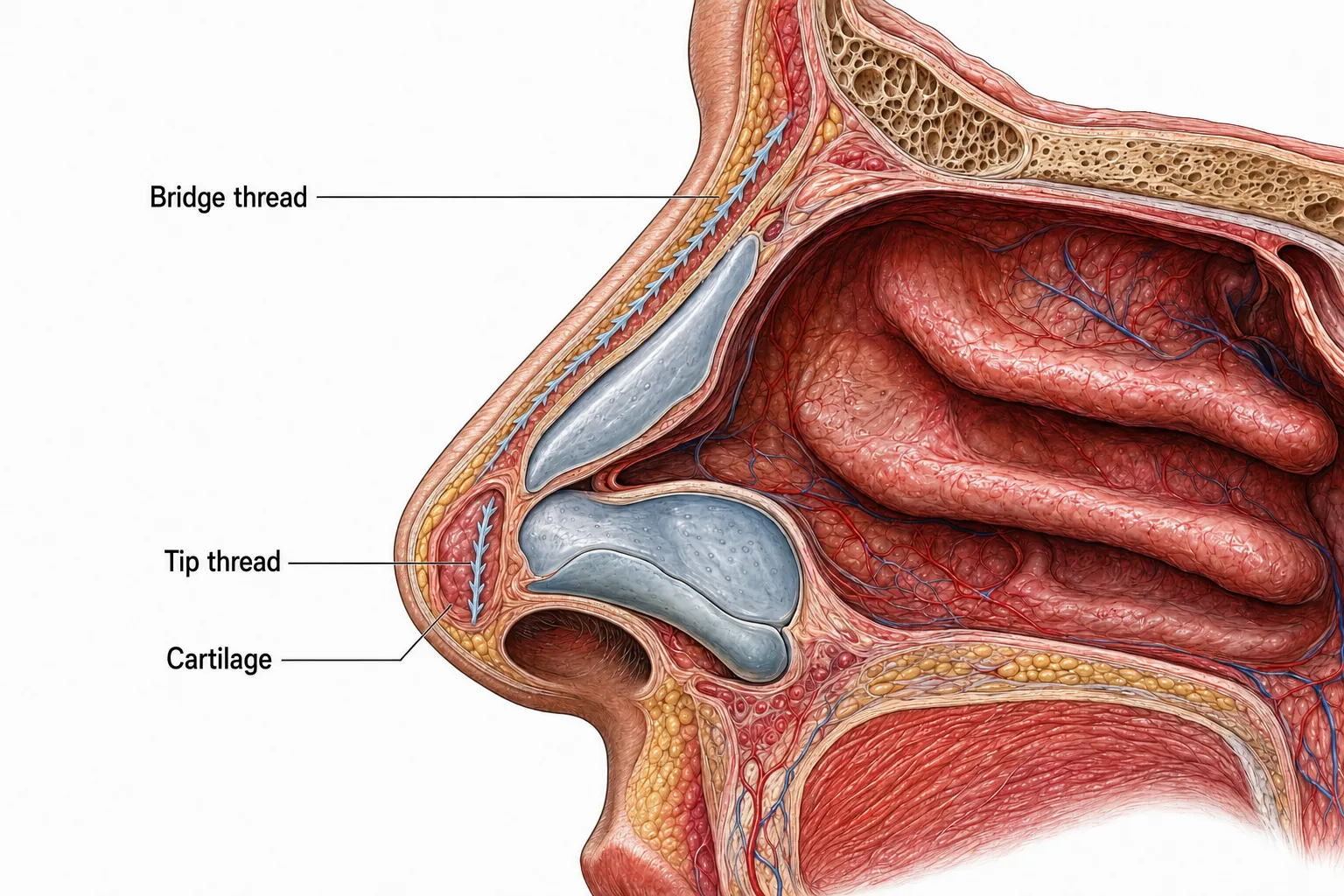
Hi-ko Thread is a thread lift that places thick, barbed dissolvable threads along the nose bridge and tip, supporting the nose's contour without incision surgery. Inside the nose, the threads act as pillars — propping up the soft tissue and holding its shape.
The threads share their material with the dissolvable sutures long used in surgery, so over time the body breaks them down and they disappear. While they dissolve, your own collagen forms around them — and after the threads are gone, that collagen keeps supporting the shape for a time.
▲ The threads prop the tissue like pillars beneath the bridge and tip
When to Consider It
- A low nose bridge makes your face feel flat
- Your nose tip is rounded or slightly drooped, and you want a cleaner line
- Incision surgery feels like too much, and you want a short-recovery approach
- You'd like to preview the changed look before deciding on surgery
What the Threads Do in the Nose
| Item | Details |
|---|---|
| Where they go | Beneath the soft tissue over the bridge · in the column beneath the nose tip (the columella) |
| Role | Propping tissue up like pillars and holding the shape — unlike pulling thread lifts, these support |
| Barbs (cogs) | Set along the thread in both directions, keeping it from slipping out of place |
| What's left behind | Your own collagen formed around the thread — still supporting the shape for a time after the thread dissolves |
The thread material is chosen from two options. It's less about which is better than about the result you want.
| Material | Character | Dissolving period |
|---|---|---|
| PDO | On the firm side — strong at setting the contour right after treatment · in exchange, it can feel relatively firm to the touch | Dissolves over 6 months–1 year |
| PCL | Soft and flexible — natural to the touch with little foreign-body feeling · in exchange, its immediate contour-setting force is relatively gentle | Dissolves slowly, over 2 years or more |
How It's Done
1. Contour check and design A 3D MetaVu scan records your facial contours and left–right balance, and we decide together which part of the nose to support, and by how much.
2. Numbing No numbing injection — a numbing spray is applied, then we proceed. There is no numbing step that involves a needle.
3. Thread placement Through a small entry point in the skin beneath the nose tip, a blunt-tipped thin tube (cannula) places the threads along the bridge and at the tip.
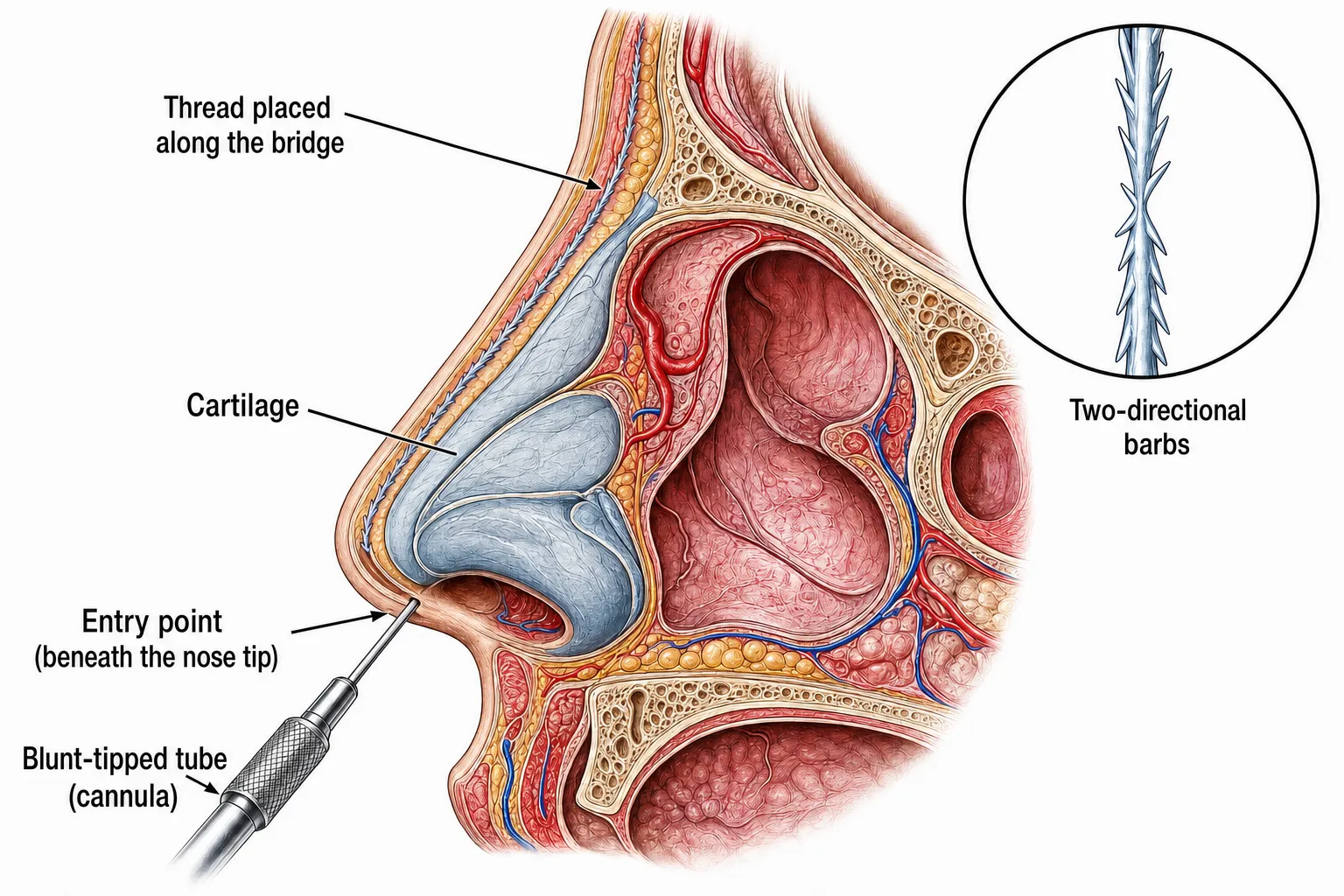
▲ One small entry point beneath the nose tip — the thread lies under the skin along the bridge (the magnified circle shows the two-directional barbs)
4. Shape check and finish The contour is checked and the remaining thread trimmed. The entry point is needle-mark-sized, so once healed it tends not to show.
Results and Recovery
| Item | Details |
|---|---|
| Target | The soft tissue of the nose bridge and tip |
| How it works | The threads prop the tissue like pillars, setting the contour immediately, and collagen forming around them sustains it |
| When results show | The propped-up contour is visible right after the treatment |
| How long the threads take to dissolve | PDO dissolves over 6 months–1 year · PCL slowly, over 2 years or more |
| After they dissolve | The collagen formed around them supports the shape for a time — duration varies by person and is estimated at the consultation |
| Pain | Mostly a feeling of tissue being pressed and caught as the thread passes, along with strong pressure, rather than a sharp pain |
| Pain control | Numbing spray before starting (no numbing injection is used) · tell us how it feels mid-treatment and we adjust |
| Downtime | Swelling for several days — the contour settles as the swelling goes down |
| Aftercare | For a while, don't press or rub the nose, and mind where glasses rest — so the shape doesn't shift before the threads settle |
| Spacing other treatments | RF or ultrasound lifting can start 2 months after — later if any foreign-body feeling or swelling remains |
This is not a permanent treatment. The shape holds while the threads and collagen support it — a different goal from surgery's semi-permanent change. On the other hand, since it isn't a lasting commitment, it can be a way to try the changed look first.
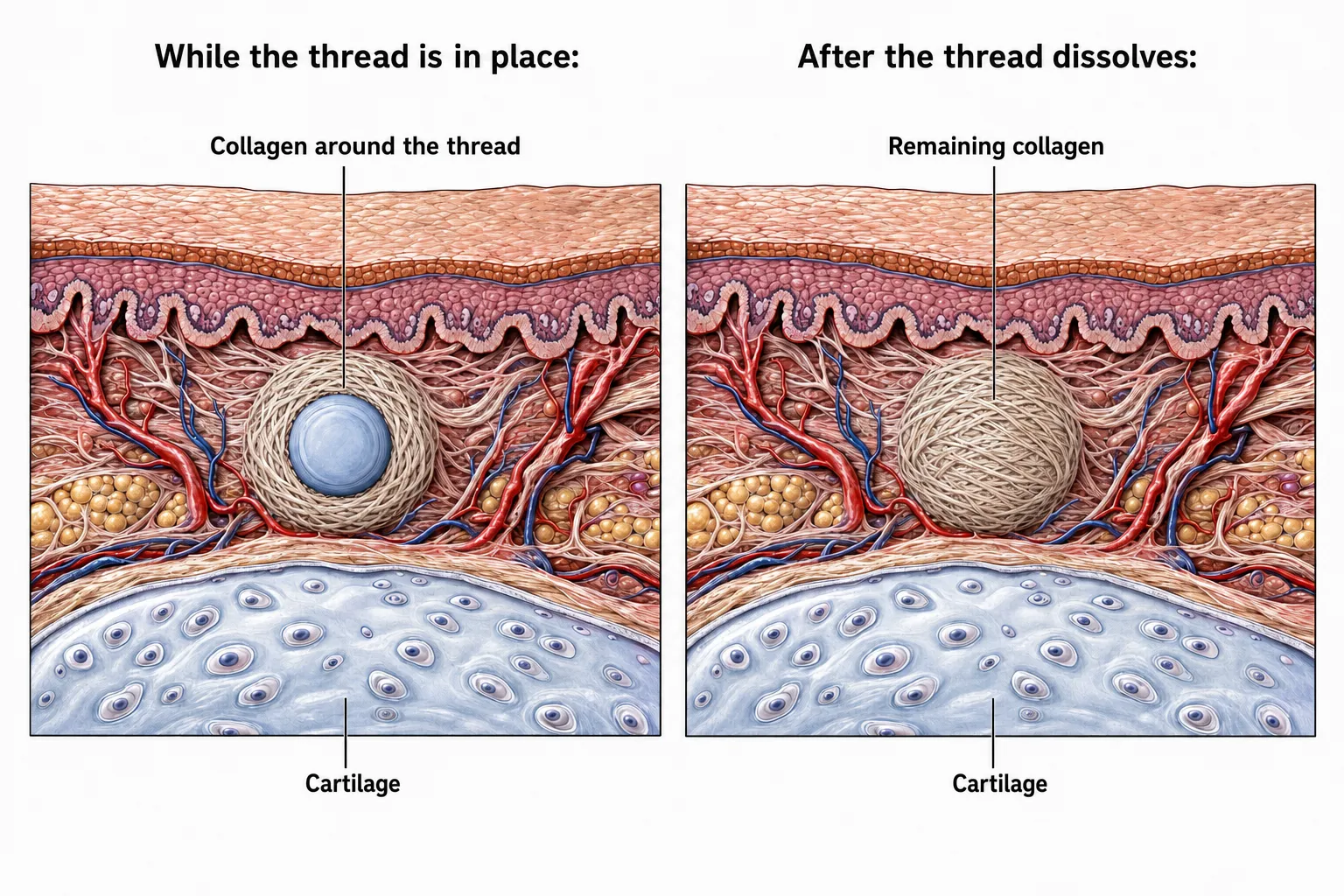
▲ With the thread in place (left) and after it dissolves (right) — the collagen formed around it holds the shape for a time (individual results vary)
Expected Reactions and Possible Side Effects
Common, temporary reactions — part of the normal course:
- Swelling for several days, with the contour settling as it subsides
- While the threads settle, they can be felt when the nose is touched
Anything beyond this is uncommon. If a reaction lasts longer than expected or worsens, contact us and we'll check it with you.
What We Check Beforehand
If any of these apply to you, let us know during your consultation. We adjust the timing or the approach.
- Past nose procedures such as surgery or nose filler — these affect the thread's path
- A period of severe nasal inflammation, such as rhinitis or sinusitis
- A condition where bleeding is slow to stop, or blood thinners (anticoagulants) — bruising can occur
- A keloid tendency (scars that heal raised)
- Skin inflammation or wounds at the treatment area
- Pregnancy or breastfeeding
How PECHE Clinic Does It
We record your contours, then design. The nose needs to be seen within the balance of the whole face. The 3D MetaVu scan records your contours and left–right balance, and which part to support — and by how much — is decided together from your assessment results.
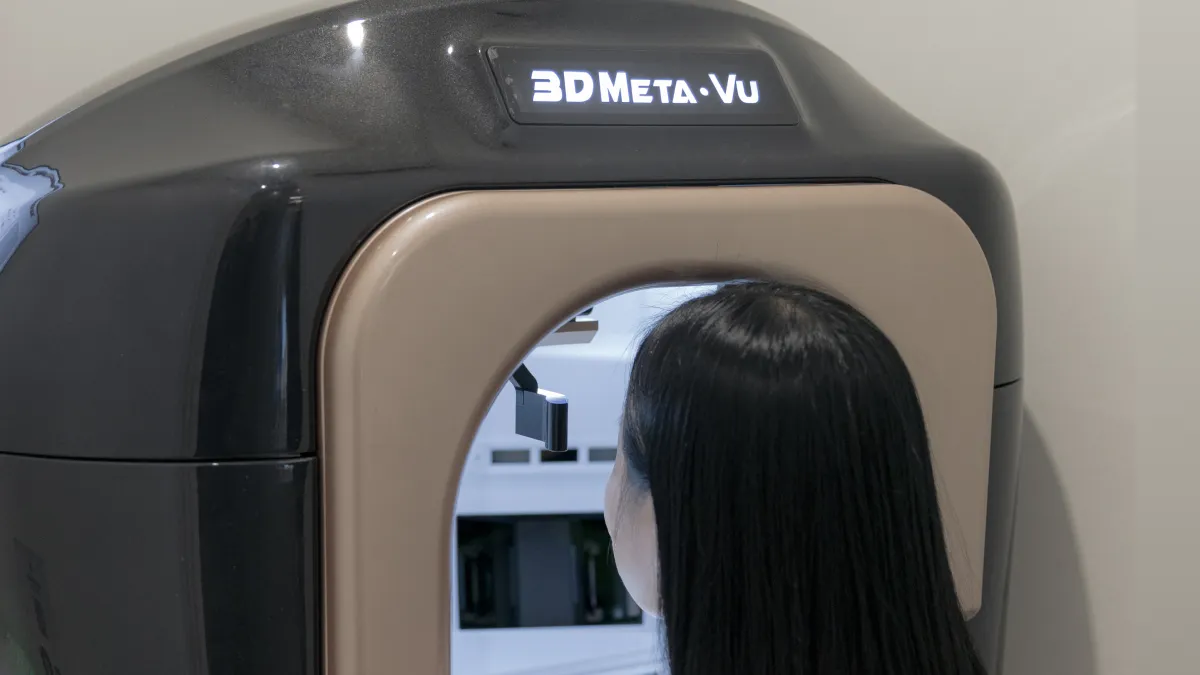
▲ The nose's contour is read within the whole face's balance
The prep room is behind a glass wall, in full view. The preparation and hygiene routine is visible through the glass from the waiting area.
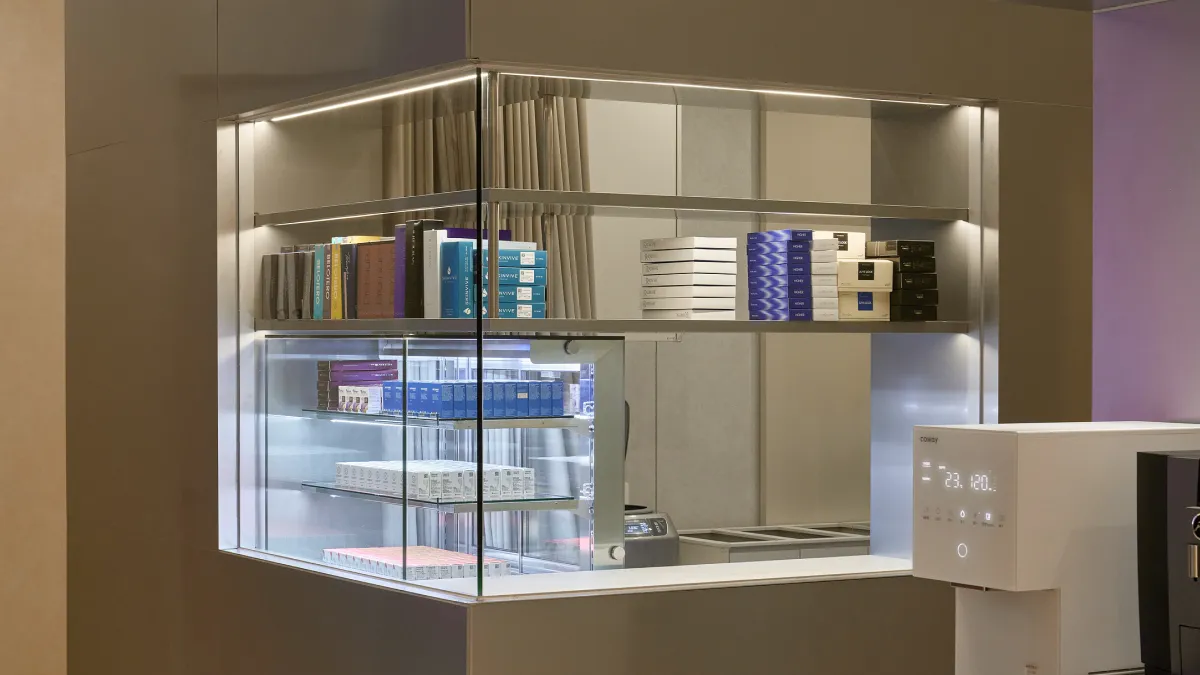
▲ The prep room, seen through the glass from the waiting area
We tell you first what it can do — and what it can't. There's a limit to what threads can support. Changes to the bone or cartilage itself belong to surgery — and if what you want is in that territory, we say so. We don't push same-day payment or packages — you're welcome to come in just for a consultation.
Pricing
Hi-ko Thread cost depends on the thread material and the number used. After your assessment, we work out what you need and then give you a quote.
Location
PECHE Clinic 3F, 364 Gangnam-daero, Gangnam-gu, Seoul Right in front of Gangnam Station, Exit 4
You may come back to have your progress checked — a short trip makes that easier.
FAQ
Q1. Who performs the treatment? A: PECHE physicians who all work to the same standards, built from over 90,000 documented treatments. Where the threads go and how many are set from your contour record and these standards, not by feel — and the same standards apply even if your physician changes.
Q2. Will it show, or be felt when touched? A: The threads sit beneath the skin and don't show from outside. While they settle, they can be felt when touched — and if a soft feel matters most to you, the flexible material (PCL) is the one to consider. Which fits is decided together from your nose's tissue condition.
Q3. Can I wear glasses? A: While the threads settle, mind the part that rests on your nose. If you wear glasses daily, tell us at the consultation — we'll work out how and when to wear them.
Q4. How is this different from surgery? A: It supports with dissolvable threads, without incisions — so recovery is short and there's little to undo. In exchange, it isn't permanent, and the range of change has limits. If you want the bone or cartilage changed, that's surgery's territory. We hear what you're after and tell you honestly which side it falls on.
Q5. What should I look for when choosing a clinic? A: Three things. First, whether they read the nose's contour within the whole face's balance. Second, whether they tell you upfront what threads can and can't reach. Third, whether it's an easy trip back for progress checks.