Ultherapy in Seoul: Preventing Hollow Cheeks Starts in the Consultation
Why cheeks look hollow after Ultherapy, and what to confirm in the consultation before you book in Seoul
"I'm looking at Ultherapy in Seoul, but every review thread I open has someone whose cheeks went hollow afterwards."
It is the worry we hear most often from patients writing to us from abroad. Hollowing is the biggest fear attached to this treatment, and no amount of reading reviews will tell you whether it will happen to your face. The faces in those reviews do not have your exact skin or fat thickness. What actually decides the outcome sits somewhere else: how your skin is assessed before treatment, and whether you can talk about it while the treatment is happening.
Ultherapy works by converging focused ultrasound (HIFU) at a single point beneath the skin, building heat there while leaving the surface untouched, and that heat prompts collagen renewal. In an analysis of 17 studies covering 477 patients, focused ultrasound treatment of the face and neck produced moderate improvement, with pain reported at a mean of 4.2 out of 10 (1). The effect and the risk come from the same thing: heat delivered at a set depth.
Why Do Cheeks Look Hollow After Ultherapy?
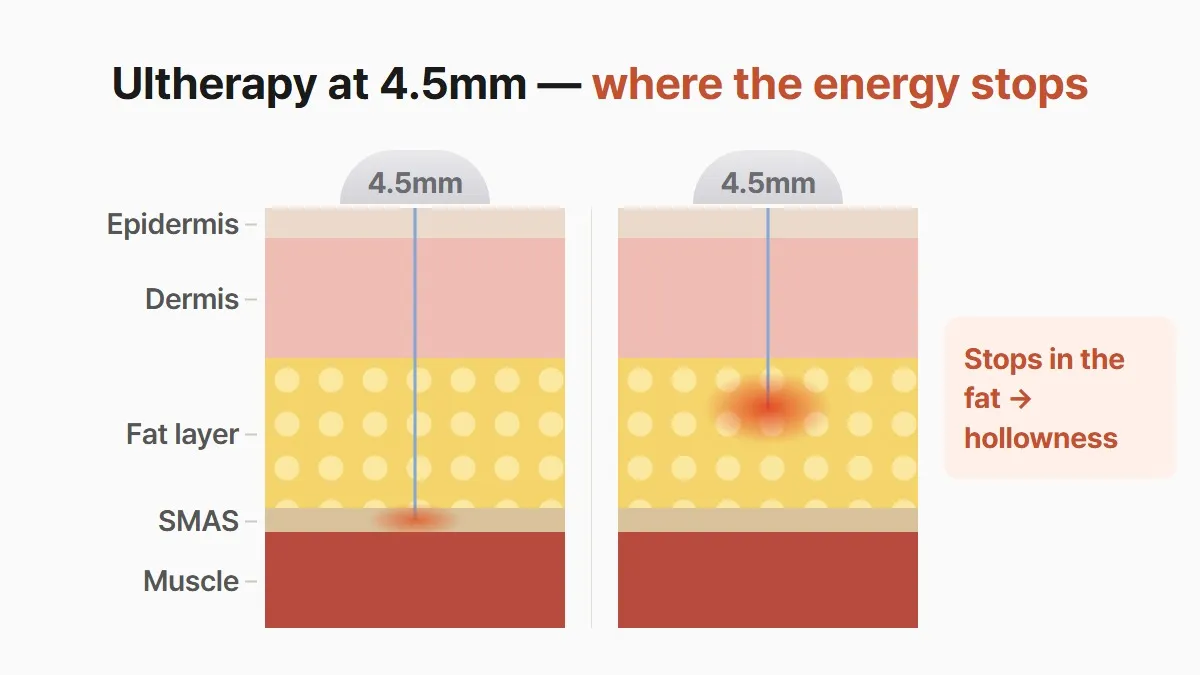
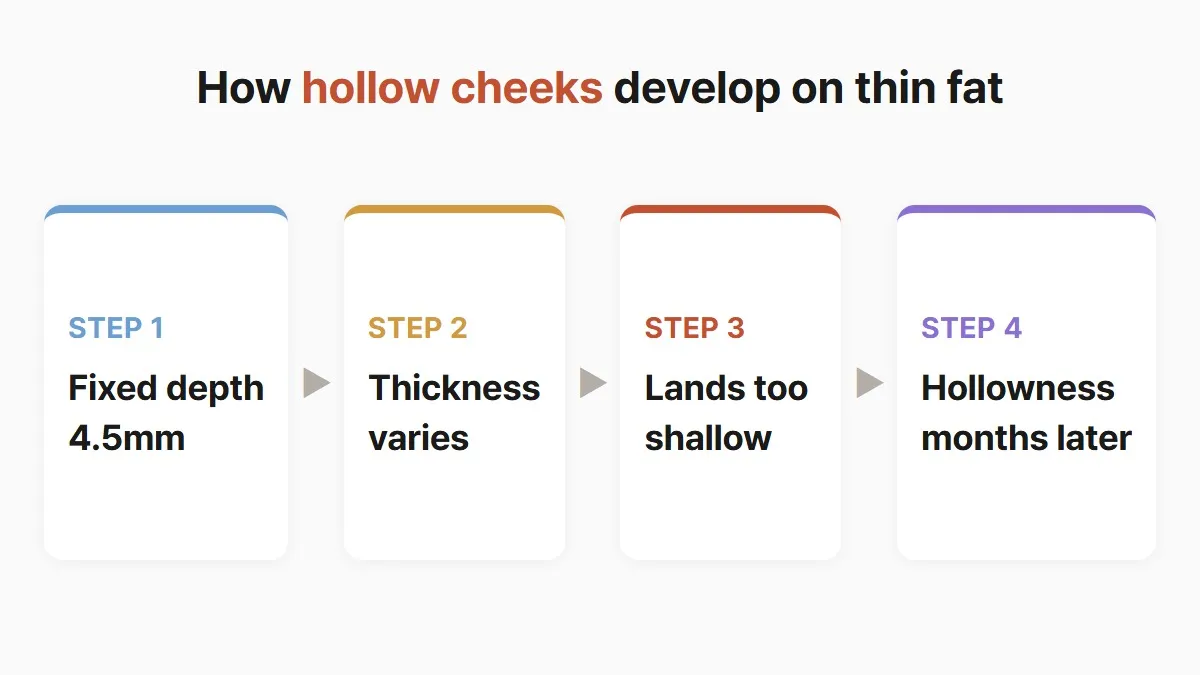
Because facial fat sits directly above the target layer, and fat shrinks when it is heated. The SMAS that Ultherapy aims for is the fibrous sheet beneath the fat — the same layer a surgeon lifts in a facelift. If the heat stops a little shallower than that, it lands in the fat pad instead, and the same thermal response that tightens fibrous tissue makes fat cells shrink instead. Weeks later that shows on the face as hollowness — the midface reads as flatter rather than lifted.
This is documented rather than anecdotal. In a review of complications following intense focused ultrasound of the face, 9 of 39 patients experienced adverse effects, and hollowness from fat volume loss (reported as fat atrophy) was among them (2).
Two things follow from that. Hollowing is less a matter of the treatment being "too strong" than of energy stopping somewhere other than the layer it was meant to reach. And how deep that layer sits differs from person to person. On someone whose skin and fat are thin, the same energy arrives somewhere else entirely. That is why preventing hollowing starts in the consultation.
What Does an Ultherapy Consultation in Seoul Check for Hollowing Risk?
It starts by establishing what condition your skin is in right now, then feeds that into how strongly the treatment is delivered. Hollowing shows up first on faces that already carry less fat, so the consultation is where two things get settled: whether this treatment suits you at all, and how many shots your face actually needs.
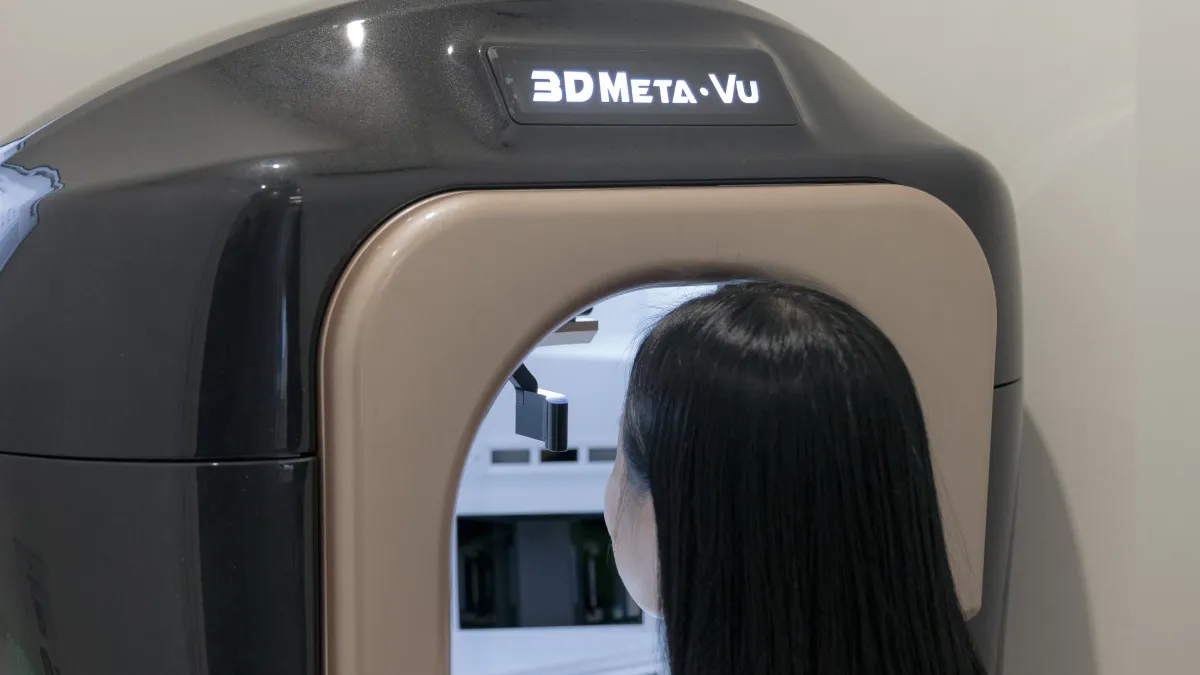
At PECHE, the consultation starts from a 3D skin analysis rather than a visual guess. Wrinkles, pores and pigmentation — the things that are hard to grade by eye — come up as data, and we look at that screen with you to work out whether what you need right now is firming or something else. Whether your cheeks run thin, and how much midface volume is still there, is read from the same 3D analysis before treatment. Nothing is assumed from your age.
| What is checked before treatment | How it is checked | How it feeds into the treatment |
|---|---|---|
| Skin condition | Wrinkles, pores and pigmentation reviewed together on a 3D skin analysis during the consultation | The starting point for separating firming from other concerns |
| Midface volume | Read from the 3D analysis before treatment | The thinner the cheeks, the lower the energy has to be set |
| Recent weight change | Covered in your medical questionnaire | Rapid loss over a short period can mean volume is already down |
| Pain sensitivity | Your history with previous treatments | Sets the reference for lowering intensity, or moving to another area to spread the discomfort |
Without that process, every face gets treated at the same setting. On thin cheeks, that setting lands as a burden.
Some of what is worth confirming before any aesthetic treatment in Korea applies well beyond Ultherapy, so we have set the rest of it out separately.
→ How to Choose a Dermatology Clinic in Korea: 6 Things to Check Before You Book
Why Do Ultherapy Results Differ From Clinic to Clinic in Seoul?
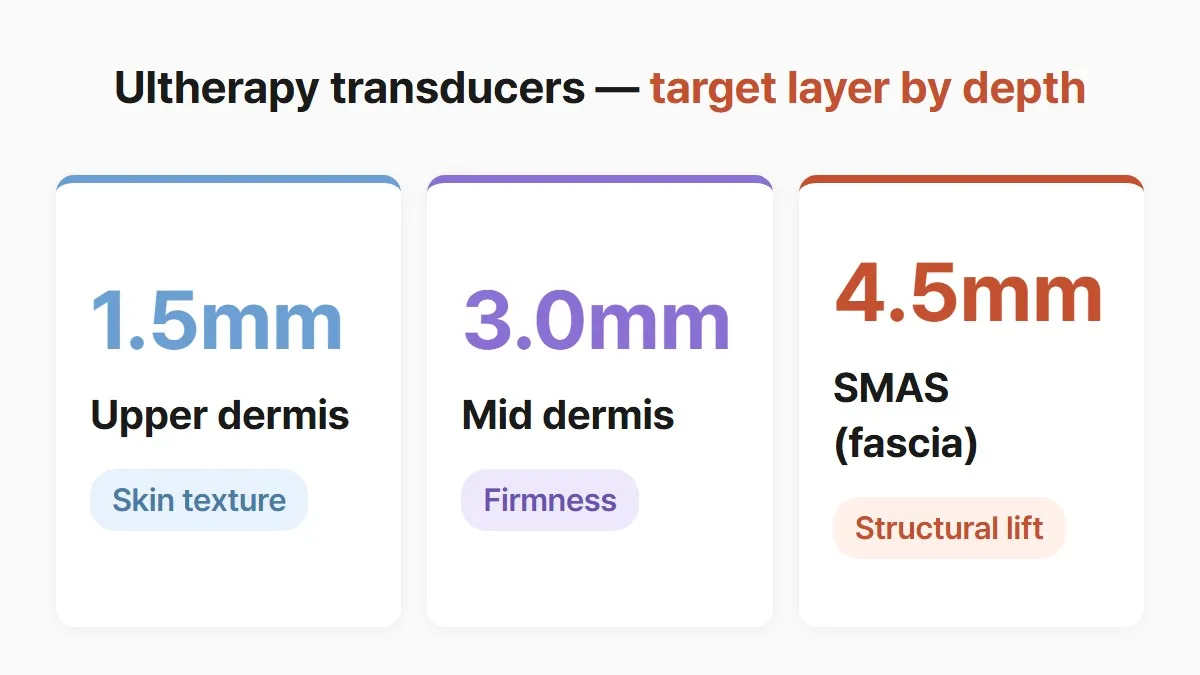
Because reading where the target layer sits on a particular face is a matter of experience, and that varies between clinics. Each Ultherapy transducer is built to release its energy at one fixed depth: 1.5mm in the upper dermis, 3.0mm in the mid dermis, and 4.5mm at the SMAS. The depth is manufactured into the part, but what actually sits at that depth differs from person to person. Use the same setting on someone whose skin and fat are thin, and the energy stays shallower than the target layer. That is why how many faces a clinic has worked on shows up in the result.
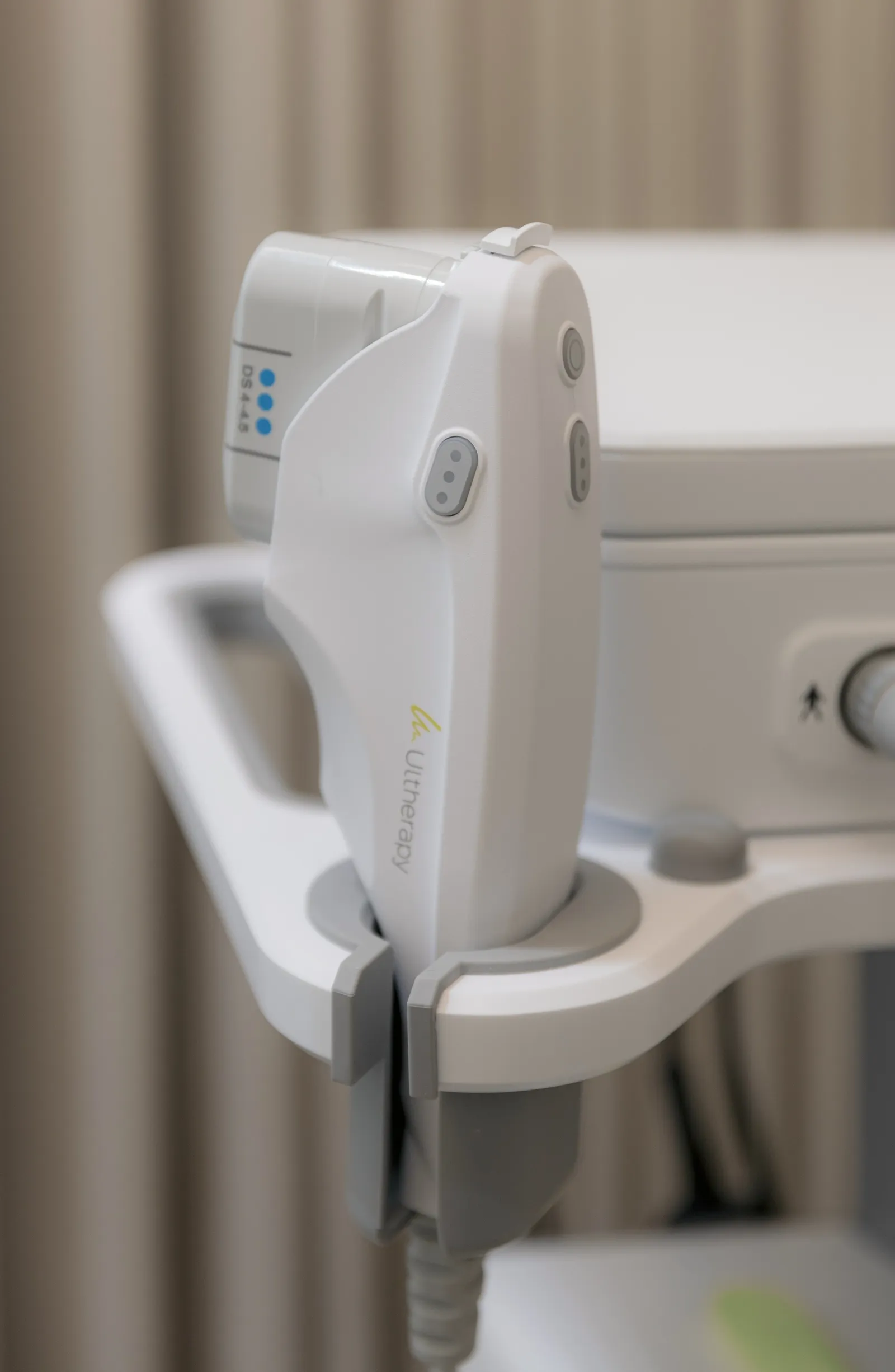
At PECHE, the more than 60,000 treatments performed by our chief director and general director are set down as a protocol our doctors share. It covers how settings adjust by skin type, how far intensity comes down for someone with thin cheeks, and how a session runs for someone sensitive to pain. It exists so that any doctor here judges by the same standard. The system we use is Ultherapy PRIME, the current model.
A setting chosen at the start does not stay fixed through the session either. Instead of "are you okay?", we ask "out of 10, where is that right now?" — and on your answer we either bring the intensity down or move to another area to spread the discomfort. If the number comes back too high, the energy drops on the spot. What was done and what you said about the pain goes into your chart, so a second visit does not start from zero.
Are Some Faces More Likely to Look Hollow After Ultherapy?
Faces that have already lost midface volume. If your cheeks look flat or sunken when you look straight ahead, the fat pad that would normally cushion the area is thin to begin with, and a treatment that works partly by tightening deep tissue can make that flatness more visible rather than less. The same goes for slim faces at any age, and for anyone who has lost weight quickly in the past year.
None of that rules the treatment out. It changes what has to be discussed first: how far the energy comes down, and whether volume should be looked at before lifting. Having a device on site does not mean PECHE recommends it — if we judge that you do not need it right now, we say so. For anyone with thin cheeks, whether a clinic draws that distinction in the consultation is the thing worth choosing on.
5 Things to Confirm Before Ultherapy in Seoul
Asking these over messenger before your trip settles most of the decision. PECHE takes consultations on WhatsApp.
- "How do you assess my skin in the consultation?" — Whether it is done by eye alone, or with diagnostic data on screen. A consultation that starts differently ends in a different treatment.
- "My cheeks are on the thin side — how do you decide the energy?" — Listen for whether low volume actually changes the setting. Preventing hollowing rests on this answer.
- "How much Ultherapy experience do you have?" — Skin and fat thickness differ from person to person, and reading that difference comes from accumulated cases.
- "Can I tell you during the session if it hurts?" — Ask whether intensity is adjusted on your response, and how that conversation happens if you do not speak Korean.
- "Do foreign patients pay more?" — Confirm before you fly that the published price applies as written, and what it covers.
If the answers come back clearly, the treatment itself is usually explained the same way. PECHE applies the price published on our website regardless of nationality or booking channel, and it is the same figure whether you read the English, Japanese or Chinese page. Staff who speak English, Japanese and Chinese are on site, so booking, consultation, treatment and aftercare all run in the same language. We are in the building right in front of Exit 4 of Gangnam Station, so there is almost no travel time, and we are open until 9 PM on weekdays and 6 PM on weekends, every day of the year.
Hollow cheeks are worth taking seriously, and they are also worth understanding correctly. The risk lives in the depth the energy reaches, and that depth comes down to how closely the energy is matched to the face examined in the consultation. It does not live in the treatment's reputation. Ask what a clinic looks at in the consultation, and the rest of the conversation gets much easier. For an accurate judgment on what suits your skin, please consult a doctor.
FAQ
Q: Can Ultherapy actually cause hollow cheeks? A: It can, when the energy settles in the fat layer above the SMAS rather than in the SMAS itself, and hollowness from fat volume loss (reported as fat atrophy) has been documented among reported complications. Matching the intensity to your own skin thickness is what prevents it, so this is worth raising in the consultation before treatment.
Q: What does an Ultherapy consultation in Seoul actually check? A: It checks what condition your skin is in and whether thin cheeks mean extra caution, before anything is treated. At PECHE the consultation reviews your skin condition on a 3D skin analysis, and how much volume is left is read from the same analysis.
Q: Why do results differ between clinics for the same Ultherapy? A: Because the depth the energy reaches is fixed by the transducer, while what sits at that depth differs from person to person. At PECHE, more than 60,000 treatments are set down as a protocol, and the energy is adjusted to your own skin thickness.
Q: My face is on the thin side. Should I skip Ultherapy? A: Not necessarily, but if your cheeks are thin, the discussion about how far the energy comes down has to happen first. At PECHE this is checked in the consultation rather than assumed from your age, and if we judge that you do not need the treatment right now, we say so.
Q: Can I ask for the intensity to be lowered during Ultherapy? A: Yes, and it helps to agree beforehand how you will say so. PECHE asks for a pain rating out of 10 during treatment and either lowers the intensity or moves to another area to spread the discomfort, in English if that is easier for you.
Q: Do Ultherapy clinics in Seoul charge foreign patients more? A: It varies by clinic, so compare the amount you are quoted against the price published on the website. At PECHE, international and Korean patients pay the same.