Fortra Laser Lifting — PECHE Clinic, Gangnam Station
Four-wavelength laser lifting that fires 755, 808, 940, and 1064 nm in a single pass · Right by Gangnam Station Exit 4
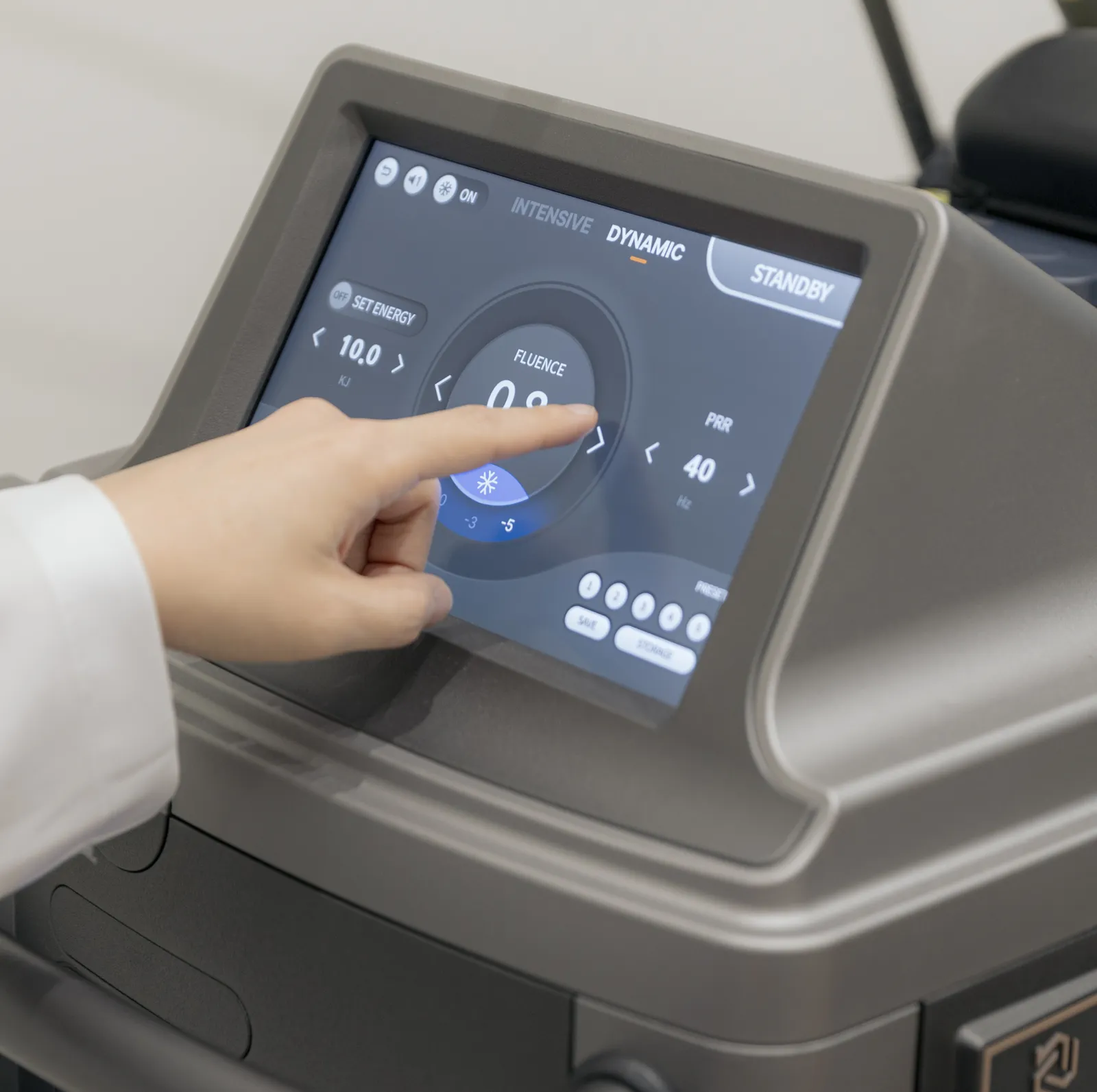
Fortra Laser Lifting
Fortra Laser Lifting is a lifting and tone-up treatment performed with the Fortra Quattro — a laser that fires four different wavelengths at the same time, heating several depths of the dermis in a single pass. Light behaves differently in skin depending on its wavelength (the length of the light wave, in nm): shorter wavelengths latch onto pigment near the surface, longer ones travel deeper. Between them, the four reach the pigment, the collagen of the dermis (the elasticity layer), the small vessels behind redness, and the fibrous walls that divide the fat into compartments — treating firmness and complexion together.
Multi-wavelength laser lifting began with three-wavelength systems (755, 810, 1064 nm). Fortra uses four — 755, 808, 940, and 1064 nm — adding 940 nm, which responds to redness. More wavelengths doesn't mean better results; what changes is the range of concerns one treatment can cover at once.
There are no needles or incisions, and almost no redness remains right afterward — so it can be done even a few days before an event.
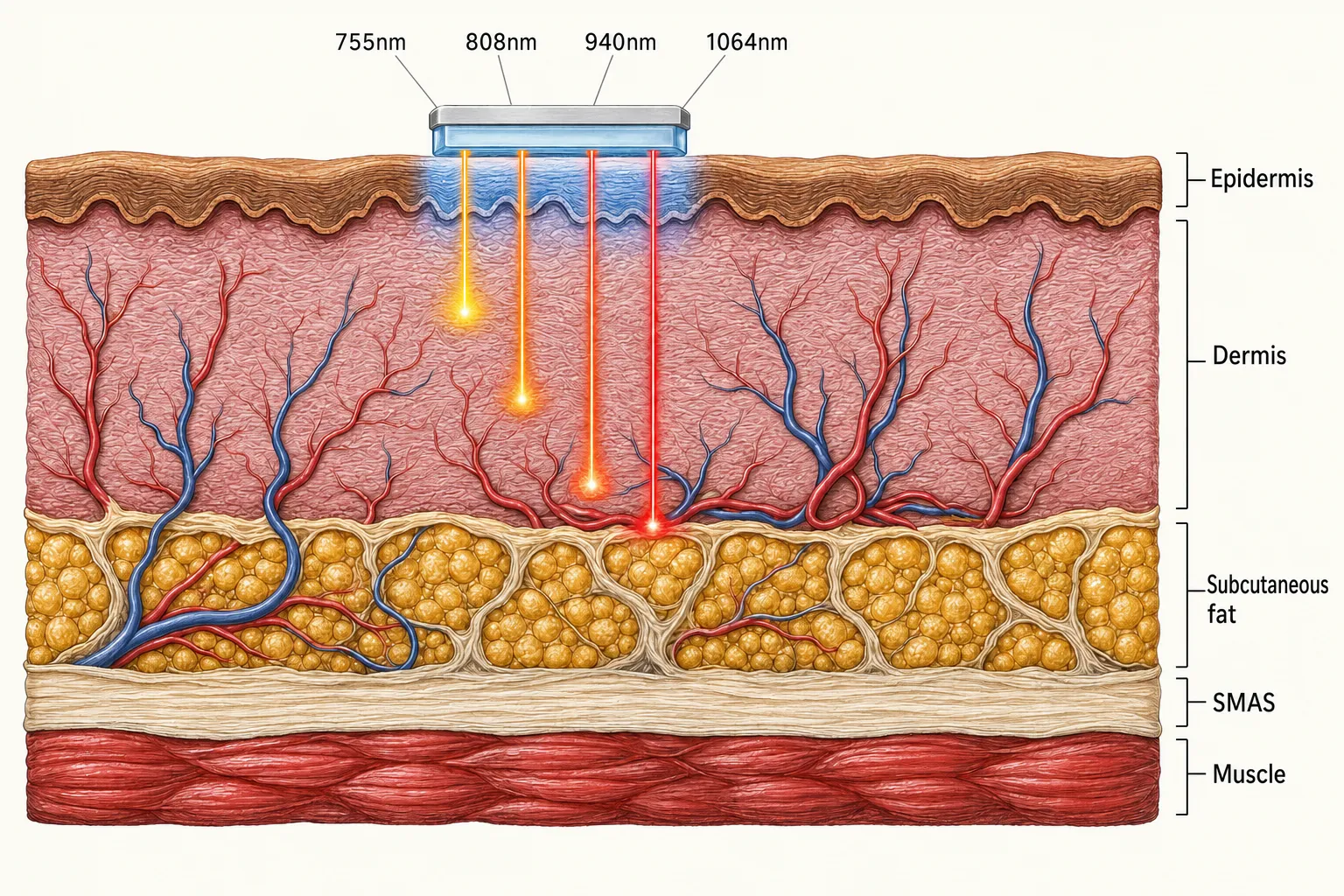
▲ The longer the wavelength, the deeper it reaches — the surface is protected by contact cooling
When to Consider It
- Sagging along the jawline and cheeks and a dull complexion bother you at the same time
- Your face flushes easily, with a faint layer of redness
- You want pores, texture, and overall firmness refined together
- You have an event with a fixed date ahead — a first date, an interview, a wedding — and need a treatment with no recovery period
Clearly visible broken capillaries call for a laser that targets vessels directly, and sagging that has reached the SMAS (the layer that supports the face) calls for an ultrasound-based treatment as well. We decide the combination together, based on your assessment results.
How It's Done
1. 3D skin analysis We capture your facial contours, skin tone, and redness. This is where we sort out whether sagging, or tone and texture, is the main issue.
2. Treatment plan Looking at the scan together, we set the total energy and the treatment coverage.
3. Numbing cream Applied and left to absorb for 15–20 minutes. This is not a high-pain treatment, so numbing cream is usually enough.
4. Treatment The tip keeps moving across the face (in-motion), layering the laser over the whole area. Where the tip touches the skin, its sapphire contact surface keeps the skin cool.
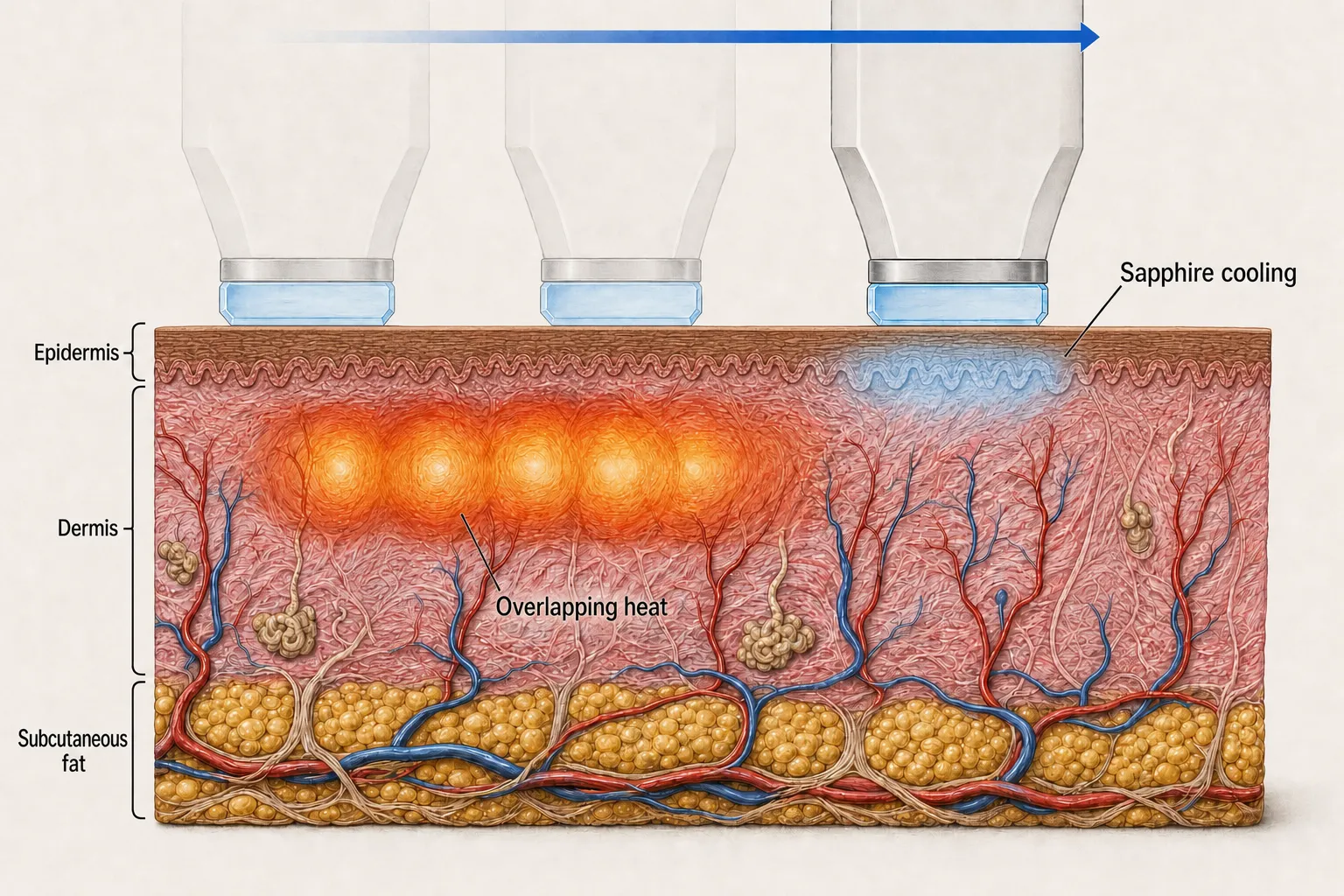
▲ The tip keeps moving, layering the heat — contact cooling guards the surface
5. Soothing care The session ends with soothing care.
Results and Recovery
| Item | Details |
|---|---|
| Wavelengths | 755 · 808 · 940 · 1064 nm fired together (manufacturer's official specification) |
| Working range | Pigment beneath the outer skin (epidermis) → the collagen and vessels of the dermis → the fibrous walls above the subcutaneous fat (the SMAS that supports the face is not heated) |
| Total energy | 20–40 kJ for tone and texture · 60–80 kJ for contour lifting — kJ is the unit for the amount of energy delivered (matched to your skin) |
| When results show | Firmness and glow visible right after treatment → builds further over 1–3 months (individual results vary) |
| How long it lasts | 1–2 months from a single session |
| Repeat cycle | 3–5 sessions at 3–4 week intervals is the standard — built up, the result holds close to a year |
| Pain | Mostly a warm heat · brief stinging moments on the cheekbones and jawline |
| Pain control | Numbing cream (15–20 minutes) is usually enough · sapphire contact cooling damps the surface heat |
| Downtime | Almost none · little to no redness right afterward — many patients book it 1–3 days before an event |
The change you see right away is a brighter complexion together with a tightened feeling along the face line. Part of it eases slightly within a few days, while the collagen-rebuilding change continues over 1–3 months.
That's why many patients have it done 1–3 days before an event. If your skin flushes easily, allow a little more margin.
It is not a treatment that lasts a year from one session. A single session holds for 1–2 months, so results are built up over 3–5 sessions at 3–4 week intervals.
Expected Reactions and Possible Side Effects
Common, temporary reactions — part of the normal response:
- Warm heat with a brief sting during treatment, most noticeable on the cheekbones and jawline
- Part of the immediate glow and tightening eases slightly within a few days — the longer-term change builds over 1–3 months
Little to no redness remains right after treatment. On thin, sensitive skin, trapped heat can raise the risk of blisters or burns — the energy is adjusted for this.
Anything beyond this is uncommon. If a reaction lasts longer than expected or worsens, contact us and we'll check it with you.
When Treatment Is Postponed
If any of these apply to you, let us know during your consultation. We postpone or adjust the timing.
- Pregnancy or breastfeeding
- Inflammation or wounds in the treatment area (we proceed once they've healed)
- Filler or skin boosters within the past 1–2 weeks (we proceed once the injected material has settled)
- Areas with heavy beard or fine hair — treated after hair removal 1–2 weeks beforehand, or a light shave on the day
How PECHE Clinic Does It
We treat by standards built on 90,000+ documented treatments. With Fortra, results come down to where the total energy goes and how much. Area-by-area standards built from over 90,000 treatments are what we follow.
We set the energy from measurements. Whether your goal is tone or contour changes the total energy and how it's distributed. The 3D scan shows your sagging and your tone; we look at the screen together and decide.
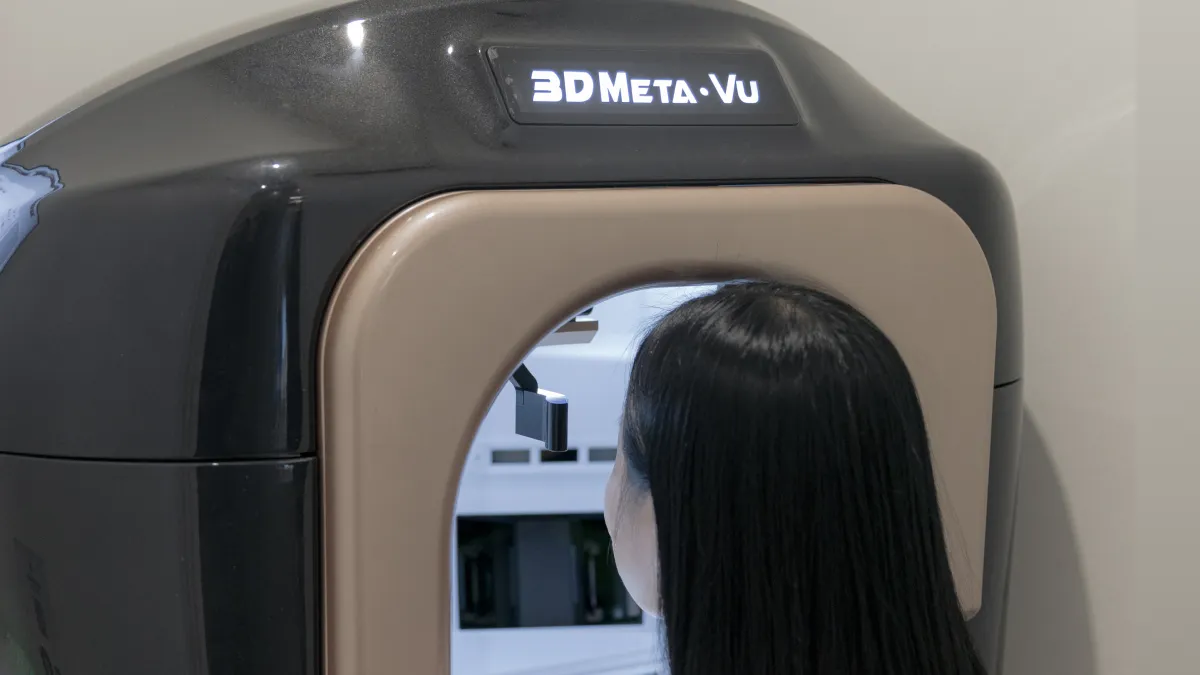
▲ We look at the measurements together
We don't push the energy. On thin, sensitive skin, trapped heat raises the risk of blisters and burns. In that case we lower the total energy to 40–60 kJ, move the tip faster, and set the contact cooling colder to protect the epidermis. We work at the level your skin accepts — not the most you can endure.
Our prep room is behind glass. You can watch treatment preparation and hygiene management through the glass wall from the waiting area.
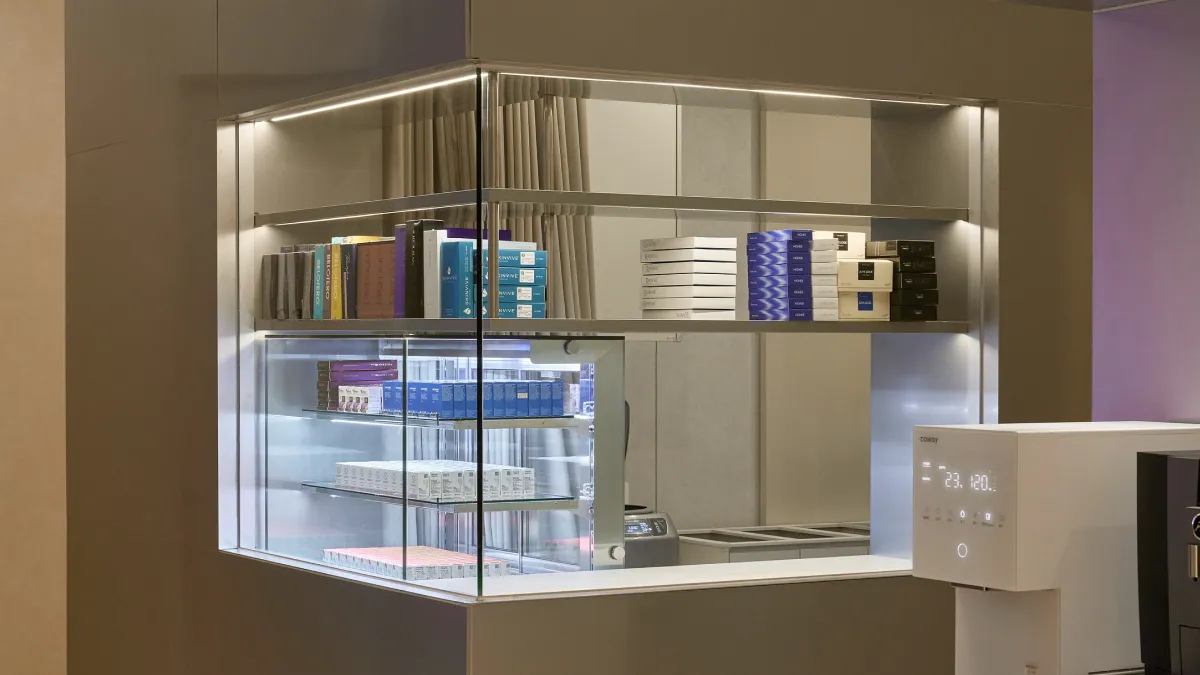
▲ The prep room, seen through the glass from the waiting area
We only recommend what you need. We tell you first what this treatment does (firmness, tone, texture) and what it doesn't (clearly visible capillaries, deep sagging). No same-day payment pressure, no package push.
Pricing
The cost of Fortra Laser Lifting depends on the total energy (kJ) and the treatment coverage. We set the coverage and energy for your goal after your assessment and quote from there.
Location
PECHE Clinic 3F, 364 Gangnam-daero, Gangnam-gu, Seoul Right in front of Gangnam Station, Exit 4
With sessions 3–4 weeks apart, a convenient location makes it easier to complete the course.
FAQ
Q1. Who performs the treatment? A: PECHE physicians who all work to the same energy-distribution standards, built from over 90,000 documented treatments. The total energy, its distribution, and the speed of the tip are set by your assessment results and these standards — not by feel — so the same standards apply across physicians and sessions.
Q2. Should I get 40 kJ or 80 kJ? A: It's a difference of goal. 20–40 kJ for complexion, texture, and light firmness; 60–80 kJ as the standard when tightening a double chin or a loose jawline. We confirm the degree of sagging during your assessment and decide together.
Q3. Is one session enough to see results? A: The immediate glow and firmness do show after a single session — many patients have a single session ahead of an event. But a single session holds for 1–2 months, so for a lasting result the standard is 3–5 sessions at 3–4 week intervals.
Q4. I have a beard or fine facial hair — can I still have this? A: Yes. But the laser reacts to the pigment in hair first, which can scatter the heat and cause stinging. Areas with heavy beard or fine hair are treated after hair removal 1–2 weeks beforehand, or a light shave just before the session.
Q5. Can I just come in for a consultation first? A: Yes. You're welcome to come in just for the assessment and consultation, then leave. Decide after you've heard your measurements, the changes to expect, and what this treatment won't solve. We won't ask for same-day payment.