Reepot Pigmented Lesion Removal Laser — PECHE Clinic, Gangnam Station
A 532nm laser that removes only sharply bordered sun spots and age spots · Sapphire contact cooling keeps the surface below freezing · Right by Gangnam Station Exit 4
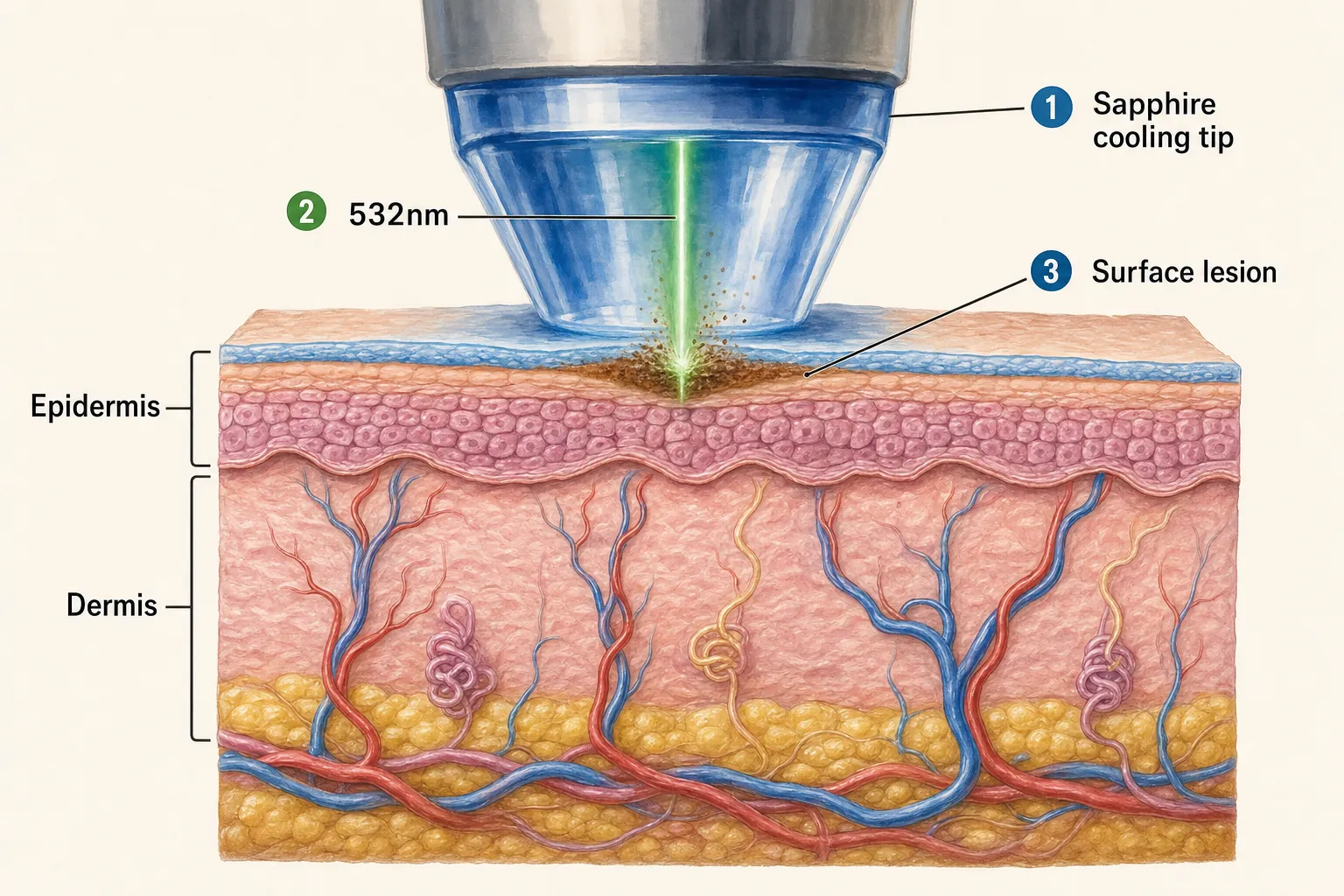
Reepot Pigmented Lesion Removal Laser
Reepot is a pigment laser that vaporizes sharply bordered sun spots and age spots with a 532nm beam, lifting away only that spot. Unlike toning-type lasers, which shatter pigment finely so the body carries it out, Reepot directly removes the surface tissue where the pigment is concentrated. That's why it's used on spots with clear borders — and not on melasma that spreads with blurred edges.
Cooling that protects the surface — the energy is strong enough to vaporize tissue, so a protective device works alongside it. A chilled sapphire tip keeps the skin's surface below freezing throughout the treatment, so the light enters while the capillaries in the dermis are constricted — the aim is to keep the energy on the pigment, not the blood vessels.
▲ While the chilled sapphire tip cools the surface, the 532nm light lifts away only the surface spot
When to Consider It
Other pigment has faded with past treatments, but the sharply bordered spots stayed A spot with a clear border is often a sun spot (lentigo), not melasma. Sun spots don't respond well to approaches that lighten pigment — so the scan comes first, to tell which one yours is.
Dark marks on your face are starting to stand out, one by one Age spots fall here too. The fewer the spots and the clearer their borders, the better suited they are to spot-by-spot removal.
You want that spot gone, and you can accept a recovery period with scabbing Because this method removes tissue, a thin scab forms at each treated spot. Knowing this before you start matters.
If your concern is blurred, spreading melasma or overall tone instead, a gentler pigment approach is the right fit. We decide together, from your assessment results.
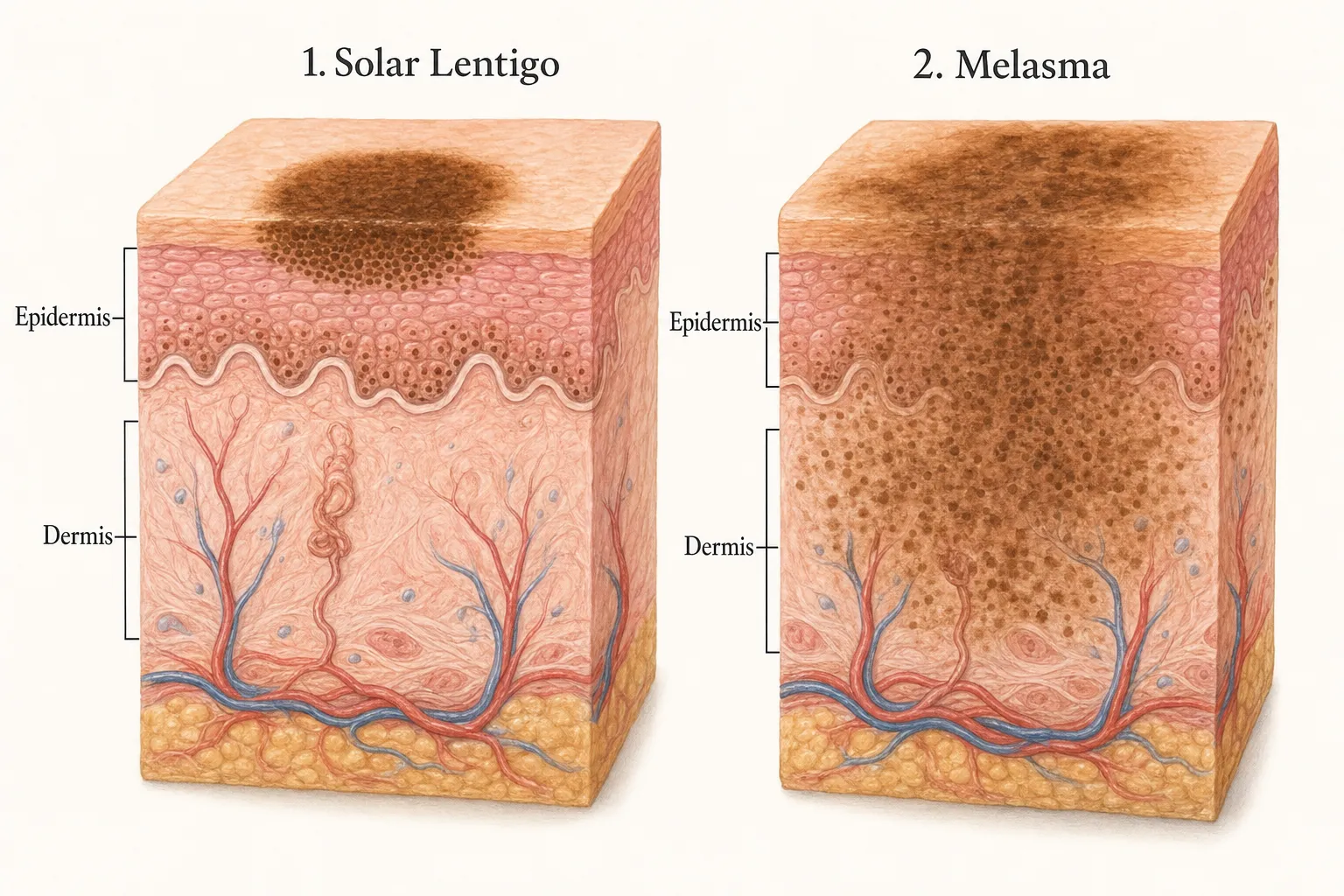
▲ Left, a sun spot — sharply bordered, seated in the epidermis / Right, melasma — blurred, spreading, mixed in deeper
How It's Done
1. Precision pigment analysis A 3D MetaVu scan under different light sources separates surface pigment from deep pigment. To the naked eye, sun spots and melasma look mixed together — so this screen is where we decide, with you, which spots to treat.
2. Treatment plan We go over which spots will be treated, how many, the expected scab period, and the limits — before starting.
3. Numbing cream After it's applied, we wait 20–30 minutes.
4. Per-spot settings Settings are chosen for each spot's size and character. This isn't a treatment that sweeps across the whole face at once — the settings change spot by spot, which is where the preparation time goes.
5. Treatment The sapphire tip's temperature is chosen from −2, −4, or −6 ℃ based on the area (for example, thinner, more sensitive skin) and the spot's character, and then each spot is treated in turn.
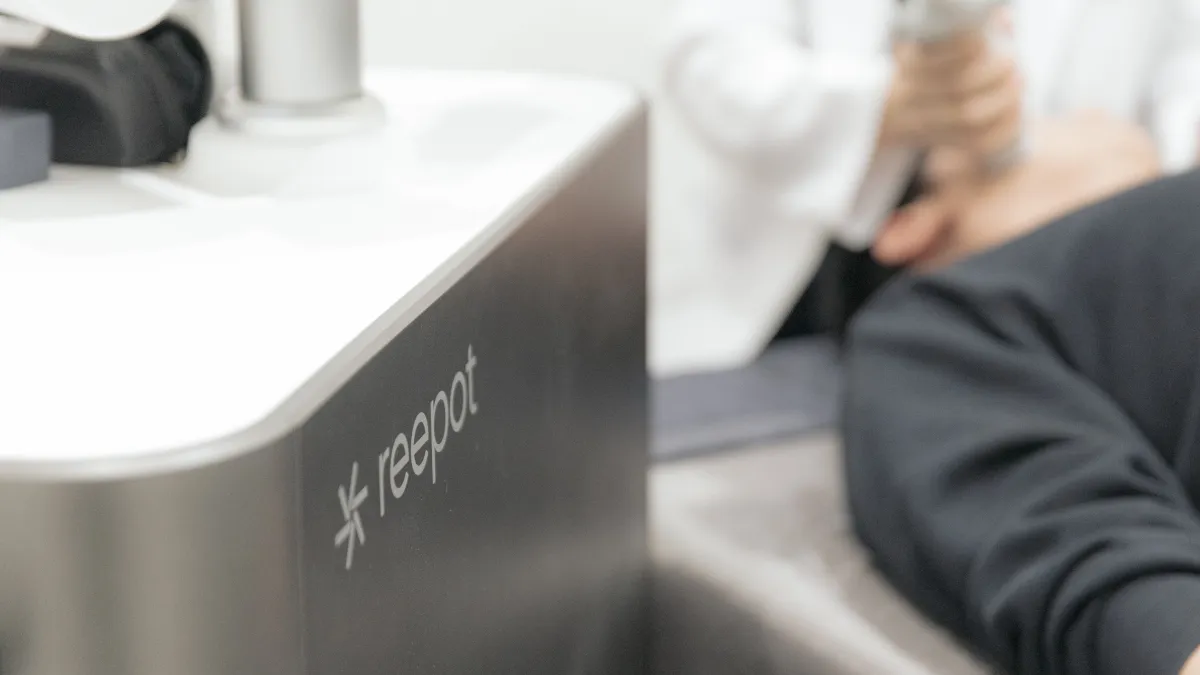
▲ Settings are adjusted spot by spot as the treatment proceeds
6. Finish and aftercare guidance The treated spots are soothed, and we go over scab care and sun protection.
Results and Recovery
| Item | Details |
|---|---|
| Method | A 532nm laser vaporizes the surface tissue where pigment is concentrated — removal, not shattering |
| What it treats | Sharply bordered sun spots and age spots (not blurred, spreading melasma) |
| Where it acts | Pigmented lesions seated in the epidermis |
| Surface protection | Sapphire contact cooling — the surface stays below freezing throughout (−2, −4, or −6 ℃) |
| When results show | A scab forms where the spot was removed; once it falls off, at 5–7 days, you can see the spot has cleared |
| Pain | A sting like the snap of a rubber band |
| Pain control | Numbing cream, plus contact cooling that continues throughout the treatment |
| Downtime | A scab for 5–7 days — left alone until it falls off on its own |
| Retreatment | Any remaining pigment is assessed 4–8 weeks later, once the scab is off and the skin has healed |
| Lasting results and recurrence | A removed spot is cleared at that site, but new pigment can rise in the same place as UV exposure accumulates again — so sun protection continues |
| Aftercare | Water-only cleansing on the day · makeup from 3–5 days later, once the scab has stabilized · don't pick the scab · gentle cleansing and moisturizer · sunscreen |
Depending on a spot's depth and number, one session may clear it, or what remains may be treated again. Picking a scab off early can leave darker pigment in its place — recovery care is part of the result.
Expected Reactions and Possible Side Effects
Common, temporary reactions — part of the normal healing course:
- A thin scab at each treated spot, usually falling off on its own in 5–7 days
Anything beyond this is uncommon. If a reaction lasts longer than expected or worsens, contact us and we'll check it with you.
What We Check Beforehand
If any of these apply to you, let us know during your consultation. We postpone or adjust the timing.
- Recent strong sun exposure or tanning — we wait until the pigment has settled
- Medications that increase light sensitivity
- Another pigment treatment received recently
- A keloid tendency (scars that heal raised), or pigment that tends to linger after wounds
- Inflammation or a wound at the treatment site — we proceed after it heals
- An important event coming up during the scab period — we time the treatment around it
How PECHE Clinic Does It
We start from measurement, not the name of a treatment. The same brown spot calls for opposite approaches depending on whether it's a sun spot or melasma. A pigment scan under changing light sources separates surface pigment from deep pigment — and we recommend Reepot only when your spots are the kind it fits.
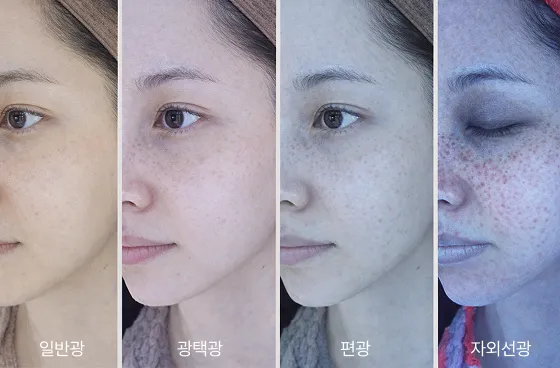
▲ We look at the measured screen together and decide which spots to treat
We keep both approaches on hand — removal and gentle lightening — and choose. We run both a laser that lifts surface lesions away and lasers that lighten pigment gradually. Your assessment tells us a spot's character; then we recommend the approach that fits it.
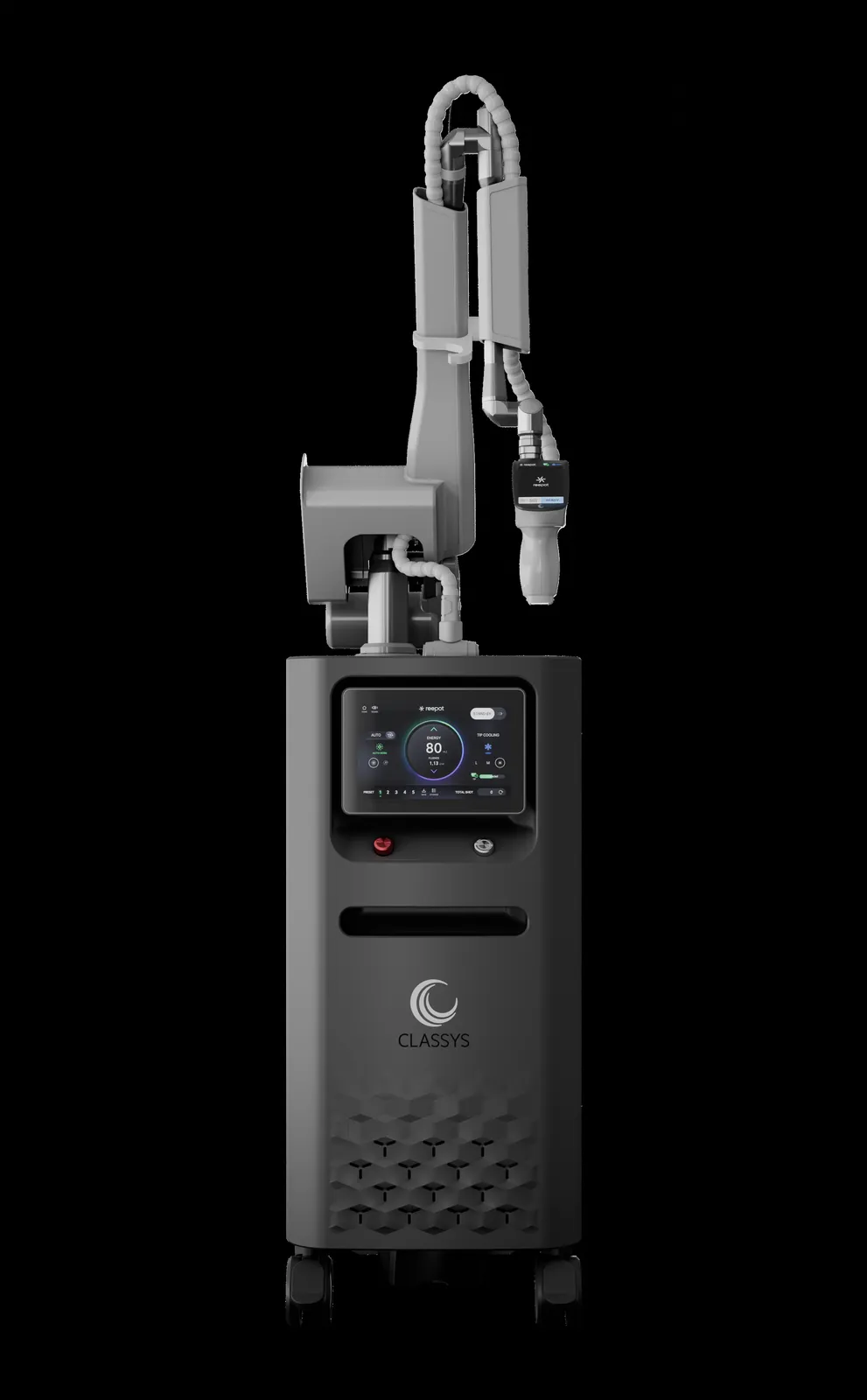
▲ Reepot — a 532nm pigment laser
We treat by standards built from over 90,000 treatments. How much energy and which cooling temperature each spot gets is set by per-area standards, not by feel. Whichever physician treats you, the same standards apply.
The prep room is behind a glass wall, in full view. You can see the preparation and hygiene routine through the glass wall from the waiting area.

▲ The prep room, seen through the glass from the waiting area
We recommend only what's needed. We tell you first what this treatment can and can't do. We don't push same-day payment or packages.
Pricing
The cost of Reepot depends on the number, size, and location of the spots. We quote after your assessment.
Location
PECHE Clinic 3F, 364 Gangnam-daero, Gangnam-gu, Seoul Right in front of Gangnam Station, Exit 4
FAQ
Q1. Who performs the treatment? A: PECHE physicians who all work to the same per-area standards, built from over 90,000 documented treatments. This is a treatment where energy and cooling temperature are set for each individual spot, so consistency of standards decides the result — and the standards stay the same even if your physician changes.
Q2. What happens if my assessment shows my spots aren't a fit for Reepot? A: If they turn out to be blurred, spreading melasma, we don't recommend Reepot — we point you to a different approach. Because the decision is made looking at the measurement screen together, you can see right there why it isn't the fit. We don't recommend treatments that don't fit.
Q3. Can I go to work or wear makeup while the scabs are on? A: On the day of treatment, water-only cleansing; makeup can resume gently from 3–5 days later, once the scabs have stabilized. Scabs usually fall off in 5–7 days, and until then the key is avoiding rubbing or picking. If you have an important event coming up, we plan the timing around it.
Q4. How is this different from the laser that shaves off moles? A: They treat different things. Raised bumps you can feel with a fingertip (moles, skin tags, and similar) suit erbium lasers, which lift away raised tissue — flat sun spots and age spots that don't catch your fingertip are Reepot's territory. Some lesions sit on the border, like age spots that have thickened and risen over time, so we confirm at your assessment which side yours falls on and guide you to the right one.
Q5. Can I just have a consultation and decide later? A: Yes. Find out whether your spots are sun spots or melasma, whether Reepot fits, and how long the scab period runs — then decide. We don't ask for same-day payment.