Lotus Erbium Laser — PECHE Clinic, Gangnam Station
Moles, skin tags, milia, flat warts, sebaceous hyperplasia — raised lesions lifted away in thin layers by a 2940nm Er:YAG laser whose light is absorbed by water · Right by Gangnam Station Exit 4
Lotus Erbium Laser
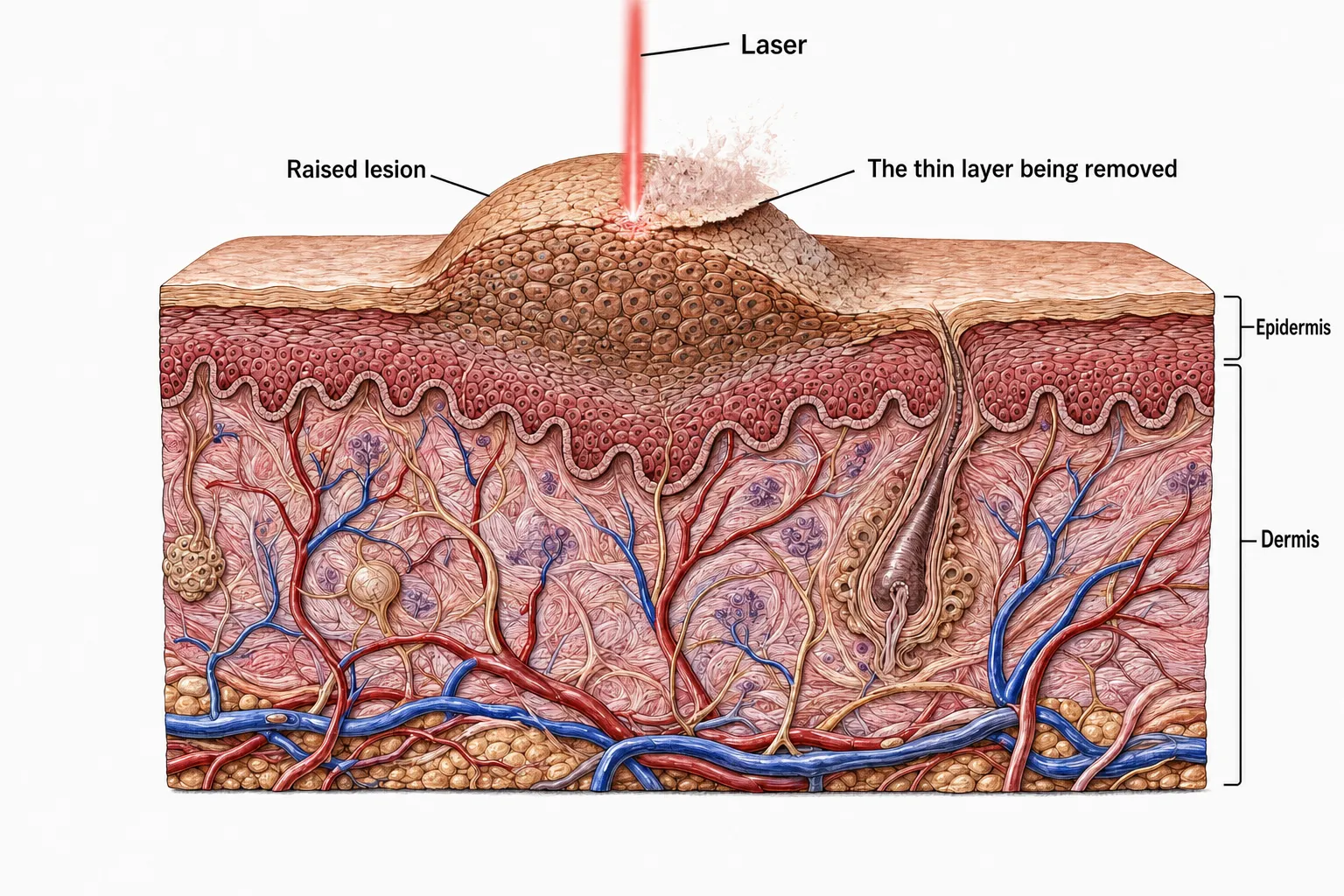
Lotus Erbium is a removal laser for lesions that rise above the skin — moles, skin tags, milia, flat warts, and sebaceous hyperplasia. Its 2940nm erbium-YAG (Er:YAG) light is the wavelength most readily absorbed by the body's water, so when it strikes a lesion, the water in the tissue vaporizes in an instant and a very thin top layer is removed. Repeating this layer by layer trims away only the raised tissue — and because the heat is mostly spent in the thin layer the light touches, the tissue just beneath is largely undisturbed.
The starting point is this: it is not a pigment-lightening treatment. The target is raised tissue, not color — lesions you can feel with a fingertip are this treatment's territory.
▲ The raised tissue is lifted away in thin layers — the heat is spent in the thin layer the light touches, and the tissue below is preserved
When to Consider It
- A mole or bump catches your fingertips when you wash your face
- White, seed-like grains (milia) sit lodged around your eyes
- Flesh-colored tags (skin tags) around the eyes or face keep multiplying
- Flat, faintly rough bumps (flat warts) are spreading across the forehead or cheeks
- Yellowish bumps with a dimpled center (sebaceous hyperplasia) stand out around the nose
Flat brown spots — sun spots, age spots — are pigment, not raised tissue, so a pigment-targeting approach is the right fit for those. Whether it catches your fingertip or lies flat is what decides it, and when it's ambiguous, the examination settles it.
Sessions and Healing, Lesion by Lesion
| Lesion | What it is | Sessions and healing |
|---|---|---|
| Milia, skin tags, small shallow moles | Bumps whose cause is confined to that spot | Often cleared in one session; shallow sites heal in 3–5 days |
| Flat warts | Caused by a virus (HPV) — new ones can rise nearby | Removed shallowly, healing in around 3–5 days; we review in about a month and trim what remains |
| Deep-rooted moles, sebaceous hyperplasia | Lesions reaching deeper — digging deep in one pass risks a sunken mark | Divided across 2–3 sessions, thinly each time; retreatment follows a check 4–6 weeks later |
The reason deep lesions are removed in stages is marks. Forcing a deep lesion out in one pass can leave a sunken scar — thin and repeated is the safer road.
How It's Done
1. Lesion check Whether it's a skin tag, a wart, or a pigmented mole changes the removal depth and the care after — so the examination comes first.
2. Numbing Numbing cream, then 30–40 minutes of waiting. For deep-rooted moles, lesions over 3mm, or deep sebaceous hyperplasia, a small amount of local anesthetic (lidocaine) is added beneath the lesion to ease discomfort.
3. Removal The lesion is lifted away in thin layers. Cooling chills the surface during treatment to ease the heat.
4. Ointment and care guidance A recovery ointment goes on, and we go over scab care, cleansing, and sun protection.
Results and Recovery
| Item | Details |
|---|---|
| Target | Lesion tissue risen above the skin — not pigment |
| Pain | Usually a stinging sensation |
| Pain control | Numbing cream for 30–40 minutes, plus a small amount of local anesthetic for deep lesions · cooling during treatment |
| Downtime | A thin scab forms over the treated spot around days 2–3 — a protective cover for the new skin, falling off on its own within 7–10 days |
| Healing period | Shallow lesions, 3–5 days · on deep lesions, pink new skin can remain for 2–4 weeks or more after the scab is off |
| Aftercare | Don't force the scab off — removed before new skin has filled in, it can leave a mark or pigmentation · recovery ointment · sunscreen |
| Retreatment | If the same spot needs another pass, it's done after a check 4–6 weeks later |
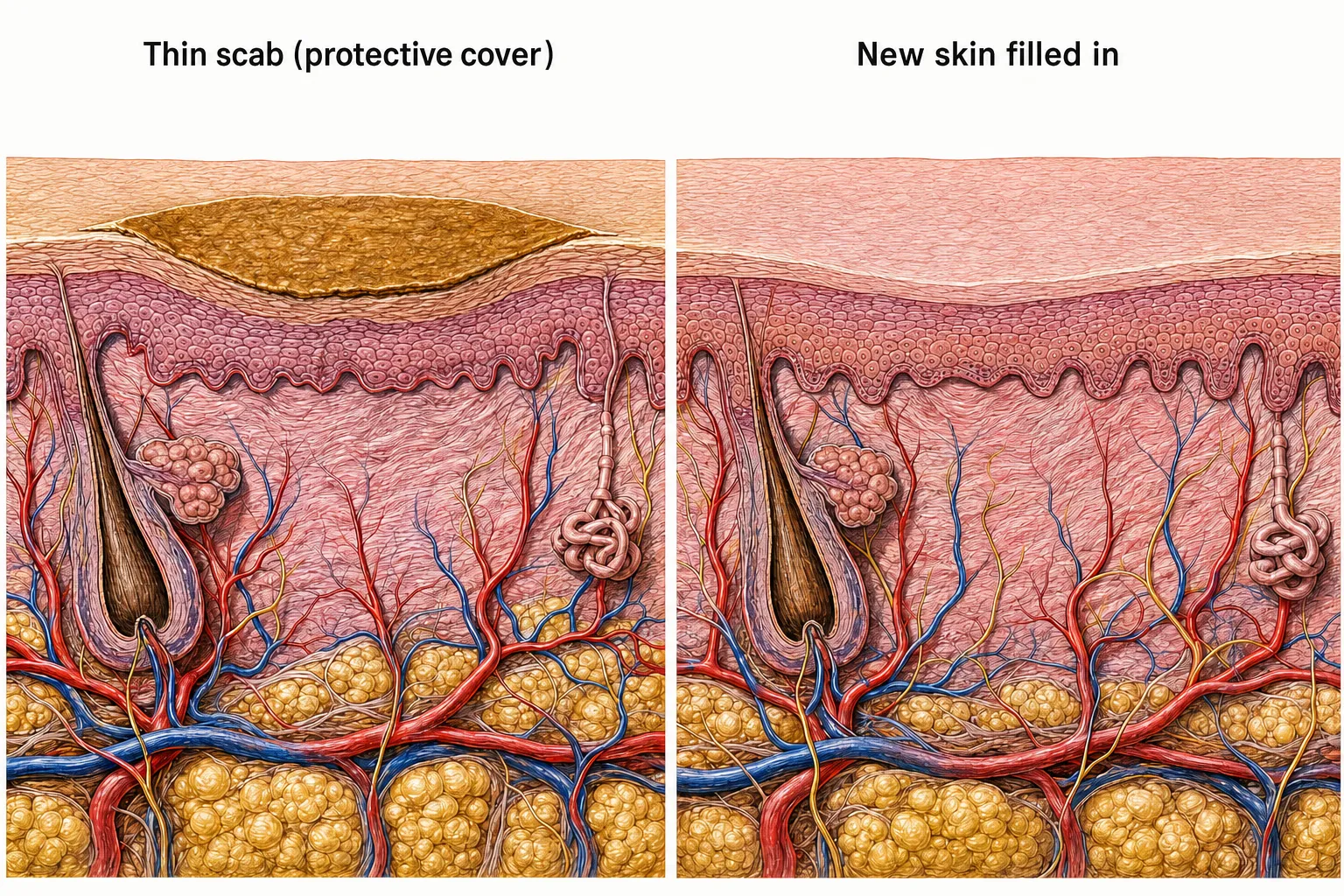
▲ The scab is a protective cover while new skin fills in — leaving it to fall on its own is what keeps marks down (individual results vary)
Expected Reactions and Possible Side Effects
Common, temporary reactions — part of the normal healing course:
- A thin scab from days 2–3, falling off on its own within 7–10 days
- On deep lesions, pink new skin that can stay visible for 2–4 weeks or more after the scab is off
A mark or a dent isn't impossible — it turns on the lesion's depth and location, your skin type, and scab care, which is why deep lesions are divided and scabs are left alone. If a reaction lasts longer than expected or worsens, contact us and we'll check it with you.
What We Check Beforehand
If any of these apply to you, let us know during your consultation. We'll review it with you or adjust the timing.
- A mole that's asymmetric, unevenly colored, or recently grown fast, oozed, or bled — it may need to be evaluated before removal
- A keloid tendency (scars that heal raised)
- Pregnancy or breastfeeding
- Aspirin or blood thinners (anticoagulants), or a condition where bleeding is slow to stop — deep lesions can bleed a little, so telling us in advance lets us prepare
How PECHE Clinic Does It
We identify the lesion first, then remove it. The same-looking bump — a skin tag, a wart, a pigmented mole — differs in removal depth and in the care that follows. Whether it's a benign lesion or a mole that needs further evaluation is checked at this same step — so that a lesion needing evaluation isn't removed before it's checked.
We don't dig deeper than needed. Rather than finishing a deep lesion in one pass, we remove only to the depth that won't leave a sunken mark, and divide the rest. Even if it takes more sessions, healing without a mark is the standard we work to.
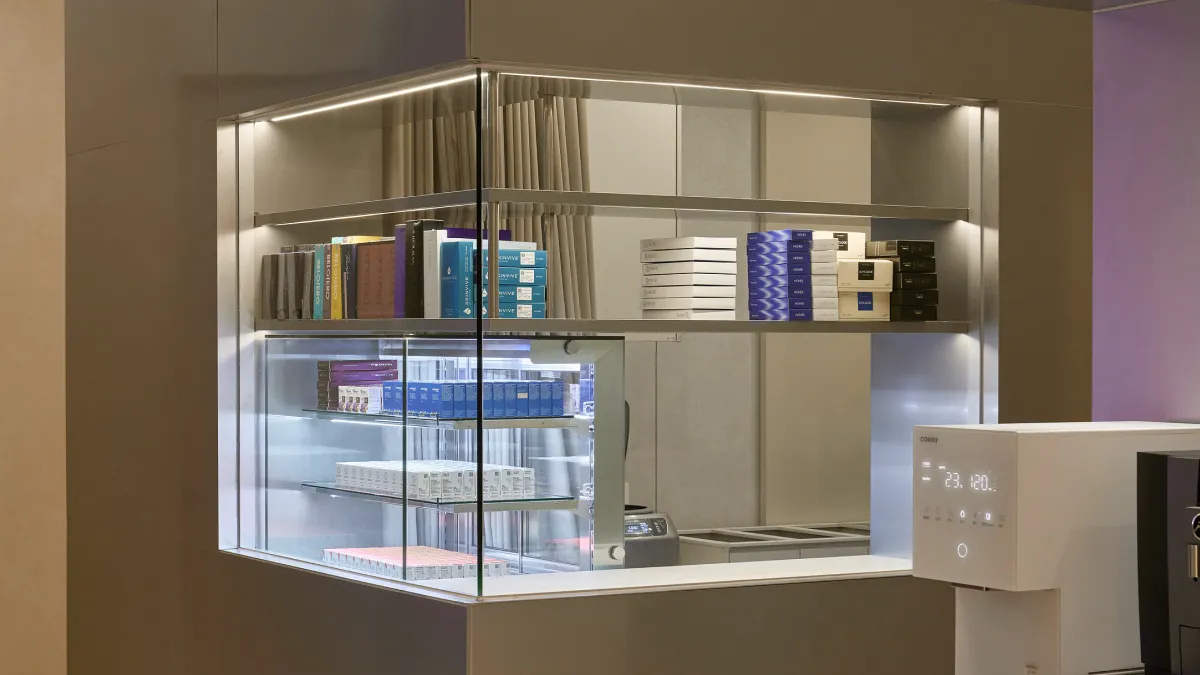
▲ The preparation and hygiene routine is visible through the glass wall from the waiting area
We tell you first what it can do — and what it can't. This treatment removes raised lesions; flat pigment and widespread melasma are not its targets. For lesions like flat warts that can rise anew nearby, we explain that tendency upfront too. We don't push same-day payment or packages — you're welcome to come in just for a consultation.
Pricing
The cost of Lotus Erbium depends on the number, size, and depth of the lesions. We examine the lesions first, then give you a quote.
Location
PECHE Clinic 3F, 364 Gangnam-daero, Gangnam-gu, Seoul Right in front of Gangnam Station, Exit 4
You may come back to check how a spot healed or to trim what remains — an easy location makes that follow-through simpler.
FAQ
Q1. Does it all come off in one session? A: It depends on the lesion. Milia, skin tags, and shallow moles are often cleared in one session; deep-rooted moles and sebaceous hyperplasia are divided across 2–3 sessions to avoid marks. Flat warts can rise anew nearby even after removal, so we review about a month later.
Q2. Will it leave a mark? A: We can't say the chance of a mark or dent is zero — depending on the lesion's depth and location, your skin type, and scab care, a pinkish mark or pigmentation can remain. Two things do the most to lower that chance: dividing deep lesions across sessions instead of digging them out at once, and leaving the scab until it falls on its own.
Q3. Does it work on melasma or flat brown spots? A: Those aren't this treatment's targets. Lotus Erbium removes raised tissue, so flat pigment belongs to a different, pigment-targeting approach. When it's ambiguous which side yours falls on, the examination settles it and we point you to the right one.
Q4. How many can be treated at once? A: It varies with the lesions' size, depth, and location — so rather than a set number, we look at their state at the examination and decide together. Splitting many lesions across visits is about reducing the healing burden: fewer spots need to heal at the same time.
Q5. How should I choose a clinic? A: Three things. First, whether they identify what the lesion is — including whether it needs further evaluation — before removing. Second, whether they divide deep lesions with avoiding marks as the guide instead of digging them out in one pass. Third, whether the location makes it easy to return for healing checks or touch-ups.