Klardie — PECHE Clinic, Gangnam Station
A repair and tone-up skin booster of low-molecular-weight hyaluronic acid plus a complex that wakes the skin's own resilience, delivered through channels made by a radiofrequency microneedling pore tip · Face · Right by Gangnam Station Exit 4
Klardie
Klardie is a skin booster that pairs low-molecular-weight hyaluronic acid with a complex of ingredients that wakes the skin's own resilience — sending repair and tone-up signals together. Hyaluronic acid is the substance that holds water in your skin, and "low-molecular-weight" means it has been broken into very small pieces. Small pieces spread wide and soak in fast, filling moisture evenly across the whole face.
The brighter tone starts at the surface. Dry skin with rough flakes can't reflect light evenly, which reads as dullness; once moisture fills in and the surface smooths out, light reflects evenly and the face looks brighter. The added complex wakes the skin's own capacity to recover, carrying that change forward. The detailed composition is explained in your consultation.
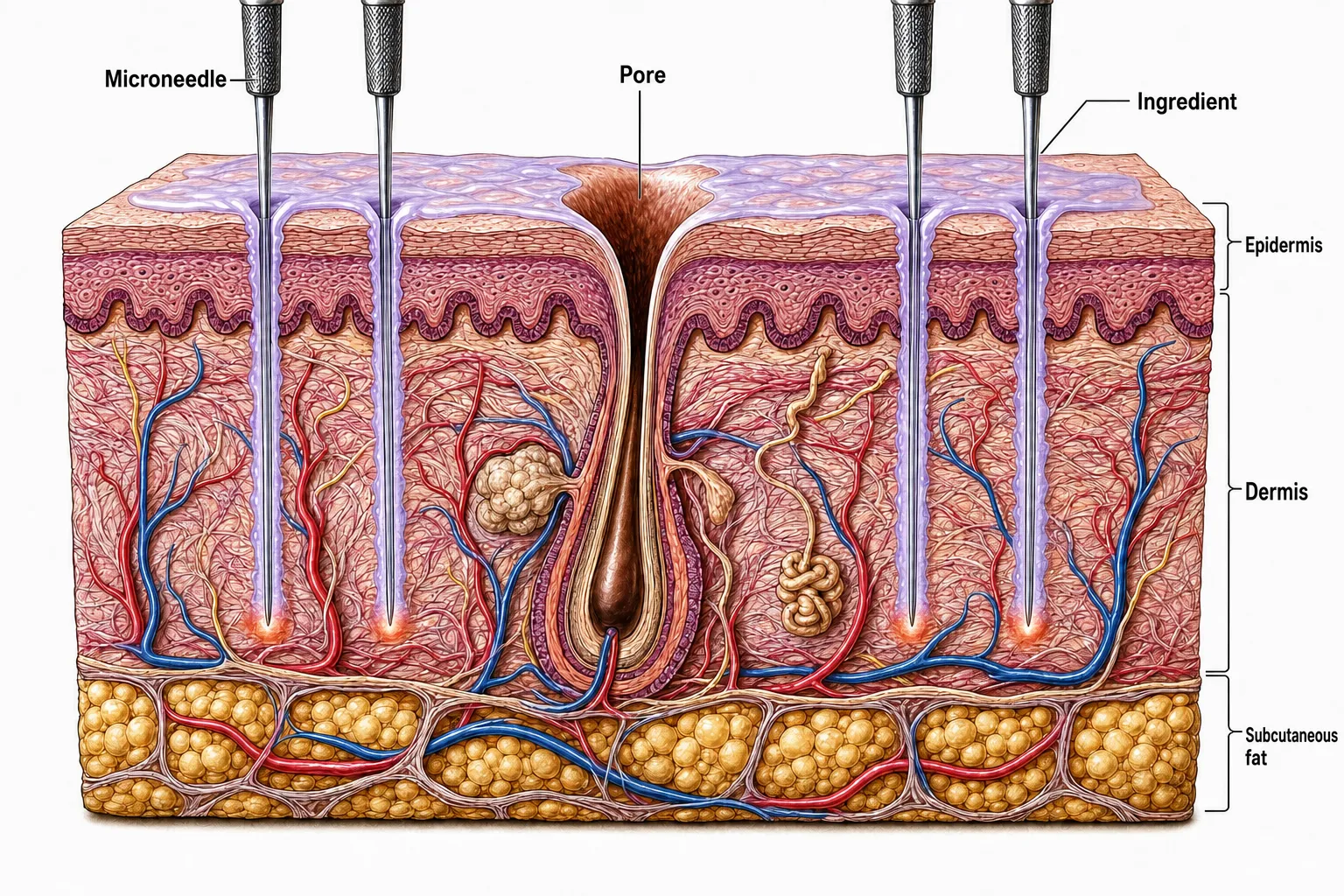
It is not injected. It's delivered together with the pore-treatment tip of a radiofrequency microneedling device (Potenza). The ingredient is applied generously to the skin, then soaks in through the channels made by the microneedles. Pore treatment and the repair and tone-up ingredients go in as one session.
▲ The ingredient enters the dermis through the channels the microneedles make, while radiofrequency heat works from the needle tips — pore treatment and delivery in a single session
When to Consider It
- Your skin looks dull and lifeless, and you want tone and glow lifted together
- You want enlarged pores and repair and tone-up delivery handled in one treatment
- You want moisture filled while also waking the skin's own capacity to recover
What Goes In with the Low-Molecular-Weight Hyaluronic Acid
| Item | Details |
|---|---|
| Ingredients | Low-molecular-weight hyaluronic acid + a complex that wakes the skin's own resilience |
| What "low-molecular-weight" means | The hyaluronic acid is broken into very small pieces — they spread wide and soak in fast, filling moisture evenly across the skin |
| Delivery | Applied to the skin, then a radiofrequency microneedling pore-tip session — it soaks in through the needle channels |
| What it targets | Moisture, glow, tone · repair signals |
| What it doesn't create | Volume · stimulation that builds large amounts of new collagen — pore and texture changes belong to the pore-tip treatment it runs with |
Klardie belongs to the family that sends repair signals to cells. Instead of a repair ingredient like salmon DNA, it pairs low-molecular-weight hyaluronic acid with a complex, sending repair and tone-up signals together. If a collagen-building family, or longer-term structural change, is your goal, a different family may fit — we decide together from your assessment results.
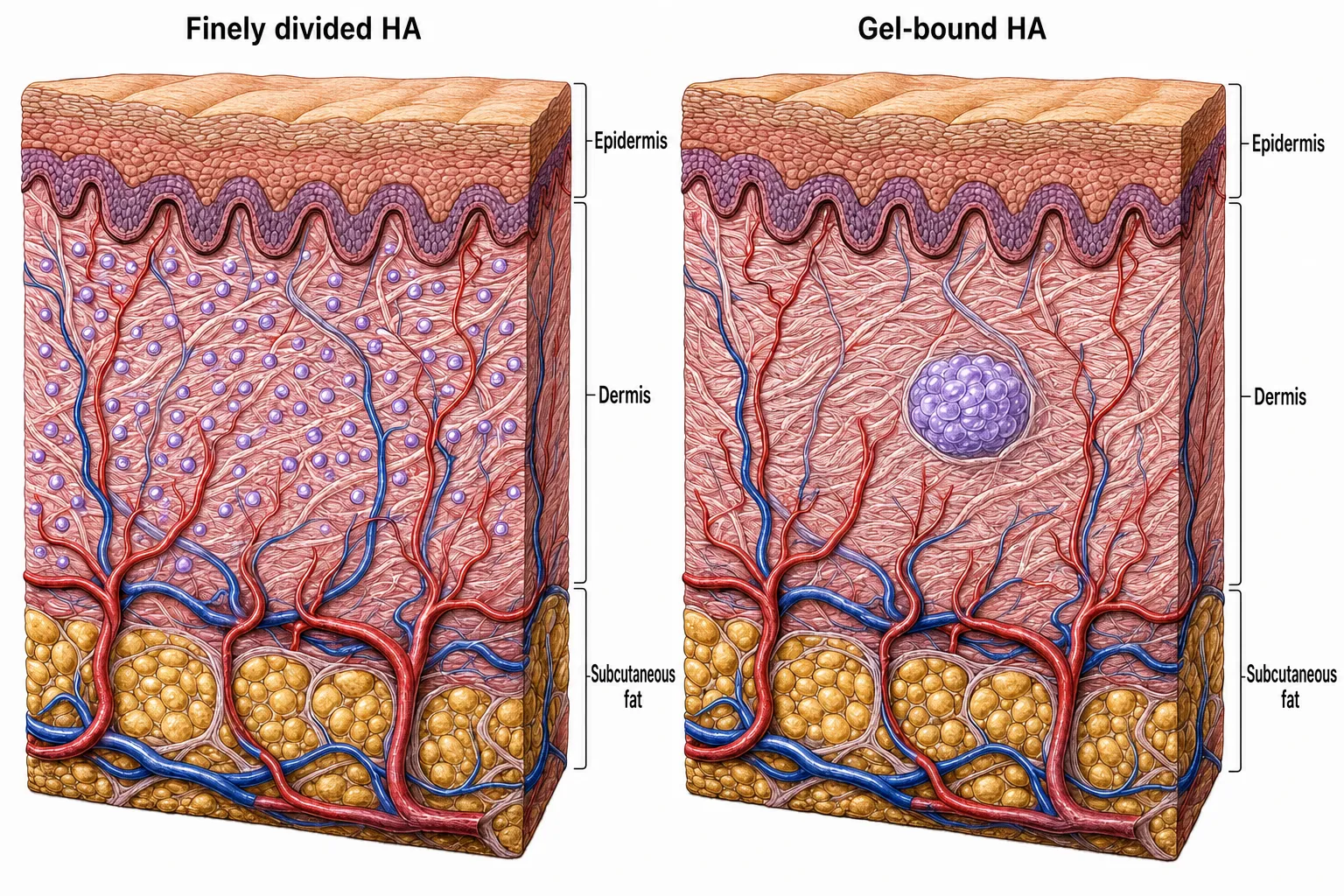
▲ The finely divided kind (left) spreads wide; the gel-bound kind (right) stays in one place — not a ranking, but different uses
How It's Done
1. Cleansing and assessment Makeup comes off, and a 3D MetaVu scan records your pigment, pores, and texture under changing light (standard, polarized, and UV).
2. Numbing cream Applied and left for about 20 minutes.
3. Microneedling plus delivery The ingredient is applied, then the pore tip moves stamp by stamp at the depth and intensity set for each area — and Klardie soaks in through the channels the needles make.
4. Soothing and aftercare guidance After soothing care, we go over when you can wash your face and wear makeup, and your aftercare steps.
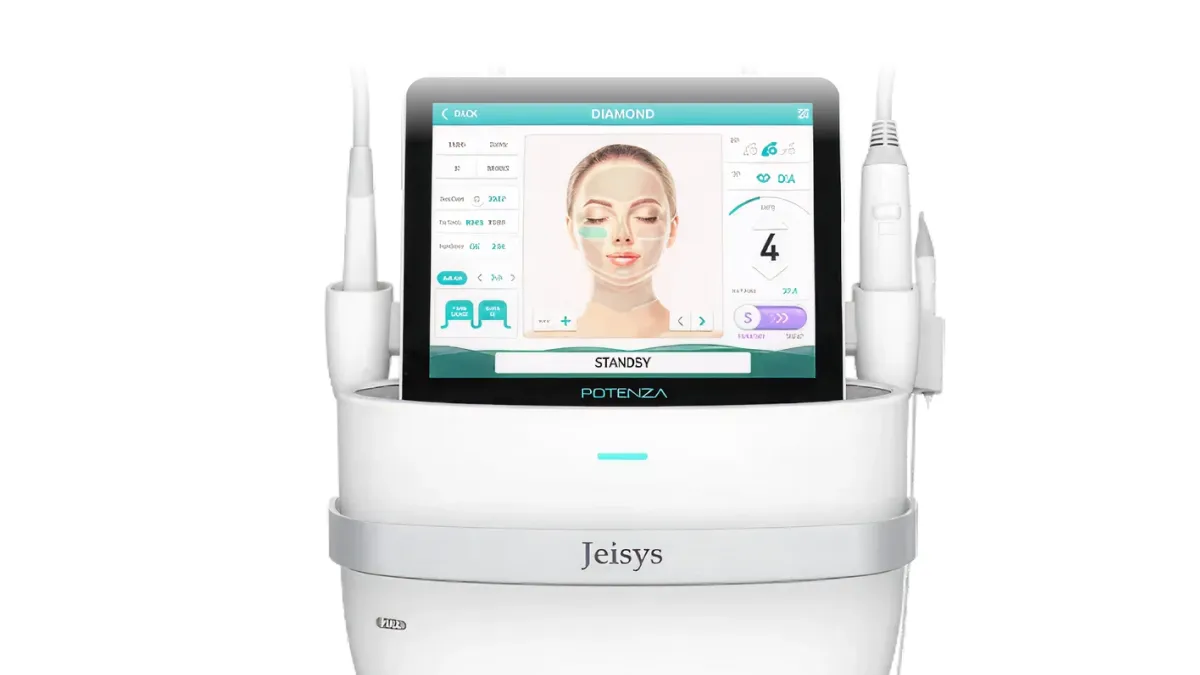
▲ The radiofrequency microneedling device that delivers Klardie
Results and Recovery
| Item | Details |
|---|---|
| Target | The dermis — around the pores and across the face |
| Delivery | Radiofrequency microneedling pore tip + ingredient delivery (not an injection) |
| When results show | Moisture and glow from relatively early on · pore and texture changes belong to the pore-tip treatment it runs with, and follow that treatment's timeline |
| Sessions and spacing | 3–5 sessions at 3–4 week intervals → maintenance once every 6–12 months after — adjusted at your assessment by skin condition |
| Pain | Several fine needles land at once — like a hot stamp pressed firmly down · a brief flash of heat spreads inside the skin just after the needles enter · a slight extra sting is possible as the ingredient soaks in, but the character of the sensation stays the same |
| Pain control | Numbing cream for about 20 minutes · tell us what you feel during the session and we adjust the intensity by area |
| Downtime | Redness while the micro-channels close — usually 1–3 days · visible swelling is rare, and if it occurs it usually settles with the redness within 1–3 days |
| Aftercare | Water-only rinse from 3–4 hours after · cleansing and makeup from the next morning · put off saunas and sweaty exercise for 3 days to a week · moisturizer and sunscreen |
Expected Reactions and Possible Side Effects
Common, temporary reactions:
- Redness, usually for 1–3 days
- Visible swelling is rare — and settles with the redness within 1–3 days if it occurs
Anything beyond this is uncommon. If a reaction lasts longer than expected or worsens, contact us and we'll check it with you.
What We Check Beforehand
If any of these apply to you, let us know during your consultation. We adjust the timing or the intensity.
- Pregnancy or breastfeeding
- Electronic implants such as a pacemaker — radiofrequency can affect how the device runs, so we check
- Inflammation or wounds in the treatment area, or severe active acne — we adjust the timing and intensity by condition
- Keloid-prone skin (scars that heal raised and thickened)
- Aspirin or blood thinners — needle marks can last longer
- Recent filler or skin boosters — the needles reach the dermis and carry heat, so we wait one month after filler, and 2–3 weeks after a skin booster, before this treatment
How PECHE Clinic Does It
Our prep room is behind glass. You can watch preparation and hygiene management from the waiting area.
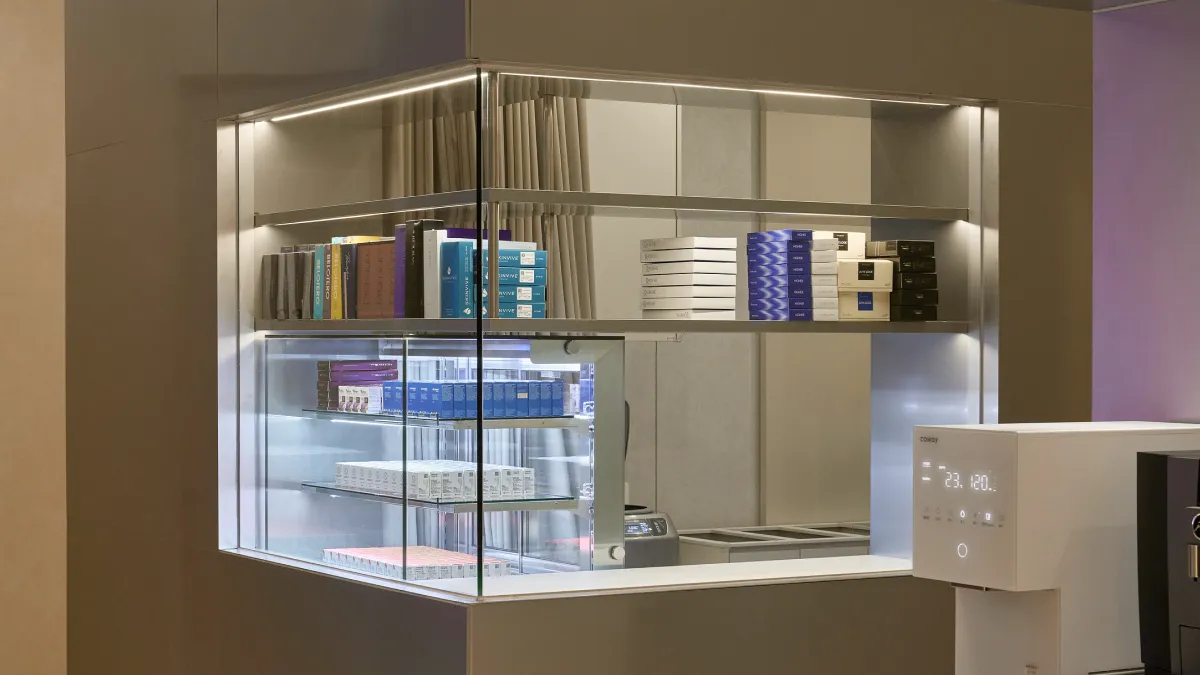
▲ The prep room, seen through the glass from the waiting area
We decide from measurements. Dullness sometimes comes from dryness and rough texture — and sometimes from pigment sitting beneath the epidermis. If pigment is the cause, filling moisture won't change the tone much. The 3D MetaVu records your pigment, pores, and texture under different light sources, and we look at the screen together to decide.
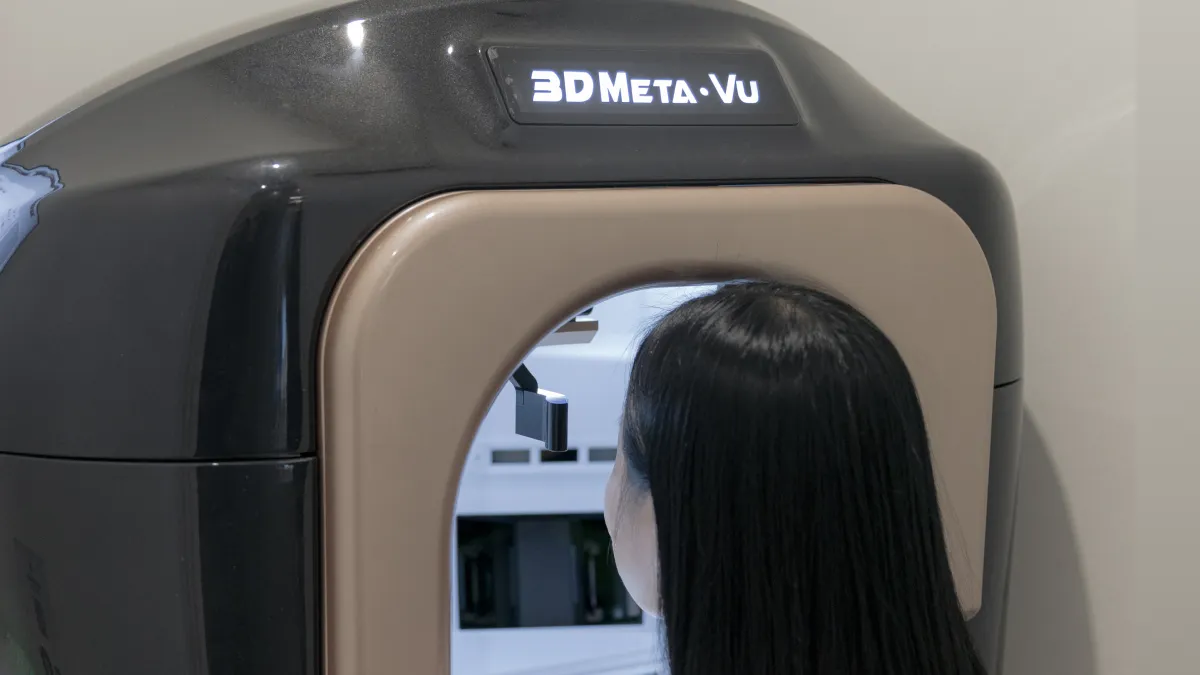
▲ We check on screen together whether pigment sits beneath the epidermis — dryness and rough texture are judged in the examination
We're honest about what to expect. We tell you first what this treatment does (moisture, glow, tone, pores, texture) and what it doesn't (volume, deep pigment, sagging), and we don't push same-day payment or session packages. You're welcome to come in just for a consultation.
Pricing
The cost of Klardie depends on the coverage and sessions of the pore-tip treatment it runs with. We quote after your assessment.
Location
PECHE Clinic 3F, 364 Gangnam-daero, Gangnam-gu, Seoul Right in front of Gangnam Station, Exit 4
A convenient location makes it easier to keep up with your sessions.
FAQ
Q1. Who performs the treatment? A: Treatments are performed by PECHE physicians who all work to the same standards, built from over 90,000 documented treatments. The pore tip's depth and intensity, and the layer the ingredient reaches, are set by your assessment results and these standards — not by feel — and the standards stay the same whoever treats you.
Q2. How is this different from an injected skin booster? A: The difference is how it gets in. Instead of a needle placing it point by point, it enters evenly across the face through the micro-channels — and the same session treats the pores. On the other hand, it isn't the right method for ingredients that must be placed in set amounts at specific spots.
Q3. How long does it last? A: The moisture and glow come up quickly but aren't permanent. Low-molecular-weight hyaluronic acid absorbs over time, so the usual rhythm is 3–5 sessions at 3–4 week intervals, then maintenance once every 6–12 months. The exact plan is decided together from your skin's condition.
Q4. Can I have other lasers around the same time? A: Order and spacing depend on the treatment, so they're set in your consultation. Because the microneedles reach the dermis, allow a 3-week gap before other treatments that follow this one.
Q5. What should I look for when choosing a clinic? A: Three things. First, whether they sort out if your dullness comes from dryness or from pigment. Second, whether they go beyond applying the ingredient — with a method that carries it through micro-channels into the dermis. Third, whether the clinic is an easy distance for your schedule.