GentleMax Pro Plus Men's Hair Removal — PECHE Clinic, Gangnam Station
Laser hair removal built for thick, deep-rooted men's hair like beard growth — up to a 26mm spot with air cooling · Face & neck / body · Right by Gangnam Station Exit 4
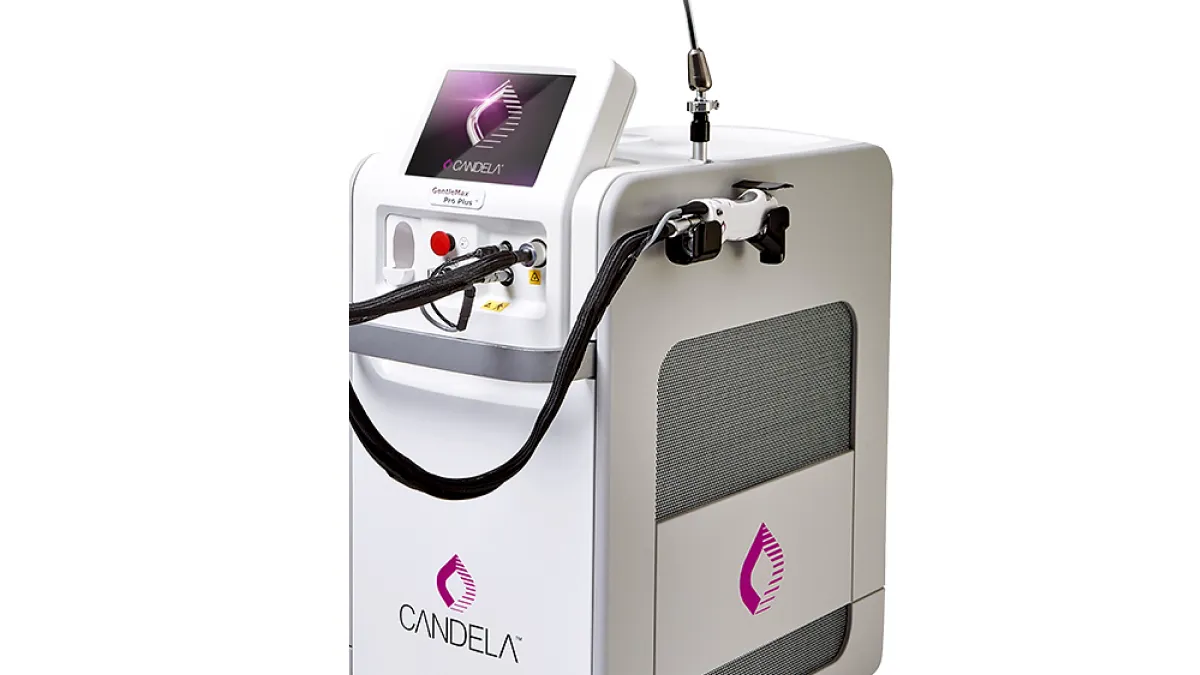
GentleMax Pro Plus Men's Hair Removal
GentleMax Pro Plus is a laser hair removal device that runs two laser wavelengths (755nm and 1064nm) in one platform. The melanin in dark hair absorbs the light, heat gathers at the follicle's root, and a follicle that takes that heat stops its activity.
A man's beard and sideburns grow under hormonal influence — thicker and more deeply rooted than hair elsewhere. The deeper the root, the harder it is for heat to reach it, which calls for a deeper-reaching wavelength and more energy.
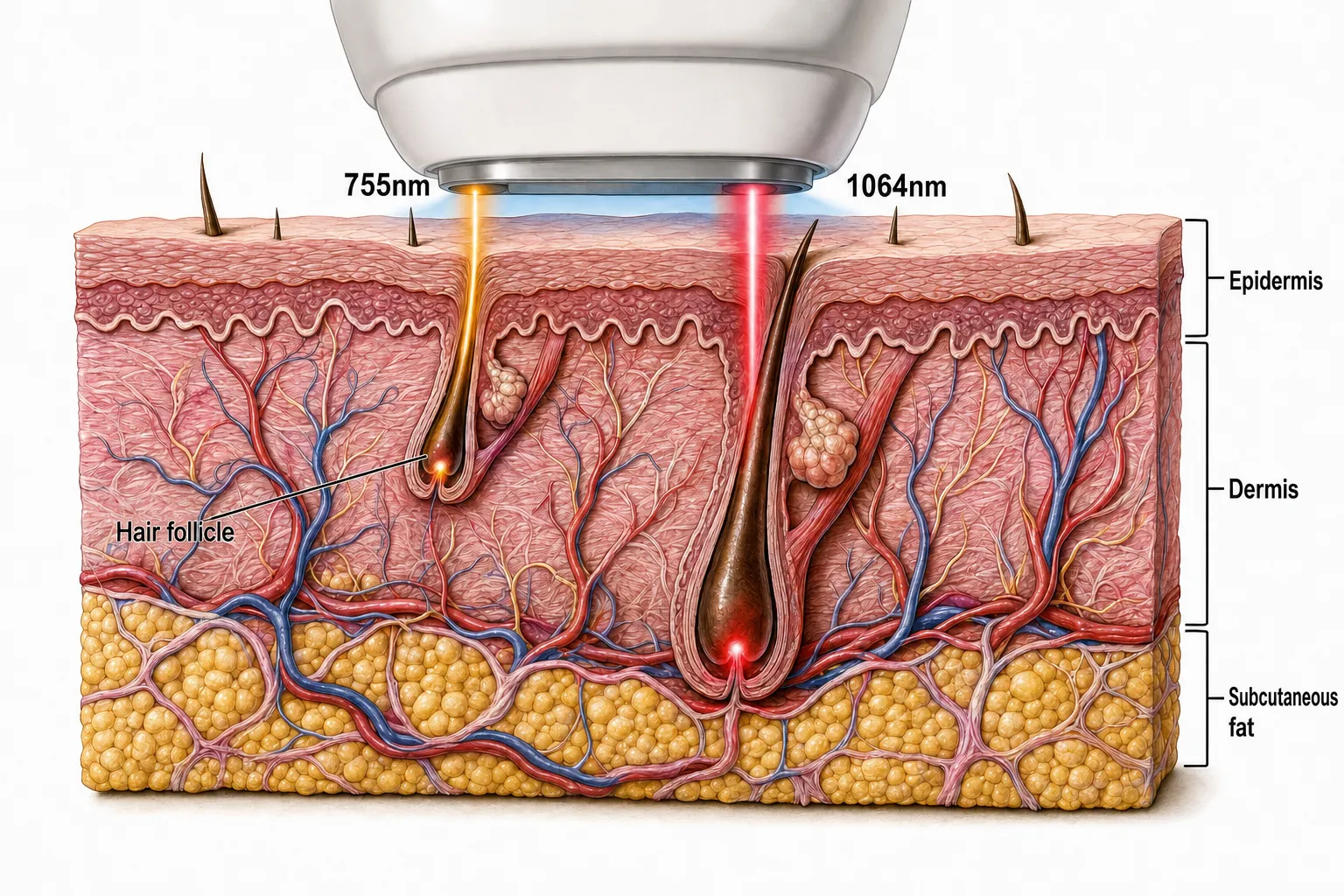
▲ The wavelength is chosen by area and hair — 755nm for shallow follicles, 1064nm for deep ones
When to Consider It
- Shaving daily, yet beard and sideburns are back by evening
- The bluish shadow of shaved stubble bothers you
- You want broad areas — chest, abdomen, back, shoulders — handled at once
- Frequent shaving keeps causing irritation or ingrown hairs
- Your skin runs dark from outdoor activity or tanning, and you've been cautious about laser hair removal
Men's Hair Removal Configurations
| Configuration | Areas |
|---|---|
| Face & neck | Beard · sideburns · upper lip · chin · neck |
| Body | Chest · abdomen · back · shoulders · arms · legs, and more |
Beard and sideburn roots run down to the subcutaneous fat, so reaching them takes more energy — and where thick hairs cluster densely, heat builds in a small area, making surface cooling all the more important.
Even on the same man, arm and leg follicles sit shallower, so the settings change. Women's hair removal configurations are covered separately.
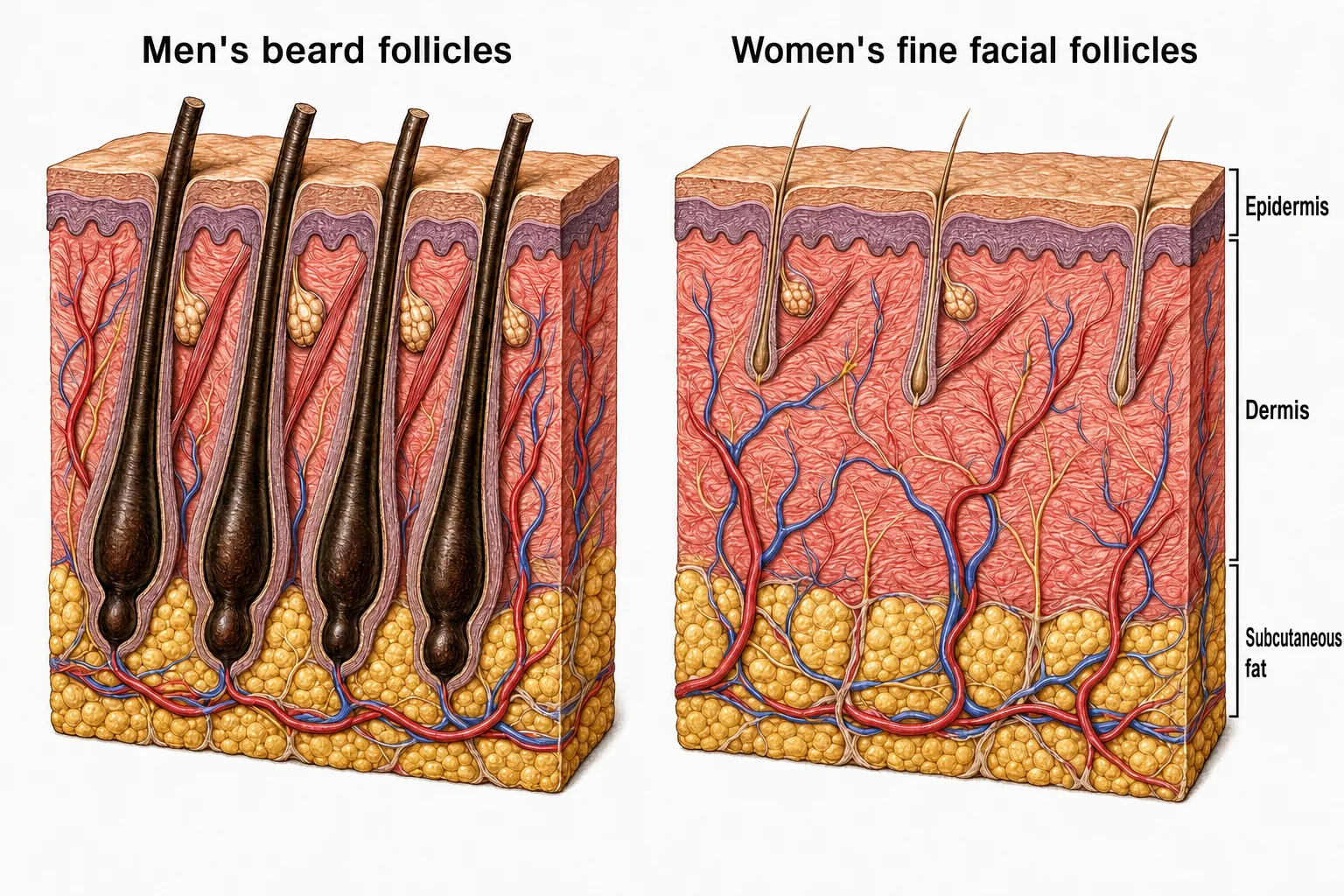
▲ In the beard area, follicles are thick, deep, and densely packed
How It's Done
1. Consultation and skin check Hair thickness by area, skin tone, and recent tanning are checked — this sets the wavelength (755 or 1064nm) and energy level.
2. Pre-treatment prep Shaving the area short 1–2 days before is ideal. Waxing and tweezing remove the dark hair inside the follicle and weaken the effect, so avoid them between sessions.
3. Numbing cream Sensitive facial areas — beard, upper lip, jawline — get numbing cream for about 10 minutes first. Chest, abdomen, back, arms, and legs usually proceed without numbing.
4. Treatment Each area is treated at its set wavelength and intensity. Throughout the session, air cooling — a steady stream of cold air from the device — chills the surface to ease the sting and reduce burn risk, and with up to a 26mm spot per pulse, broad areas move quickly.
5. Soothing and guidance After soothing, we go over moisturizing, sunscreen (SPF 30+), and the care for the following 1–2 weeks.
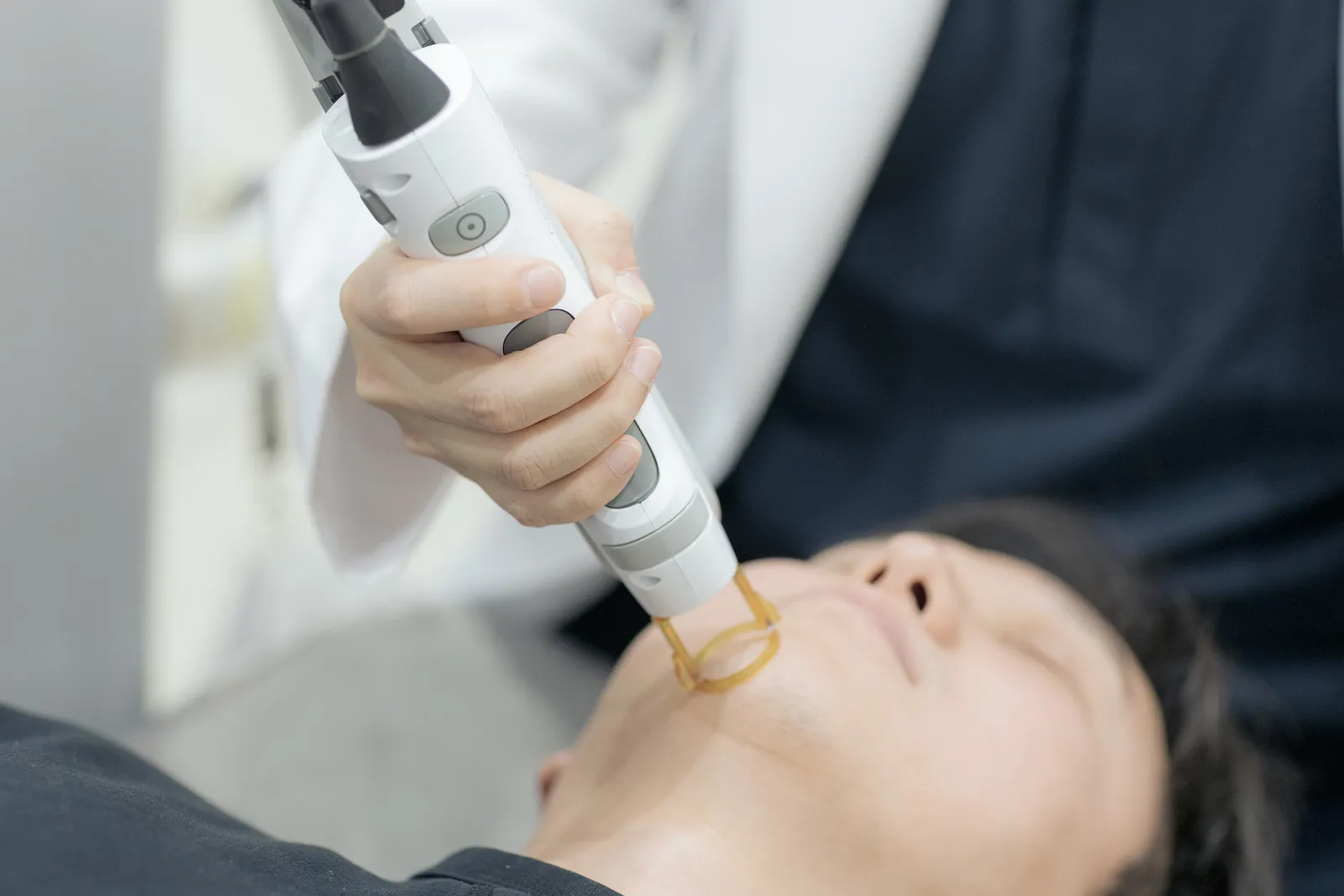
▲ A GentleMax Pro Plus session in progress
Results and Recovery
| Item | Details |
|---|---|
| How it works | The pigment (melanin) in dark hair absorbs the laser, concentrating heat at the follicle root — acting on follicles in their growth phase (anagen) |
| Wavelengths | 755nm (shallow follicles, lighter skin) · 1064nm (deep, thick hair, darker skin) — chosen per area |
| Spot and cooling | Up to a 26mm spot per pulse · air cooling chills the surface throughout the session |
| When results show | Hairs from treated follicles shed over 1–2 weeks → roughly 10–25% of the area's hair reduced per session |
| Sessions | 6–12 sessions at 4–6 week intervals, cumulative · growth slows from sessions 3–4 |
| Interval by area | Hormonal facial hair (beard, upper lip, chin) about 4 weeks · underarms 4–6 weeks · chest, abdomen, back about 6 weeks · arms and legs 6–8 weeks |
| Maintenance | Once every 1–2 years after the course (hormonal influence can reactivate some follicles) |
| Pain | A jolt of heat reaching follicle depth — light on the outer arms and legs, and the back · moderate on underarms and abdomen · strong on the upper lip, chin, and beard |
| Pain control | Face: numbing cream for about 10 minutes plus air cooling · body: air cooling · tell us how it feels mid-session and we adjust within the safe range |
| Downtime | Redness and slight swelling for 1–2 hours right after · back to routine the next day · skip saunas, hard exercise, and strong sun for 24 hours |
The reason it doesn't finish in one pass: hair has growing phases and resting phases. The laser acts only on follicles currently growing (anagen). Resting follicles (telogen) hold little pigment and don't respond to the same laser. At any point, only about 10–20% of all hairs are growing — which is why sessions continue at 4–6 week intervals.
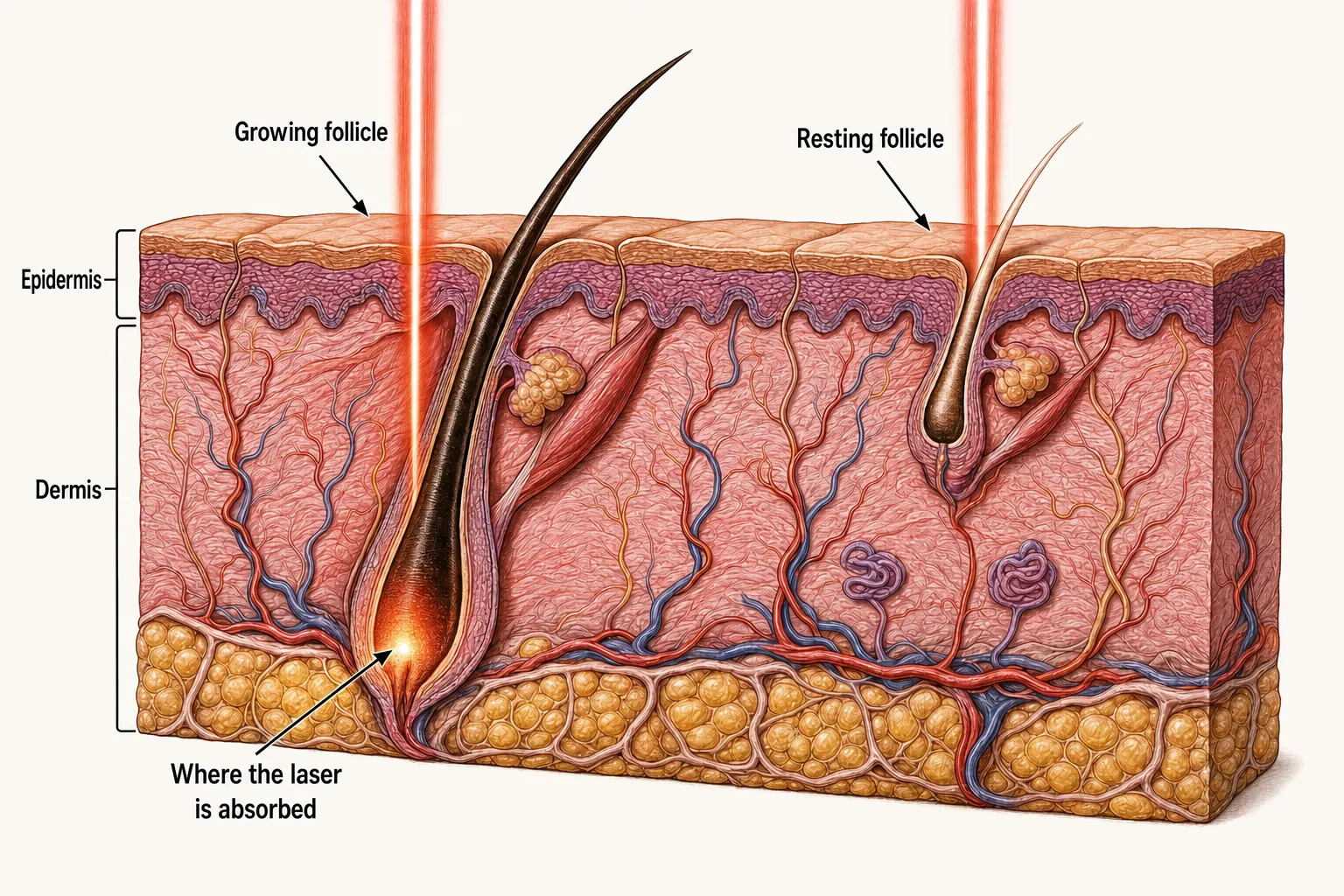
▲ The laser is absorbed only by follicles currently growing — which is why the sessions are divided
Expected Reactions and Possible Side Effects
Common, temporary reactions — part of the normal response:
- Redness and slight swelling at the treated area for 1–2 hours
- Hairs from treated follicles shedding over the following 1–2 weeks — part of the intended course
Anything beyond this is uncommon. If a reaction lasts longer than expected or worsens, contact us and we'll check it with you.
What We Check Beforehand
If any of these apply to you, let us know during your consultation. We adjust the timing or exclude the area.
- Recent strong sun exposure or tanning — pigmentation risk, so we wait until it settles
- Inflammation or wounds at the treatment area — we start after they heal
- White or very light hairs mixed into the beard — with no pigment to target, they don't respond
- A keloid tendency (scars that heal raised)
- Medications that increase light sensitivity (such as some antibiotics or diuretics)
- Tattoos or semi-permanent makeup in the treatment area — burn risk, so that spot is excluded or only its surroundings treated
- Waxing, tweezing, or depilatory cream between sessions — the next session loses effect (shaving is fine)
How PECHE Clinic Does It
We treat by standards built from over 90,000 treatments. For effective energy to reach the follicle within the safe range, wavelength and energy have to be set to the area, skin tone, and hair thickness. We've built per-area standards from over 90,000 documented treatments — so whichever physician treats you, the same standards apply.
We use sufficient energy, within the safe range. With thick, deep follicles like a man's beard, too little energy disables too few follicles — and the session count just grows. But simply turning the energy up raises the risk of burns and pigmentation. We set effective energy within a range chosen to keep side-effect risk low, judged from your skin tone and hair thickness, and adjust within that range by watching your skin's response mid-session.
We tell you where it will hurt, upfront. The upper lip, chin, and beard — where follicles run deep and nerves gather — feel the same energy more sharply. We tell you before starting which spots sting more.
We're honest about what to expect. The goal of laser hair removal isn't "never grows again" — it's a major reduction in active follicles. Hormonal influence can bring some follicles back, so maintenance once every 1–2 years is part of the picture, and we say so first. We don't push same-day payment or session packages — you're welcome to come in just for a consultation.
Pricing
Men's hair removal cost depends on the area (face & neck / body), the range, and the session plan. We check your hair's condition at the consultation, then give you a quote.
Location
PECHE Clinic 3F, 364 Gangnam-daero, Gangnam-gu, Seoul Right in front of Gangnam Station, Exit 4
Because this treatment takes several sessions at 4–6 week intervals, a convenient location makes the full course easier to keep up with.
FAQ
Q1. Who performs the treatment? A: PECHE physicians who all work to the same per-area wavelength and energy standards, built from over 90,000 documented treatments. Intensity is set from your area, skin tone, and hair condition by these standards — so even if your physician changes, the standards stay the same.
Q2. If I do beard and arms/legs together, are the settings different? A: Yes. Follicle depth and skin thickness differ by area, so wavelength and energy are set separately. Thick, deep beard and sideburns lean on the deeper-reaching 1064nm; shallow-follicled outer arms and legs lean on 755nm. Even within one session, settings are divided by area.
Q3. I'm outdoors a lot and my chest and back are tanned. Can I still get treated? A: For tanned skin we use the 1064nm side, which is absorbed less by surface pigment while reaching deep. But starting while strong sun exposure is still recent raises pigmentation risk, so we schedule the start for after your tone settles. During the course, it's also better not to leave treated areas in direct sun.
Q4. How should I prepare the hair before a session? A: Shave it short 1–2 days before. Waxing, tweezing, and depilatory creams remove the dark hair the laser targets — so between sessions, shaving only.
Q5. Can I just have a consultation and decide later? A: Yes. You can come in just to have your areas and hair checked, hear the expected number of sessions and the limits (including the need for maintenance), and decide afterward. We don't push session packages or same-day payment at the consultation.