Skin Botox — PECHE Clinic, Gangnam Station
Tiny, divided doses placed into the skin's shallow layer — not the expression muscles · Right by Gangnam Station Exit 4
Skin Botox
Skin Botox takes botulinum toxin diluted very thin and places it in dozens of divided micro-doses across the skin's shallow layer. Rather than stopping the movement of expression muscles, it works on the state of the whole face's skin — pores, oil, texture. PECHE Clinic runs it in two configurations: 1 area, and the full face.
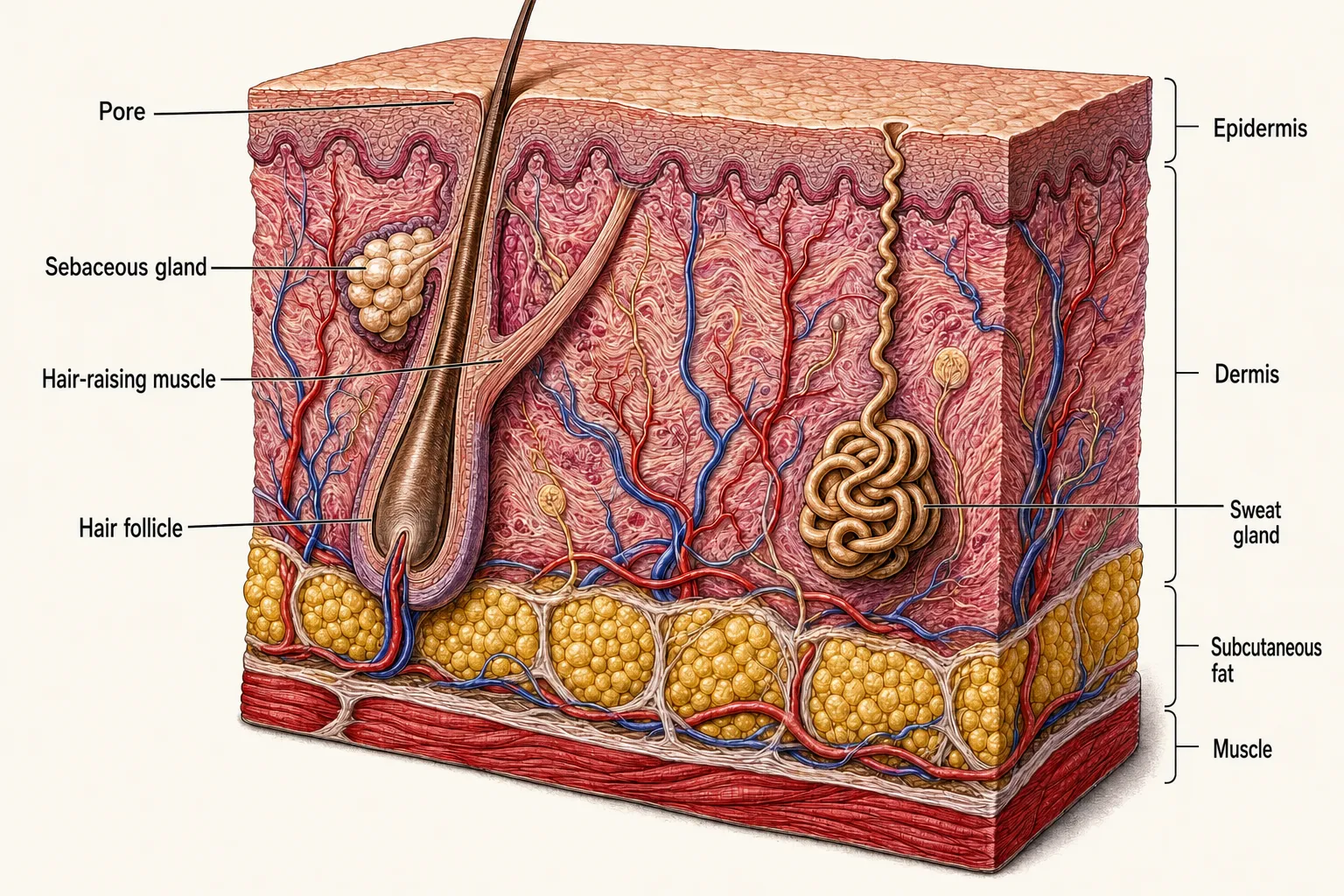
▲ The dermis just beneath the epidermis, drawn large — on the left, a hair follicle with its grape-cluster sebaceous gland, and between them the slim arrector muscle that raises the hair. The coiled bundle on the right is a sweat gland, its duct spiraling up to the pore at the surface. The red muscle layer at the very bottom is a long way down
The signal molecule nerves release isn't used only by muscles. Sebaceous glands receive the "release oil" signal through the same molecule, sweat glands the "release sweat" signal — and the tiny muscles that raise the hairs, likewise. Reduce the release of that signal, and less oil comes out, and the small muscles that cinch the pores loosen.
When to Consider It
- By afternoon, your forehead and nose area turn shiny
- Pores look vertically stretched and makeup sits unevenly
- Fine surface texture stands out even with no expression
- Your skin looks tense and stiff, as if always braced
- You want your skin's condition refined while your expressions stay untouched
Hollowing or dryness from thinned, depleted skin isn't what this treatment addresses — that calls for refilling what's missing.
Same Drug, Different Depth
The same botulinum toxin is used, but the depth where it stays is different from when expression wrinkles are the target. Aiming at expression muscles means going down to the muscle layer; Skin Botox stops far shallower, inside the skin itself. So it doesn't reach the large muscles that make expressions — only the shallow layer's sebaceous glands, sweat glands, and tiny muscles.
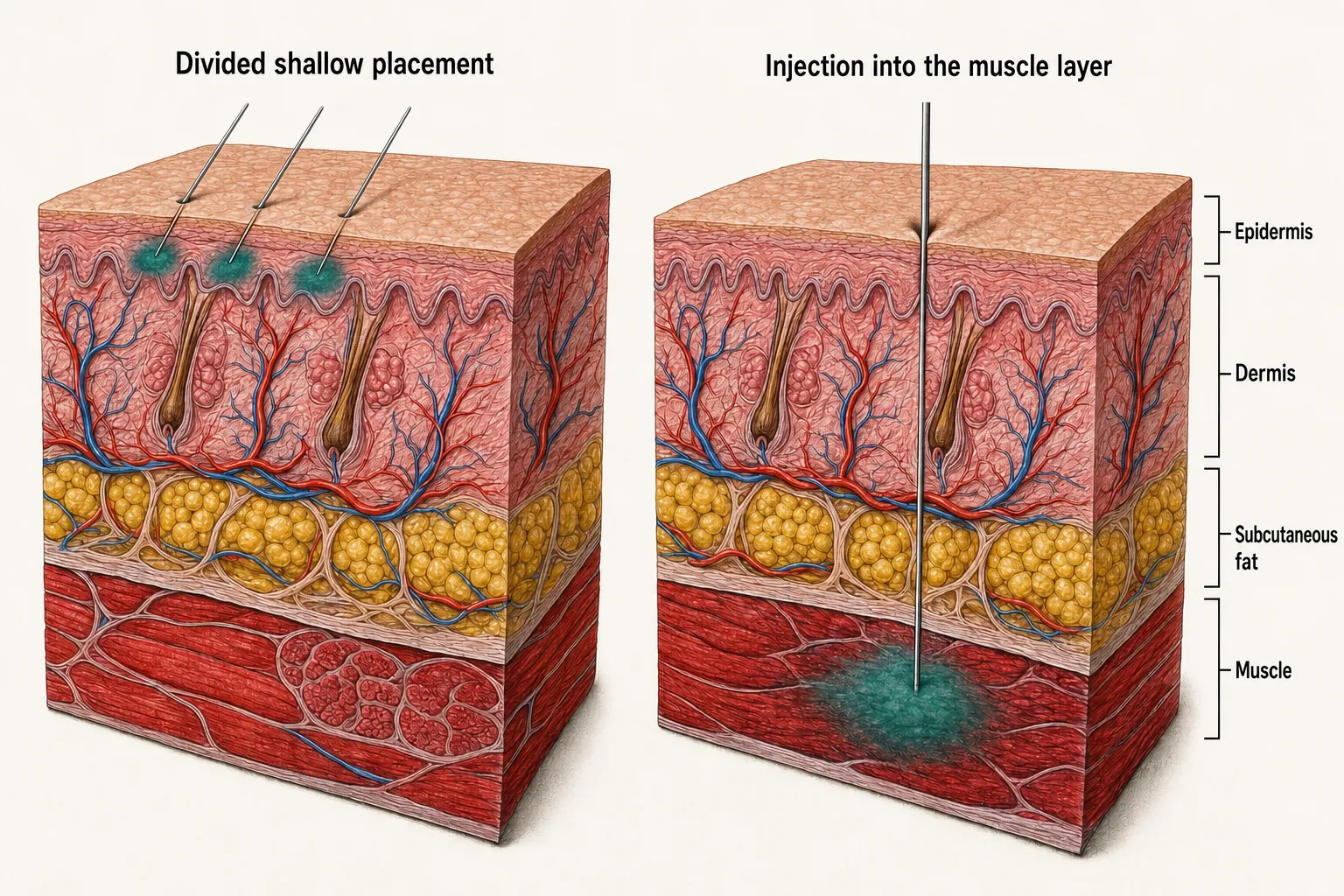
▲ The same drug at two depths, side by side — on the left, three fine needles enter shallowly, leaving small teal deposits in the upper dermis; on the right, one needle passes the yellow fat down to the red muscle at the bottom. Skin Botox is the left-hand depth
When it enters the correct layer, each injection point swells into a small, white, rice-grain bump. These marks usually settle within 1–2 hours.
| Treatment areas | The face — forehead, cheeks, around the nose, chin, and more |
|---|---|
| Configurations | 1 area · full face |
How It's Done
1. Assessment A 3D MetaVu scan captures your pores, oil, texture, and lines.
2. Deciding the range We look at where the shine and pores actually stand out, and decide whether 1 area is enough or the full face is needed.
3. Numbing For the full face, numbing cream is applied for about 20 minutes; for 1 area, a cold roller dulls the sensation first.
4. Injection A very fine needle enters at a shallow angle, placing micro-doses across dozens of points.
5. Aftercare guidance We go over when the bumps settle and what to follow for the day.
Results and Recovery
| Item | Details |
|---|---|
| Where it acts | The shallow layer's sebaceous glands, sweat glands, and tiny hair-raising muscles — a depth that doesn't reach the large expression muscles |
| What it treats | Shine · stretched-looking pores · fine surface texture |
| When results show | From days 3–7, clearest at week 2 — the signal doesn't cut off at once; it tapers over several days |
| How long it lasts | 3–6 months |
| Continuing | Repeated to match the 3–6 month duration |
| Pain | Each point is a light, shallow prick — but because they repeat densely, a sharp, hot sting continues as the product goes in. It can bring tears during the session |
| Pain control | Numbing cream for about 20 minutes for the full face · a cold roller for 1 area |
| Downtime | The bumps at each injection point settle within 1–2 hours; you can wash your face and wear makeup after 2–3 hours · bruises, if any, fade within 3–7 days |
| For the day | Don't lie down for 4–6 hours · skip saunas, hard exercise, and massaging the treated area — all to keep the product from spreading beyond where it was placed |
The result shows not as one spot visibly changing, but as the whole face's shine and surface settling into order. It is not a treatment that reverses the size of enlarged pores.
Expected Reactions and Possible Side Effects
Common, temporary reactions — part of the normal response to injection:
- Small rice-grain bumps at each injection point, settling within 1–2 hours
- Bruises, if any, fading within 3–7 days
Anything beyond this is uncommon. If a reaction lasts longer than expected or worsens, contact us and we'll check it with you.
What We Check Beforehand
If any of these apply to you, let us know during your consultation. We postpone or adjust the timing.
- Pregnancy or breastfeeding
- Conditions affecting the point where nerves meet muscles, such as myasthenia gravis — the very site where botulinum toxin acts, so symptoms could worsen
- Medications that affect nerve–muscle signaling (including some antibiotics)
- Severe acne inflammation or wounds at the injection site — timing is set by your condition
- A past hypersensitivity reaction to botulinum toxin
- Severely dry, thinned skin — refilling may be the better place to start
- Aspirin or blood thinners (anticoagulants) — bruising can be heavier, so tell us in advance and we'll plan for it
- Botulinum toxin received elsewhere recently — tell us when, with which product, and how much, and we'll recalculate the total amount given in one session and the interval to your next treatment
How PECHE Clinic Does It
We don't sprinkle the same dose across the whole face. Shine and pores vary from zone to zone even within one face. With standards built from over 90,000 treatments and the condition confirmed in your assessment, we decide which zones get how many points, and how much at each.
We offer four botulinum toxin products. Botulinum toxin is a substance produced by bacteria. The bacteria send it out wrapped in other proteins to keep it intact — but only the core inside produces the effect; the wrapping plays no part in it. The core is identical across all four products; what differs is that some products keep the wrapping, and some strip it away to leave only the core.
| Product | Made by | Protein wrapping | Albumin (storage aid) |
|---|---|---|---|
| Newlux | Medytox, Korea | Kept | Used |
| Coretox | Medytox, Korea | Stripped away | Not used |
| Xeomin | Merz, Germany | Stripped away | Used |
| Allergan Botox | AbbVie, USA | Kept | Used |
What keeping or stripping the wrapping means. The wrapping protects the core — but it also means foreign proteins unrelated to the effect enter your body along with it. Repeated over the years, your body can come to recognize and respond to those proteins — and then the same dose may not work as well as it once did. Stripped products leave less room for that. For a one-off treatment the difference is negligible; it matters when you plan to continue over several years.
Albumin is a common protein naturally present in human blood. It keeps the core from degrading while the drug is stored as a dried powder — and Coretox does without it too. Skin Botox spreads across the whole face, so more goes in at once than when expression wrinkles are the target — which is why we look at how many years you plan to continue, together with the product.
We open the genuine product in front of you — and you can watch it being dissolved through the glass wall, too. Botulinum toxin doesn't keep long once dissolved, so it's stored as a powder and dissolved in saline just before treatment. The more diluted it is, the larger its volume — and the wider it spreads. Skin Botox is mixed especially thin, so what was dissolved, and how much, matters. You see which product is opened right in front of you, and the dissolving itself is visible through the glass wall from the waiting area.

▲ The prep room, seen through the glass from the waiting area — how thin the full-face mix is made is visible through this glass
We tell you first what it can do — and what it can't. Skin Botox settles shine and surface texture; it can't reverse the size of enlarged pores or fill hollowed spots. If the cause lies elsewhere, we point you to that approach first — and you're welcome to come in just for a consultation.
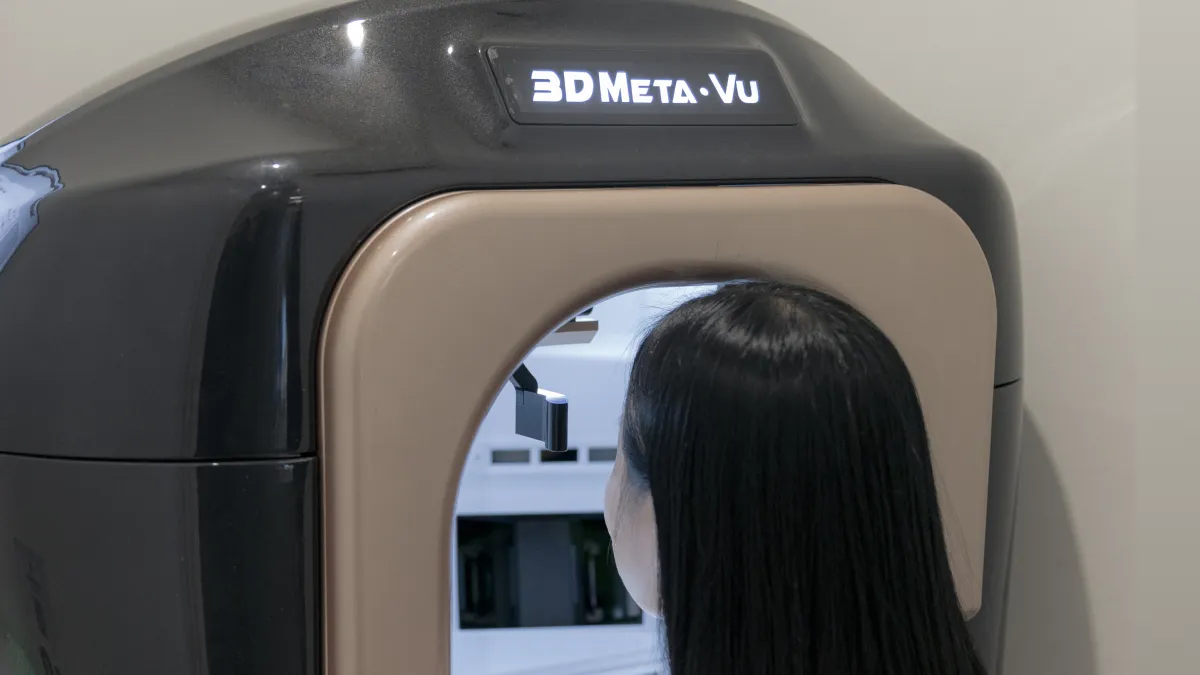
▲ The 3D MetaVu screen — pores, oil, texture, and lines are captured before treatment to see which zones of the face need the most
Pricing
The cost of Skin Botox depends on the range (1 area or full face) and the product. We confirm the range you need during your assessment, then give you a quote.
Location
PECHE Clinic 3F, 364 Gangnam-daero, Gangnam-gu, Seoul Right in front of Gangnam Station, Exit 4
A treatment you return for periodically, depending on how your skin looks — so an easy trip genuinely matters.
FAQ
Q1. Who performs the treatment? A: PECHE physicians who all work to the same injection standards, built from over 90,000 documented treatments. With Skin Botox, even a slightly deeper placement reaches the expression muscles — so the depth and the spacing of the points are set by these standards, not by feel.
Q2. Will my face stiffen or my expressions turn awkward? A: The drug is mixed very thin and placed in micro-doses in a shallow layer that doesn't reach the expression muscles. The goal itself is your skin's surface condition, not stopping expressions — smiling and frowning stay as they are.
Q3. Will my pores actually get smaller? A: The small muscles that cinch the pores loosen and less oil comes out, so pores stand out less — that's the mechanism. The enlarged pore's size itself doesn't reverse, so how noticeable the change is varies by person. We tell you this before starting.
Q4. How often should I have it? A: It fades gradually over 3–6 months. To keep the result, you repeat on that cycle — and if you're also receiving botulinum toxin in other areas, we factor that amount into the interval.
Q5. What should I look for when choosing a clinic? A: This treatment turns on how thin the mix is, at what depth, and across how many points. Look for whether they explain those standards, and whether you can confirm which product was dissolved, and how much.