Radiesse — PECHE Clinic, Gangnam Station
A volume and contour injection in which calcium mineral microspheres act as a scaffold so your own collagen takes over the volume · Jawline, cheekbones, and smile lines · Right outside Gangnam Station Exit 4
Radiesse
Radiesse is a collagen-stimulating injection: microspheres made of a calcium mineral from the same family as bone and teeth (CaHA — calcium hydroxylapatite) are suspended in a gel and placed in the deep layers of the skin. It is made by Merz, and because it is a material that stays in the body once placed, it went through the U.S. FDA's most stringent review pathway, premarket approval, and was approved in 2006.
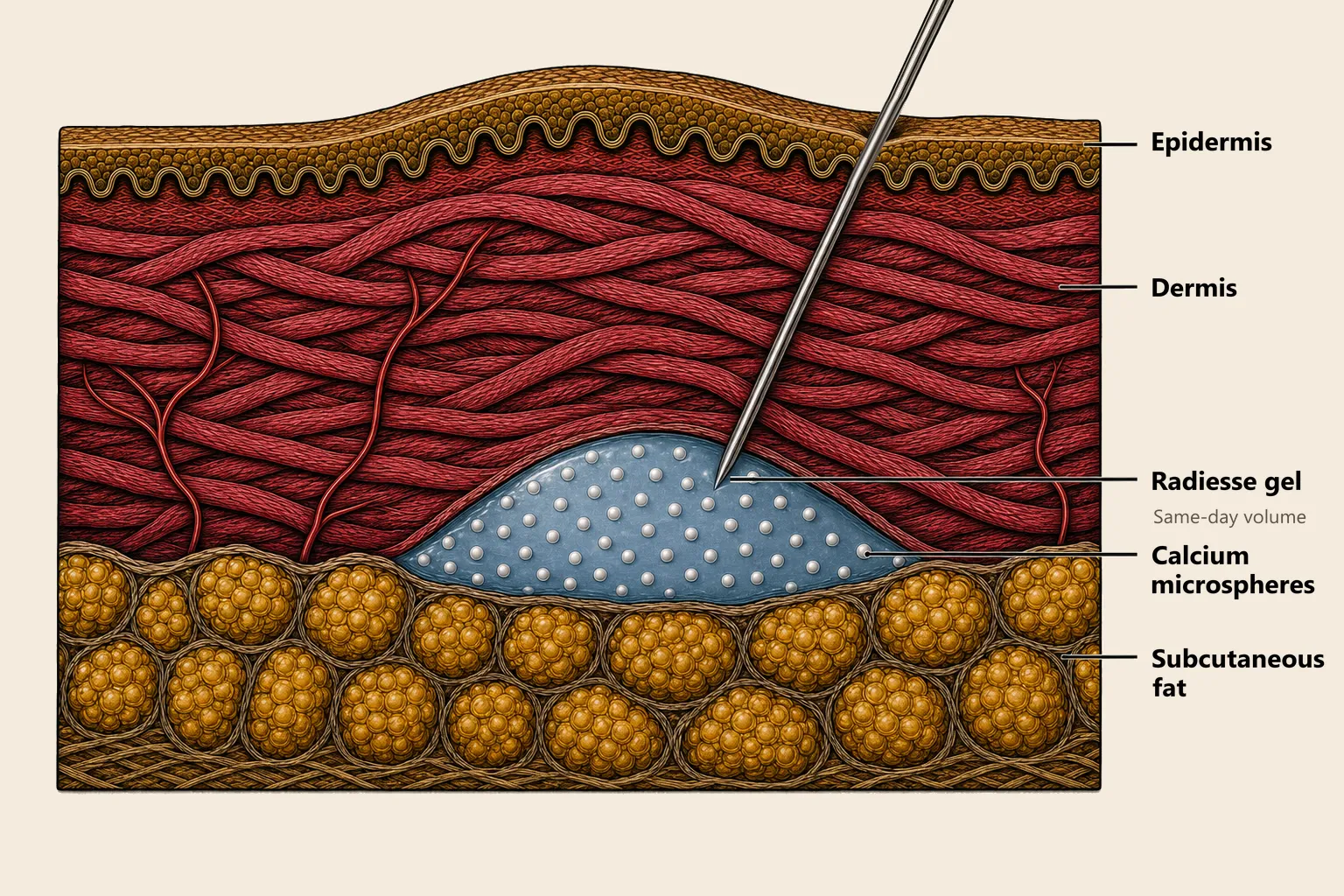
Put simply, on the day of treatment the gel props up hollowed areas to create volume, and as the gel is absorbed over several months, the microspheres are understood to act as a scaffold so that your own collagen takes over that space.
▲ On the day of treatment — most of the volume comes from the gel (blue-gray), with calcium microspheres scattered through it
Radiesse at a Glance
| Item | Details |
|---|---|
| Category | Collagen-stimulating injection (gel + microspheres · no incisions) |
| Ingredients | Calcium mineral (CaHA) microspheres + gel (CMC gel — a water-soluble gel derived from plant fiber) · a white, opaque semi-solid · microsphere diameter 25–45μm (per manufacturer data · 1μm = one-thousandth of a millimeter) |
| Mechanism | The gel creates same-day volume, then collagen and elastin weave together using the microspheres as a scaffold and take over that space |
| Injection layer | Lower dermis to the subcutaneous layer (the fat layer beneath the dermis) |
| Manufacturer and approvals | Merz · U.S. FDA premarket approval (2006) |
| Concerns and areas it suits | Jawline, receding chin, and cheekbone contours · areas that need support to be propped up, such as deep nasolabial folds (smile lines) and marionette lines |
| Areas we don't treat | Lips · nose |
| Available options | Radiesse 6cc |
| Numbing | Local anesthesia (no separate wait for numbing) |
| When results show | Volume from the gel on the day of treatment, with your own collagen added over the following months |
| How long it lasts | Usually 1–2 years, then gradually decreases (varies by person) |
| Sessions | One session as the base · after 1–2 months, we look at the progress and decide together whether to add to any area that needs more · when the effect fades, we decide together on a single maintenance session, if you'd like one |
| Recovery | Injection marks and redness 1–2 days · bruising, if it occurs, 3–7 days · swelling for a few days depending on the area |
| Can it be reversed? | It cannot be dissolved — the dissolving injection (hyaluronidase) breaks down only hyaluronic acid |
How It Works
1. The gel creates volume on the day of treatment The gel that carries the microspheres creates volume right where it's placed. The gel itself does not prompt collagen production.
2. The microspheres become a scaffold The cells that make collagen (fibroblasts) travel along the microspheres and attach to their surface. Rather than triggering a strong inflammatory reaction, the process is closer to the cells using the microspheres as a foothold (a scaffold) to do their work.
3. Collagen and elastin weave together New collagen, along with elastin — the elastic fiber that lets skin stretch and then return to place — is understood to weave in an orderly way around the microspheres, forming a supporting structure. The manufacturer also explains that new microvessels form during this process, and that the soft collagen formed first gradually changes into a form that firmly supports the skin.
4. Your own tissue takes over where the gel was The gel is absorbed over several months, and the tissue formed in the meantime takes over the volume. The microspheres and the new tissue are not permanent either, and gradually diminish over time.
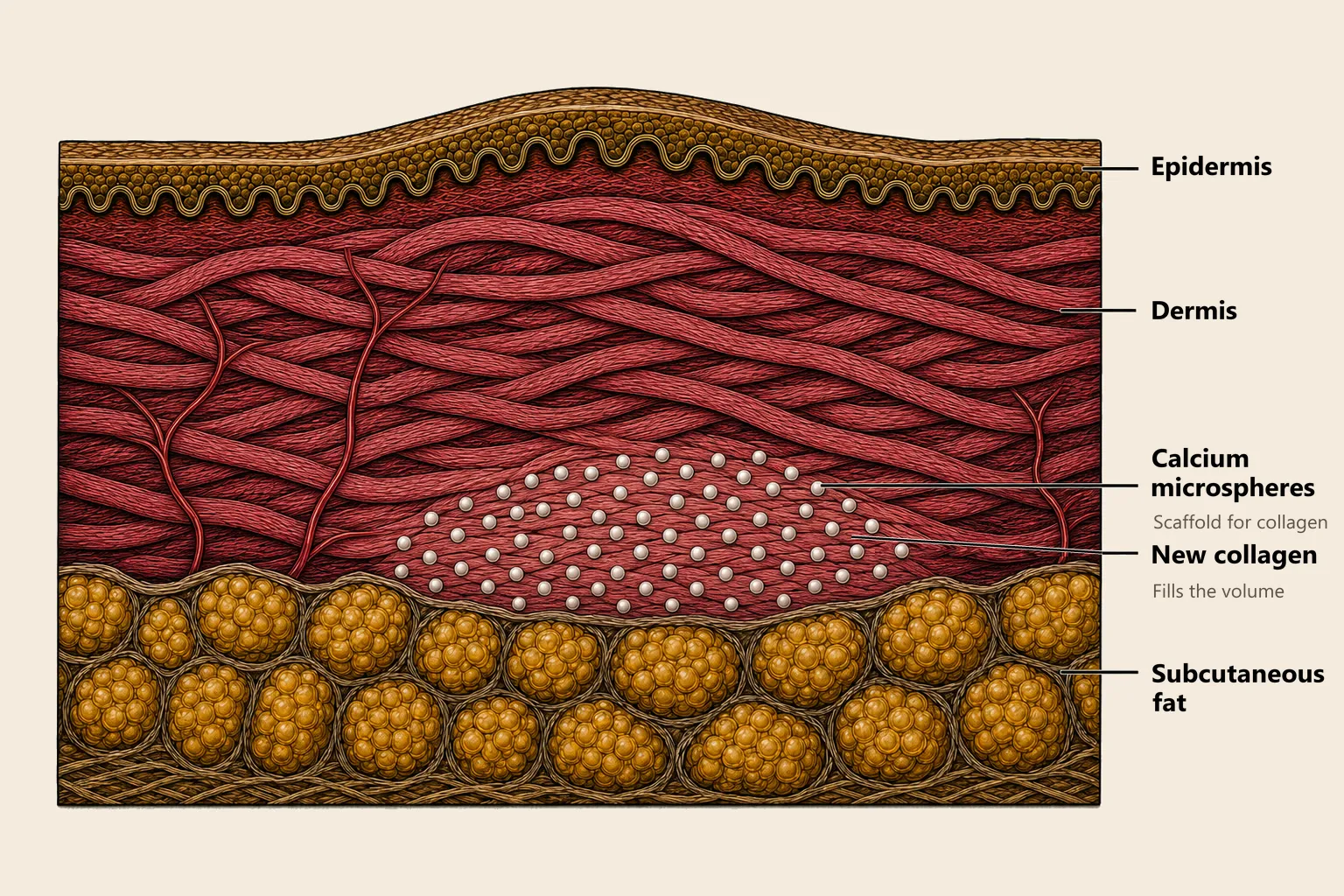
▲ Several months later — where the gel has gone, new collagen (lighter color), formed using the remaining calcium microspheres as a scaffold, fills the space
Expected Results and Why
| Expected result | Why |
|---|---|
| Hollowed areas are propped up (jawline and cheekbone contours, deep nasolabial folds) | Because a gel that is both viscous and elastic supports the collapsed area, and tissue that uses the microspheres as a scaffold builds up on top of it |
| The shape is visible on the day of treatment | Because the gel creates volume right where it's placed |
| Volume continues after the gel is gone | Because your own collagen takes over the space while the gel is being absorbed |
Even when the space is filled with your own collagen, the result is not permanent. Once it has run its course, that collagen is gradually broken down by the body and the area returns to how it was. The extent of the change and how long it lasts vary from person to person.
When to Consider It
- Your jawline looks blurred, or a receding chin is a concern
- The area around your cheekbones or the sides of your cheeks has hollowed, making your facial contour look flat
- Deep nasolabial folds or marionette lines (lines that run from the corners of the mouth down toward the chin) need support from underneath
- You want to see the shape on the day of treatment, and want your own collagen to take over that space afterward
When a different approach may be the right fit
- You need precise shaping, or want to leave room to adjust it later — hyaluronic acid (HA) filler may be the right fit
- You want a broadly hollowed area filled subtly and gradually — a powder-type collagen-stimulating injection may be the right fit
- The texture and density of thin skin are your main concern — a skin booster injected into the shallow dermis may be the right fit
- Sagging is your main concern — this treatment has a different goal from lifting, which raises sagging skin
Differences from Other Treatments and Limitations
| Compared approach | What they share | How they differ |
|---|---|---|
| A collagen-stimulating injection with microspheres of PCL (the material used in dissolvable medical sutures) in gel | Gel + microsphere structure · same-day volume from the gel, after which collagen takes over | In the PCL approach, collagen forms as the body recognizes the microspheres as foreign material and responds to them, and there are several versions in which the microspheres break down at different rates. Radiesse works by cells attaching to the calcium microspheres as a scaffold and weaving collagen and elastin. This is not a matter of better or worse but of a difference in approach |
| A powder-type collagen-stimulating injection using PDLLA (an ingredient that gradually breaks down in the body) | Both use microparticles to prompt your own collagen production | The powder type gives no same-day volume; it fills in gradually from weeks 3–4, after the swelling goes down, using round, soft particles to smoothly fill broad hollows. Radiesse creates same-day volume with its gel and has strong supporting power, so it leans toward defining contours |
| Hyaluronic acid (HA) filler | Volume appears on the day of treatment | With filler, the injected gel itself is the volume, and it can be corrected with a dissolving injection, so it is used for precise shapes such as the nose and chin tip. With Radiesse, your own tissue takes over the volume after the gel is absorbed |
Limitations: It cannot be dissolved to reverse it, and even when the space is filled with your own collagen, the result is not permanent.
How It's Done
1. 3D skin analysis and consultation 3D MetaVu imaging captures your facial contours and left–right balance. We look together at the areas that appear hollow on the results screen and decide where the product goes and how much, before treatment.
2. Your physician's name and a final check Before treatment, we let you know the name of the physician treating you, and that physician personally reviews your assessment results and the condition of your face.
3. Treatment The genuine product is opened in front of you. Then, with local anesthesia that briefly dulls sensation only in the area being treated, the product is placed in divided amounts in the lower dermis to the subcutaneous layer. You'll feel a sting as the needle goes in; after that, what you mainly feel is not so much a sharp pain as a heavy, pressing fullness and a dull ache as the firm gel pushes into the deep tissue and fills it.
If you feel very tense, you can add Non-Sedation Gas Anesthesia (Air Nox) as an option — you breathe in a mix of oxygen and nitrous oxide that reduces pain and tension while you stay conscious and responsive.
Recovery, Expected Reactions, and Precautions
Recovery: Injection marks, redness, swelling, bruising, mild pain or itching, and a lump-like feeling under the skin may occur, and most of these settle down over time. Other reactions are uncommon, but everyone responds differently — if a reaction lasts longer than expected or becomes more noticeable, contact us and we'll check it with you.
Aftercare instructions
- Don't press or rub the treated area firmly — the product could be pushed out of place and settle unevenly
- Avoid saunas and strenuous exercise on the day of treatment — strong heat and sweat can irritate the blood vessels widened by the treatment and make redness and swelling worse
- A gentle water-only rinse from 3–4 hours after treatment, and makeup from the next day — the needle marks need time to close
- If you're planning a heat-based lifting treatment, we decide on its timing together at your consultation — strong heat delivered while the product is settling in the deep layers can affect its shape
Rare but possible effects
- Firm lumps that can be felt under the skin (nodules), hardened areas, and color changes have been reported. If they occur, we respond with treatment that gently breaks up the clumped tissue
- As with any injectable product, the product can, in rare cases, enter a blood vessel and block it. If pain keeps getting worse after treatment, or the skin turns white or a dark, dusky red, contact us right away
When we do not perform this treatment
- A history of anaphylaxis (a sudden, severe whole-body allergic reaction), multiple severe allergies, or a hypersensitivity reaction to the ingredients (a U.S. FDA contraindication)
- A condition in which bleeding is slow to stop (a bleeding disorder) (a U.S. FDA contraindication)
- Pregnancy, possible pregnancy, or breastfeeding
When we postpone treatment
- Inflammation, infection, or pus-filled acne in the treatment area — we proceed once it has healed
What to tell us in advance
- Blood-thinning medications such as aspirin or anticoagulants — you may bruise more easily
- An allergy to local anesthetics (such as lidocaine), or a history of hives or difficulty breathing after dental anesthesia — because the treatment is done under local anesthesia
- Keloid-prone skin (scars that heal raised and thickened)
- Other recent treatments — if you've had filler, a thread lift, lifting, or similar treatments, let us know at your consultation
- Whether to have another treatment on the same day is decided together after your assessment
How PECHE Clinic Does It
We follow standards built from more than 90,000 treatments performed across the clinic. From more than 90,000 treatments performed across PECHE Clinic, we have built standards for each area and skin condition, and the same standards apply whichever PECHE physician treats you. With Radiesse, those standards set which layer the product goes into and how the amount is divided.
A physician personally reviews your assessment results before we begin. A physician reviews your 3D MetaVu imaging results and checks the condition of your face once more just before treatment. Before we begin, we tell you the name of the physician who will treat you.
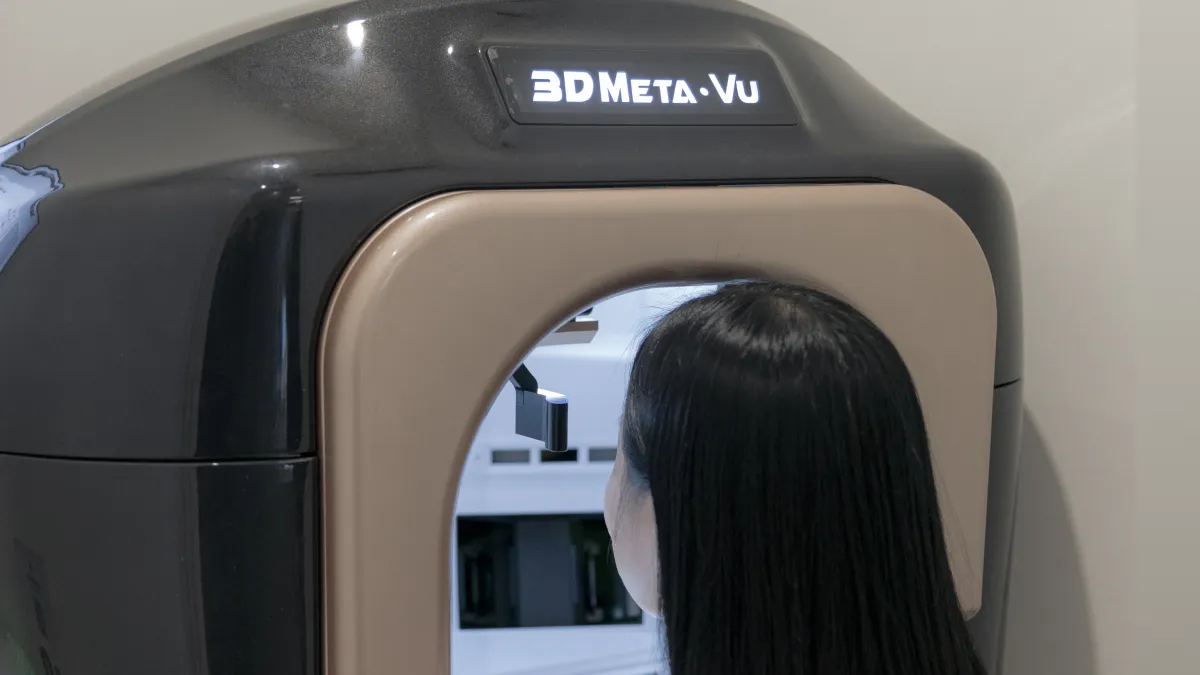
▲ We review your imaging results together
We open genuine products in front of you and keep the preparation area in view behind a full glass wall. You can see for yourself which product is being used. Treatment preparation takes place in an open-kitchen-style preparation area behind a full glass wall, so from the waiting area you can see the genuine product, the preparation process, and hygiene practices for yourself.
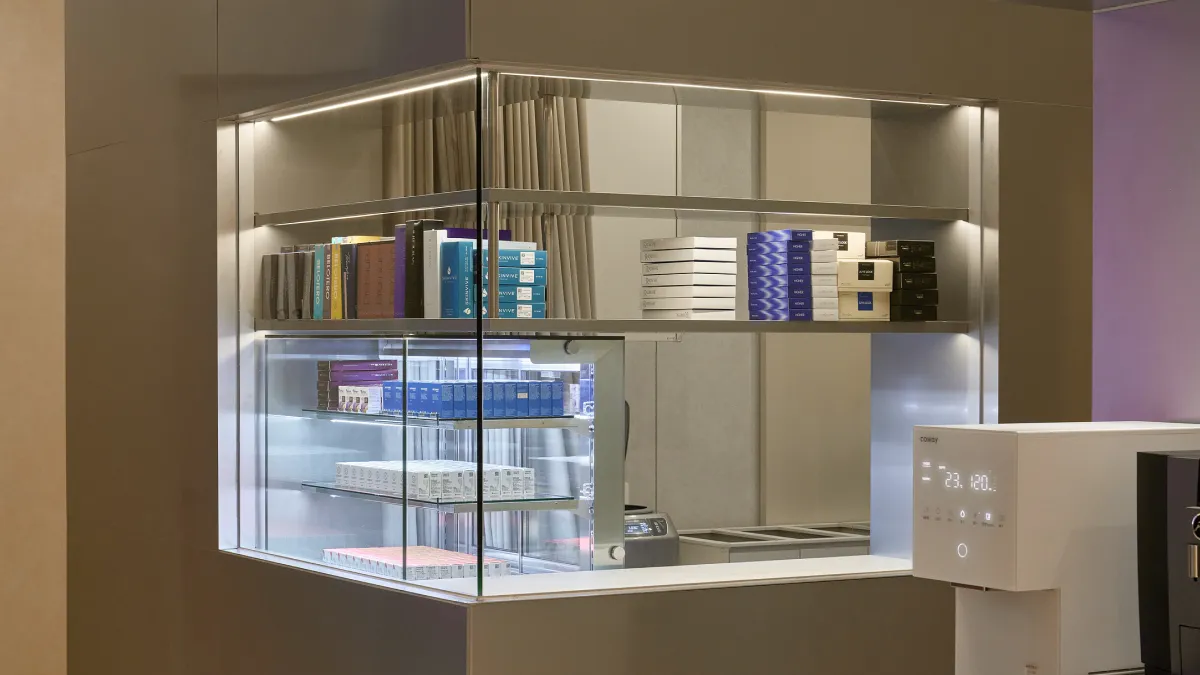
▲ The treatment preparation area, seen through the glass wall from the waiting area
We recommend only the treatments your assessment results call for. We tell you up front what this treatment can do (volume and contour that prop up hollowed areas) and what its limits are. You're welcome to come in just for a consultation and leave.
Pricing
Prices for Radiesse are published on our website for every product option. Whichever country you're visiting from and whichever channel you book through, the price is the same as the one published on our website — so there's no need to compare prices from one booking channel to another. Making sure you can come in trusting the price you checked in advance — that is the trust PECHE Clinic puts first.
Radiesse is offered as Radiesse 6cc, and the areas to be treated are decided together after your assessment.
Location and Clinic Hours
PECHE Clinic 3F, 364 Gangnam-daero, Gangnam-gu, Seoul Right outside Gangnam Station Exit 4 — the building entrance is right in front of you as you come out
Clinic Hours (Korea Standard Time, KST)
- Monday–Friday: 10:30 AM – 9:00 PM
- Saturday, Sunday, and public holidays: 10:00 AM – 6:00 PM
- No lunch break — we see patients straight through midday
FAQ
Q1. Who performs the Radiesse treatment? A: Before treatment, we first let you know the name of the physician treating you, and that physician personally reviews your assessment results and the condition of your face before starting. The layer and the amount injected follow standards built from more than 90,000 treatments performed across the clinic, so the same standards apply even if a different physician treats you.
Q2. I've heard the ingredient is in the same family as bone and teeth — won't it feel hard to the touch? A: The ingredient is a calcium mineral, but it goes in as very small, round microspheres spread evenly through a gel, so the treated area tends to feel firm yet supple, like your own skin. In the rare case that a firm lump forms, we respond with treatment that gently breaks up the clumped tissue.
Q3. Does the result stay the way it looks on the day of treatment? A: No. The volume on the day of treatment includes both the gel and swelling, so as the swelling goes down and the gel is absorbed, it may feel for a while as though the volume has decreased. After that, collagen that forms using the microspheres as a scaffold fills the space and the result that actually remains becomes visible — which is also when we look at whether to add to any area that needs more.
Q4. What about areas where Radiesse isn't used, such as the lips or nose? A: The lips are an area where Radiesse is generally not used. The nose has a complex network of blood vessels, and in the rare case that product blocks a vessel there, it has to be dissolved right away — so we don't treat it. For these two areas we recommend hyaluronic acid filler, which can be dissolved, while areas that need to be propped up, such as the jawline and cheekbones, can be treated with Radiesse — the two can be planned together, each for its own areas.
Q5. Does defining the jawline mean sagging skin gets lifted? A: No. Radiesse props up hollowed or blurred areas from underneath to make the contour line more defined; it doesn't pull sagging skin up. If you have both hollowing and sagging, we look at your assessment results and decide together on the right approach for each.