Hyaluronidase (Filler-Dissolving Injection) — PECHE Clinic, Gangnam Station
An injection that breaks down hyaluronic acid filler with an enzyme to undo added volume and restore your shape · Lumps, asymmetry, overfilled volume · Right by Gangnam Station Exit 4
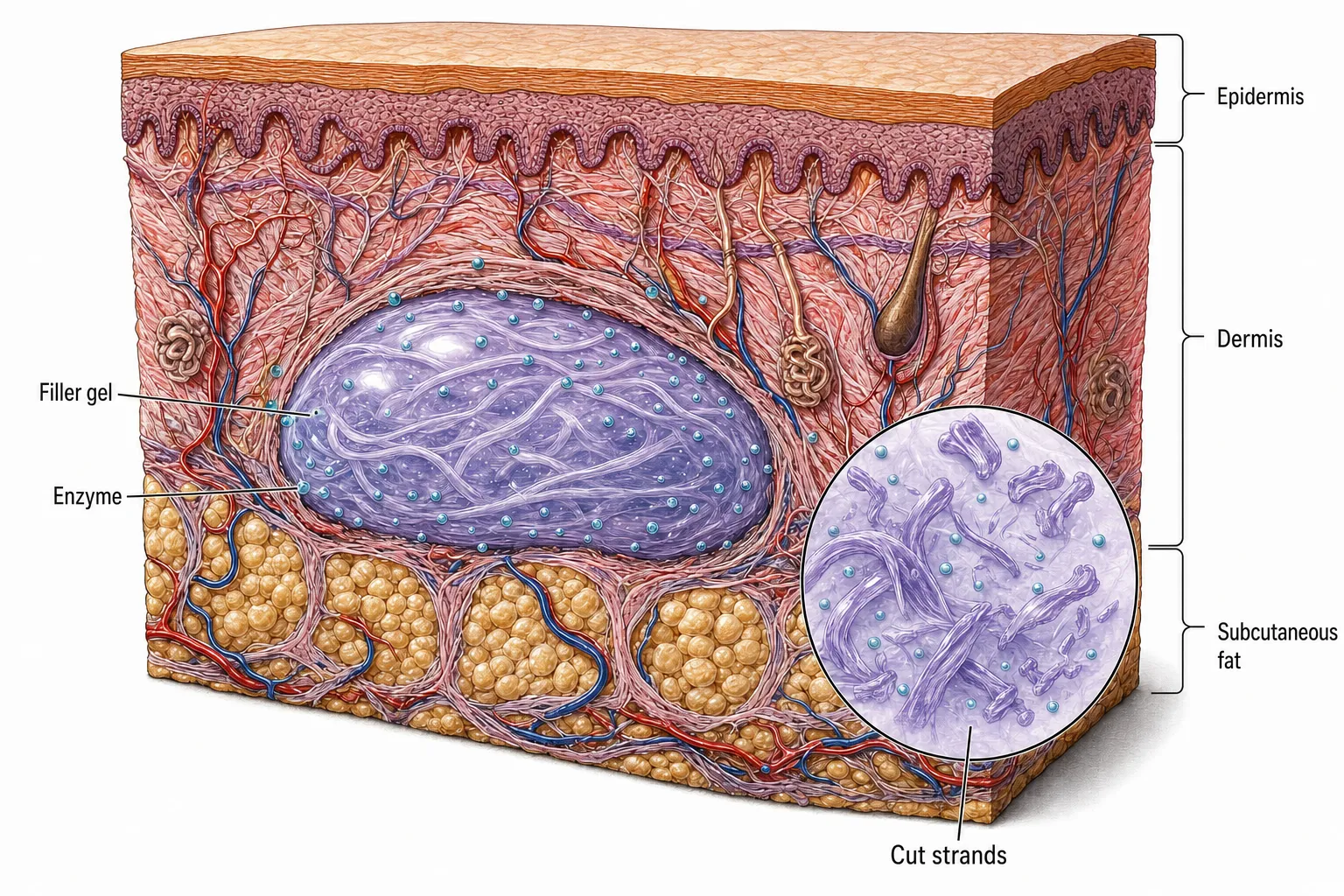
Hyaluronidase
A hyaluronidase injection dissolves hyaluronic acid filler. Filler gel is made of fine, thread-like strands of hyaluronic acid tied together; when the enzyme hyaluronidase is placed at that spot, the strands are cut into small pieces — the gel can no longer hold its shape, and the body absorbs it.
This enzyme already exists in your body, quietly breaking down hyaluronic acid a little at a time. The treatment places a generous amount of it exactly where it's needed, so it does in a short time what the body would take a long time to do.
▲ When the enzyme cuts the gel's strands, the gel loses its shape and unravels
When to Consider It
- The filled area has clumped — you can feel it, or it looks uneven
- The volume is too much and your face looks unnatural
- The two sides no longer match
- You want to go back to the shape you had before — including tidying up filler placed elsewhere and starting fresh
What It Dissolves — and What It Can't
| What was injected | Response to hyaluronidase |
|---|---|
| Hyaluronic acid (HA) filler | Dissolves — any hyaluronic acid responds regardless of manufacturer or product, though how fast it unties and how much enzyme it takes depend on how tightly it was bonded |
| Collagen-stimulating ingredients — listed on the label as PCL, CaHA, PDLLA, and the like | Does not dissolve — the enzyme only cuts hyaluronic acid strands |
| Permanent implants such as silicone | Does not dissolve |
If you don't know what was injected, the most accurate source is the record at the clinic that treated you. If that's not available, we estimate together in the consultation from when it was placed and how it feels to the touch.
How It's Done
1. Area check We feel for where the filler sits, how much there is, and how clumped it is. For the face, a 3D MetaVu scan records your contours and left–right balance.
2. Allergy check The enzyme is a protein, and rare allergic reactions are possible — so we check your medication allergy history first.
3. Cooling and injection An ice roller chills the area for 5–10 minutes, then the enzyme is placed in divided amounts at the layer where the filler sits. Whether we dissolve all of it or only part changes the amount and the placement.
4. Progress check Once the swelling settles, we look at how much has dissolved, and decide whether to add more — and when to refill.
Results and Recovery
| Item | Details |
|---|---|
| Target | Hyaluronic acid filler placed in the dermis or the fat layer beneath it |
| How it works | The enzyme cuts the hyaluronic acid strands into small pieces; the gel unravels and the body absorbs the loosened material |
| When results show | Right after the injection the area can look more swollen because of the injected solution; within one to three days it visibly settles, and the change from dissolving becomes visible · large amounts, or filler that has hardened over time, may not untie in one round, so it's sometimes done in stages |
| Sessions | We look at how much has dissolved and decide together whether more is needed |
| Pain | As the needle goes in, a slightly sharper, achy sting than a filler injection |
| Pain control | The area is chilled with an ice roller for 5–10 minutes before the injection |
| Downtime | Swelling right after, for one to three days · bruising is possible |
| Aftercare | We watch how the swelling settles — whether to refill is decided after that |
Your own hyaluronic acid decreases too. The enzyme can't tell injected filler from the hyaluronic acid your skin already had. So for a few days the dissolved area can look more sunken than before the filler, or feel dry and dull. Your body keeps producing hyaluronic acid, so this change is temporary.
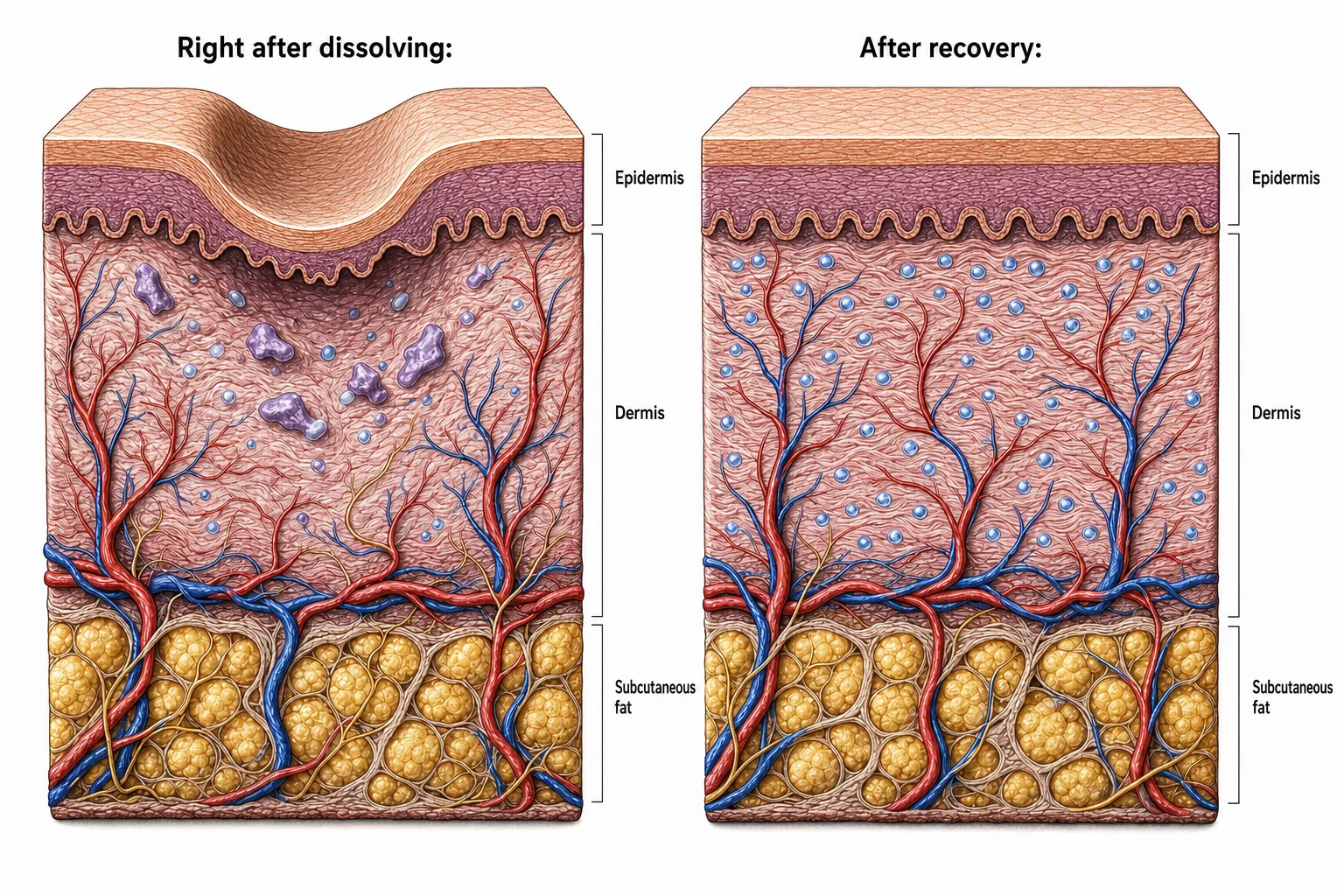
▲ The spot can look briefly sunken right after dissolving, and returns as the body refills its hyaluronic acid (individual results vary)
Refilling waits at least 1–2 weeks. The dissolving enzyme needs time to break down fully and clear out, and the swelling needs to settle. If new filler goes in while enzyme remains, the new filler can dissolve too — and while the area is swollen, there's no telling how much empty space there really is. So we confirm the space first, then refill.
What to Expect Afterward
- Swelling right after the injection, settling over one to three days · bruising is possible
- For a few days the area can look more sunken than before the filler — your body keeps producing hyaluronic acid, so this settles back
If anything lasts longer than expected, contact us and we'll check it with you.
What We Check Beforehand
If any of these apply to you, let us know during your consultation. We adjust the approach or the timing.
- A history of medication allergies — especially a severe allergic reaction after a bee sting. Bee venom carries an enzyme of the same family
- Pregnancy or breastfeeding
- Inflammation or wounds in the treatment area
- A condition that keeps blood from clotting easily, or taking blood thinners — bruising can be heavy
- Where, what, and when you had injected — the more you can tell us, the more accurate the judgment
How PECHE Clinic Does It
Our prep room is behind glass. You can watch preparation and hygiene management from the waiting area.

▲ The prep room, seen through the glass from the waiting area
We decide where to dissolve, and how much, before anything else. Dissolving everything isn't always the answer. Untying only the clumped part, reducing one side only, or clearing it all and starting fresh — each changes the amount and the placement. For the face, the 3D MetaVu records your contours and balance, and we decide looking at that together with what we feel by touch.
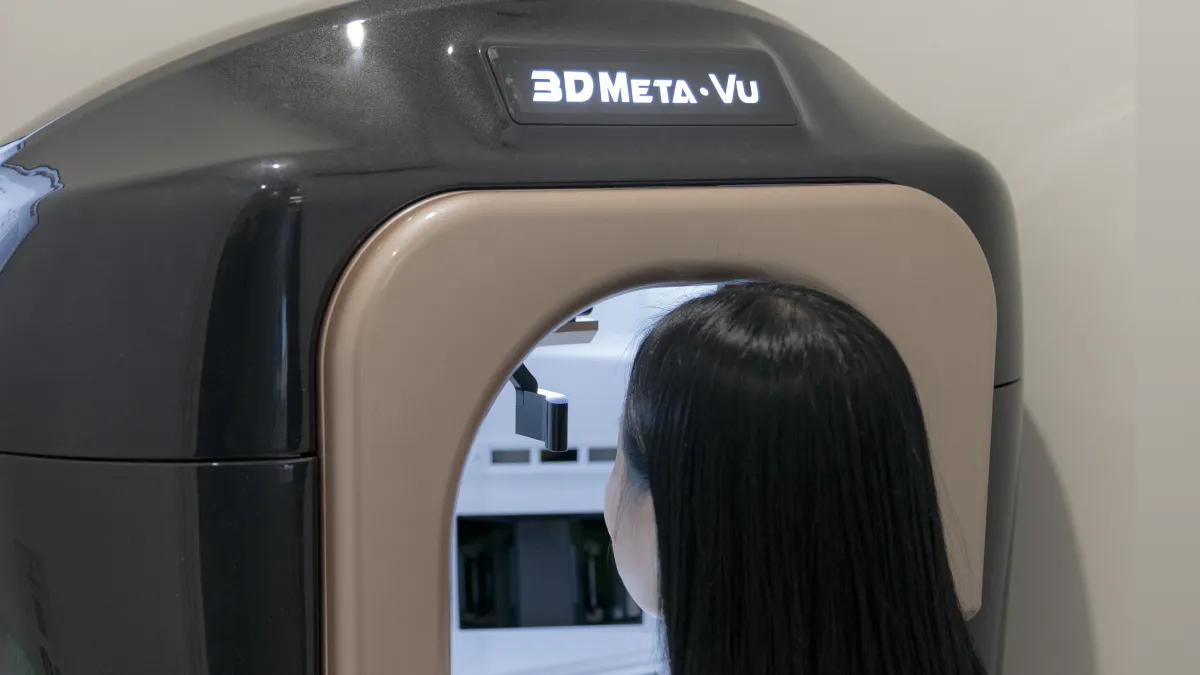
▲ We record the contours and balance, then set the range to dissolve
We tell you first what it can do — and what it can't. Hyaluronic acid filler can be dissolved; but skin stretched by the filler, or marks from long compression, don't bounce straight back. We don't push same-day payment or packages. You're welcome to come in just for a consultation.
Pricing
The cost of hyaluronidase depends on the area, the amount to dissolve, and the sessions. We set the range after the examination and quote from there.
Location
PECHE Clinic 3F, 364 Gangnam-daero, Gangnam-gu, Seoul Right in front of Gangnam Station, Exit 4
Many patients come back once more to check how much dissolved and set the refill timing — a short trip makes that follow-up easier.
FAQ
Q1. Who performs the treatment? A: PECHE physicians who all work to the same standards, built from over 90,000 documented treatments. We confirm by touch which layer the filler sits in and how much there is, then set the amount and placement — the same standards, whoever treats you.
Q2. Can you dissolve filler I had at another clinic? A: Yes. If it's hyaluronic acid filler, it dissolves no matter where it was placed. But if you don't know what was injected, it may be an ingredient that doesn't dissolve — so we confirm as much as can be known before proceeding.
Q3. Will dissolving take my face back to how it was before the filler? A: It mostly comes close, but we can't promise an exact return. Your own hyaluronic acid is reduced along with it, so the area can look more sunken for a few days — and if long-standing filler stretched the skin, that part can remain.
Q4. Can you dissolve only part of it? A: Yes. By dividing the amount and placement, we can untie only the clumped spot or reduce one side only. There are limits to dissolving exactly as much as intended, though — so placing less at a time and watching how it progresses is safer than a single large dose.
Q5. What should I look for when choosing a clinic? A: Three things. First, whether they confirm what is where, and how much, before dissolving. Second, whether they check your medication allergy history first. Third, whether it's an easy distance to return for the follow-up check after dissolving.