PicoSure Fractional Laser — PECHE Clinic, Gangnam Station
A honeycomb lens splits the light into hundreds of points, leaving the epidermis untouched and stimulating only the dermis · Pores and scars · Face · Right by Gangnam Station Exit 4
PicoSure Fractional Laser
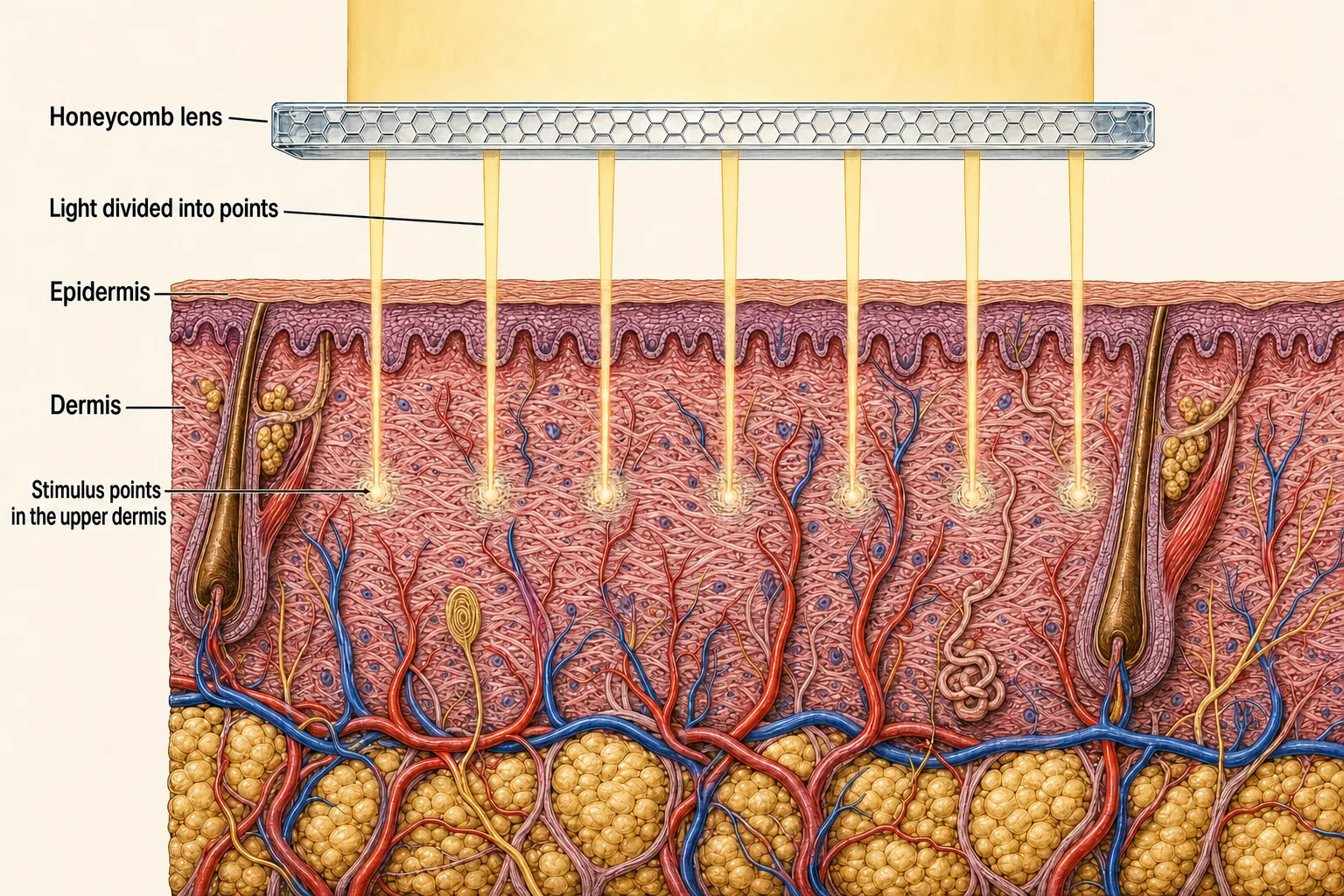
The PicoSure Fractional Laser takes the same 755nm light used for pigment and fits a honeycomb-patterned lens (the FOCUS lens) in front of it. A single beam passes through this lens and splits into hundreds of tiny points.
The wavelength — the value that describes a light's color — is on the short side at 755nm, so the divided points don't travel very deep: they do their work in the upper dermis. That is exactly the layer where enlarged pores and shallow depressed marks sit.
The points pass through the epidermis without breaking it, creating fine stimulus points only in the dermis beneath. As the skin repairs those points, it builds new collagen and elastin — the two proteins that hold skin up — and as that collagen builds up, enlarged pores and depressed marks gradually fill in.
Because it works in the dermis through the epidermis rather than removing the surface layer, no scabs form and daily life carries on easily.
▲ The lens divides the light into points, leaving the epidermis as it is and placing stimulus points in the upper dermis
When to Consider It
- Makeup settles into your pores, or they stand out by afternoon
- Shallow, depressed acne marks cover a wide area
- The skin on your cheeks feels bumpy, like orange peel
- You want fine lines at the eyes and mouth refined along with the texture
- You've put it off because you couldn't spare a scabbing recovery period
The Pores and Scars It Treats
| Target | What it is |
|---|---|
| Enlarged pores | The channel that carries sebum out has widened, and the collagen around it has loosened and no longer cinches it |
| Shallow depressed scars | Where acne healed, the dermis didn't fully recover, leaving the surface slightly sunken |
| Rough texture and fine lines | The dermis's collagen has thinned, leaving the surface looking uneven |
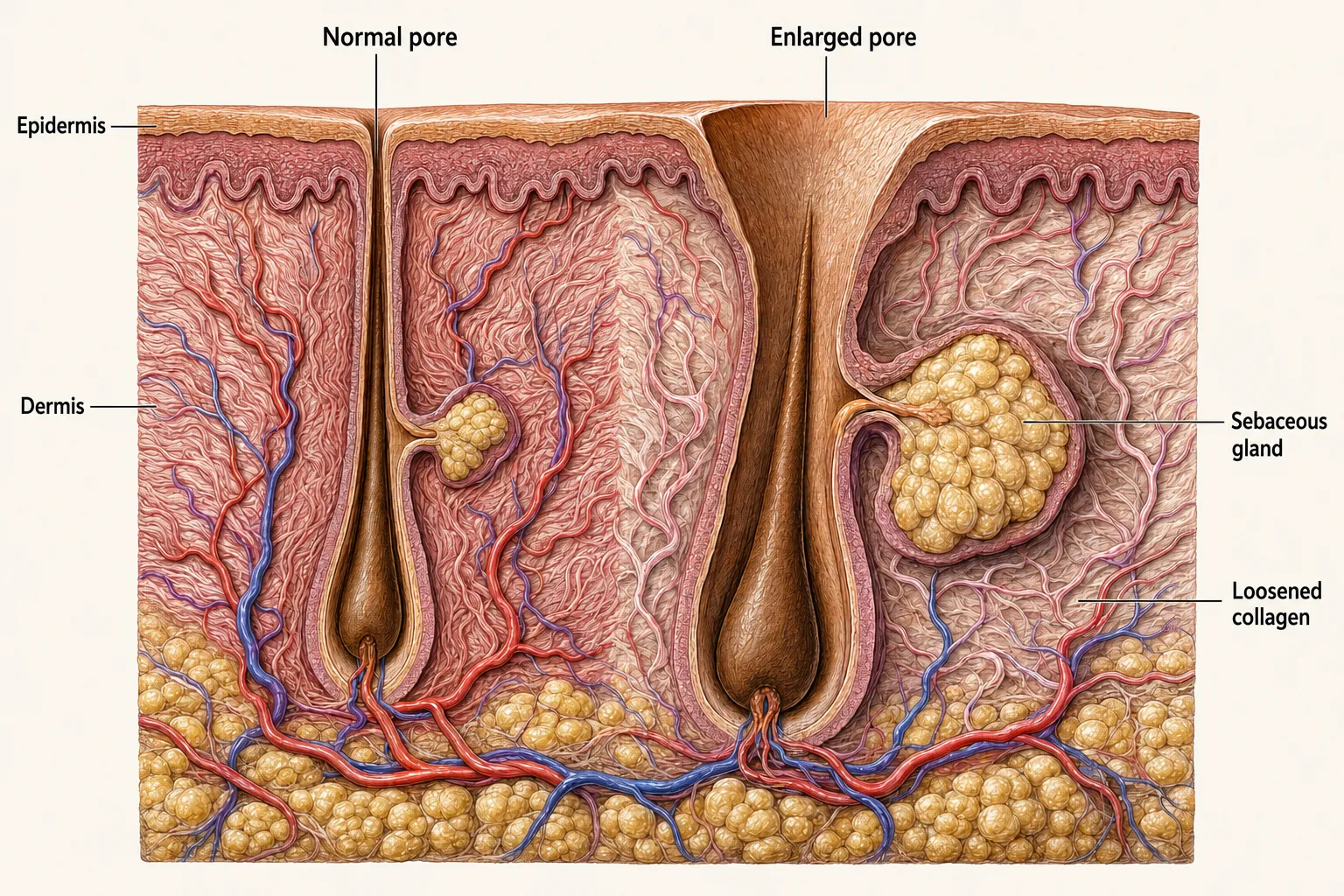
▲ A normal pore on the left, an enlarged one on the right — when the collagen that cinched the channel loosens, the pore stays open
Deeply tethered, firm scars don't fill in well with this method alone. Tissue pulling the scar's base downward remains, so a different method that cuts that tissue directly may be needed. If pigment or tone is the main concern, the same device's other mode is the fit. Your assessment confirms which applies, and we decide together.
How It's Done
1. Cleansing and makeup removal The skin is cleansed first so nothing blocks the light.
2. 3D MetaVu analysis Pore size, texture, and line distribution are photographed to decide which areas get which intensity.
3. Numbing cream Applied, then about 20 minutes of waiting. Even on the same device, this lens-fitted mode is more intense than toning, so numbing is the default.
4. Treatment With the honeycomb lens fitted, each area is treated in turn.
5. Soothing and guidance After soothing, we go over how the redness will settle, sun protection, and other care.
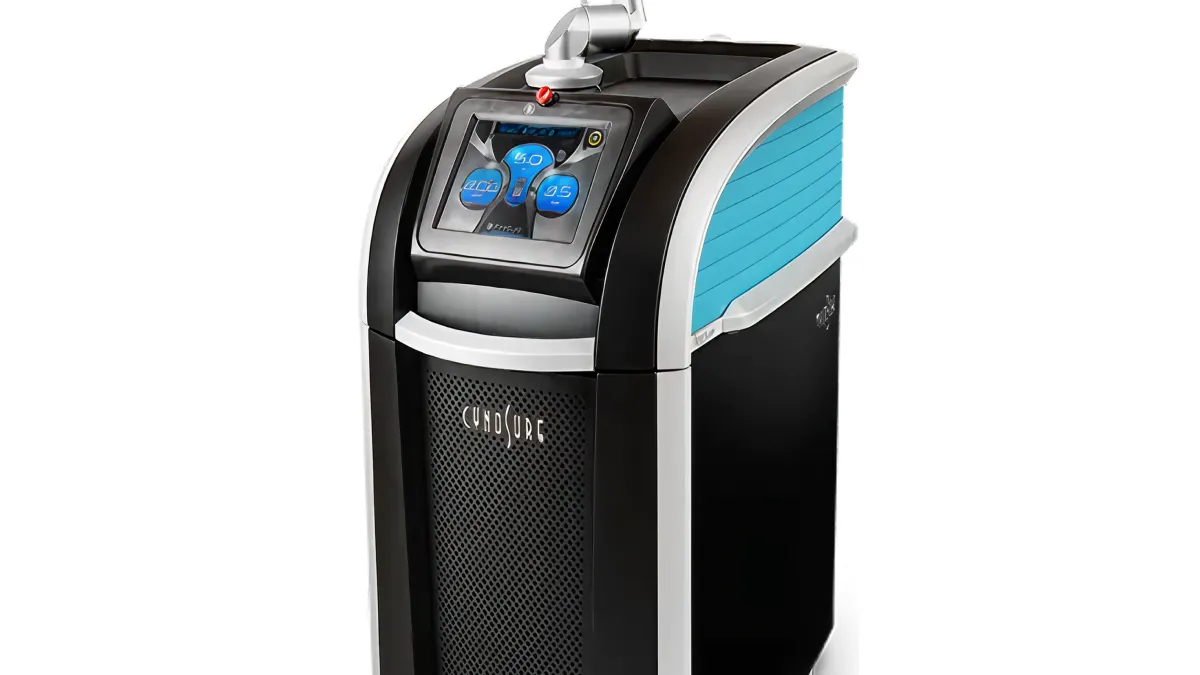
▲ PicoSure — switching lenses to treat pigment and texture separately
Results and Recovery
| Item | Details |
|---|---|
| Target | Collagen and elastin in the upper dermis |
| How it works | The honeycomb lens divides the 755nm light into hundreds of points that pass the epidermis and leave stimulus points in the upper dermis |
| Areas | Face |
| When results show | Not right after — gradually over 2–3 months, as new collagen fills in at the stimulus points |
| Sessions and spacing | 3–5 sessions at 3–4 week intervals, matched to the skin's repair cycle · adjusted by pore condition and scar depth |
| Pain | A hot, stinging heat crackles across the skin's surface like scattering sparks — a different feeling from toning's light rubber-band flick |
| Pain control | Numbing cream applied and about 20 minutes' wait before starting · tell us how it feels mid-session and we adjust the intensity |
| Downtime | No scabbing · redness for a day or two |
| Aftercare | Sunscreen and moisturizer |
There's a reason the results come slowly. This treatment doesn't narrow pores or fill scars directly — it has the skin build its own collagen while repairing the stimulus points. That collagen takes time to accumulate, so the change appears not right after, but gradually over 2–3 months.
Your innate pore size itself doesn't change. The realistic goal is to reverse the enlargement and keep that improvement for as long as possible — stop the care, and sebum and aging continue, so pores can widen again.
Expected Reactions and Possible Side Effects
Common, temporary reactions — part of the normal response:
- Redness at the treated area for a day or two, then settling
This treatment doesn't leave scabs.
Anything beyond this is uncommon. If a reaction lasts longer than expected or worsens, contact us and we'll check it with you.
What We Check Beforehand
If any of these apply to you, let us know during your consultation. We adjust the timing or lower the intensity.
- Recent strong sun exposure or tanning — we wait until the tan fades
- Active inflammatory acne or wounds at the treatment area — we proceed after they calm
- A keloid history (scars that heal raised)
- Medications that increase light sensitivity, or recent oral acne medication
- A recent peel or pigment treatment — we space it out
- Pregnancy or breastfeeding
- A history of cold sores (herpes) — they can recur after stimulation, so tell us in advance
How PECHE Clinic Does It
Pore, scar, or texture — we find the cause first. The same bumpiness can be pores widened by sebum, marks left by acne, or broken-down texture — and the approach differs accordingly. The 3D MetaVu scan photographs pore size, texture, and line distribution, and we recommend this treatment when it fits.
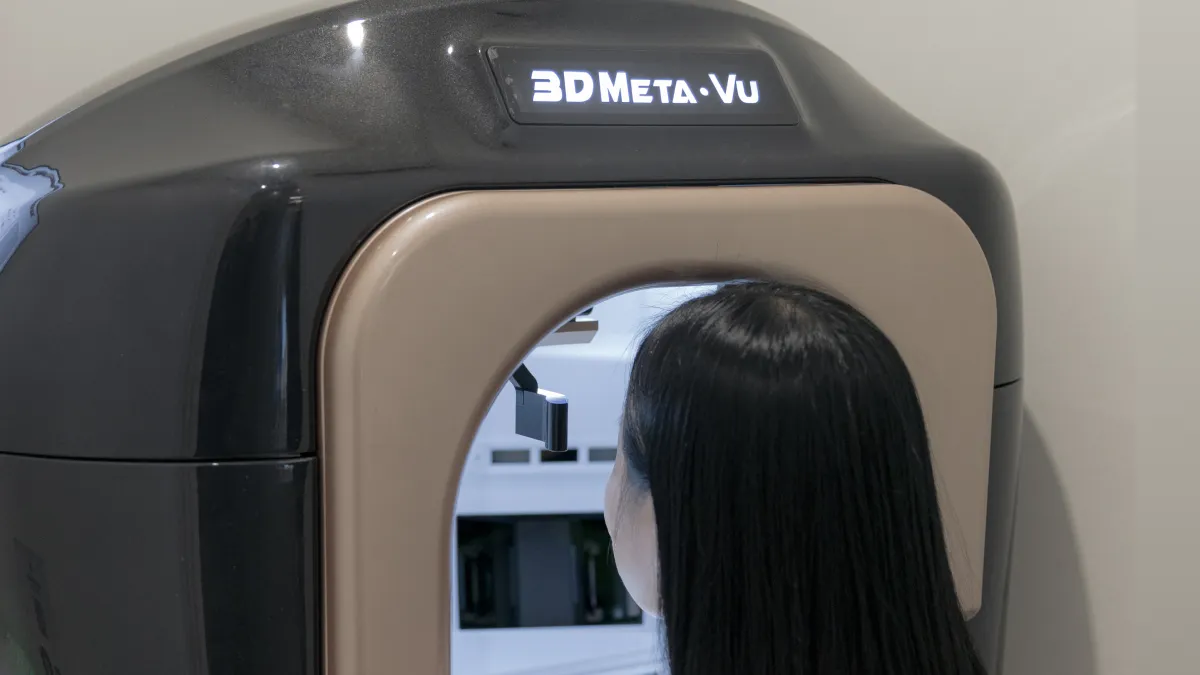
▲ We look at what the eye sees and what the scan reveals, together
We tell you first what it can't do. Tethered scars don't fill in well with this method alone, and innate pore size doesn't change. Saying this before you start is what lets you judge whether to continue the sessions. Scar treatment has an order: calm active inflammation first, release tethered scars, then help regeneration with this treatment, and leave pigment for last.
We treat by standards built from over 90,000 treatments. Even within one face, the forehead, cheeks, and chin differ in skin thickness and repair speed. Per-area intensity is set by standards, not by feel — and whichever physician treats you, the same standards apply.
The prep room is behind a glass wall, in full view. You can see the preparation and hygiene routine through the glass wall from the waiting area.
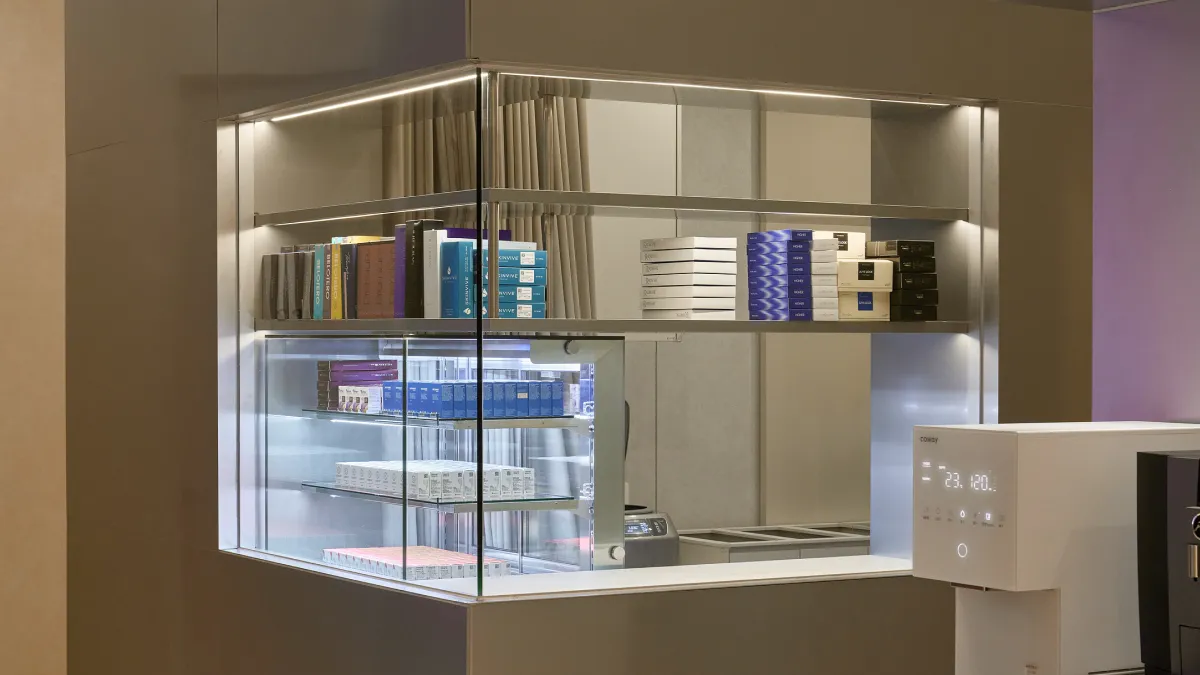
▲ The prep room, seen through the glass from the waiting area
We recommend only the sessions you need. We don't push same-day payment or session packages. You're welcome to come in just for a consultation.
Pricing
PicoSure Fractional Laser cost depends on the area treated and the session plan. We confirm your pore and scar condition at the consultation, then give you a quote.
Location
PECHE Clinic 3F, 364 Gangnam-daero, Gangnam-gu, Seoul Right in front of Gangnam Station, Exit 4
Because this treatment is spread across several sessions, a shorter trip makes the planned spacing easier to keep.
FAQ
Q1. Who performs the treatment? A: PECHE physicians who all work to the same per-area intensity standards, built from over 90,000 documented treatments. Intensity is set from the pore and scar condition confirmed at your assessment, and even if your physician changes, the treatment stays within the same standards.
Q2. Can I go to work the next day? A: This method doesn't remove the surface layer, so no scabs form; redness lasts a day or two, then settles. The time redness lingers varies with intensity and area, though — if you have an important event coming up, tell us before the session and we'll adjust around it.
Q3. Can I have it the same day as a pigment treatment? A: Lightening pigment and treating texture differ in goal and mechanism. Whether to run them the same day or separately is decided at the consultation, based on your skin's condition and how much recovery time you have. Forcing both at once can lengthen recovery.
Q4. How many sessions will I need? A: 3–5 sessions at 3–4 week intervals, matched to the skin's repair cycle, is the baseline. Results build as collagen accumulates, so one session isn't enough — and it's adjusted by pore condition and scar depth, from your assessment results.
Q5. How should I choose a clinic? A: Three things. First, whether they measure and show you your pore and texture condition before treating. Second, whether they tell you upfront what this method can and can't do — tethered scars take a different approach. Third, whether the clinic is easy to reach across the spaced sessions.