PicoSure Toning — PECHE Clinic, Gangnam Station
A single 755nm wavelength fired in trillionths of a second, shattering freckles and shallow blemishes seated in the epidermis · Face and body · Right by Gangnam Station Exit 4
PicoSure Toning
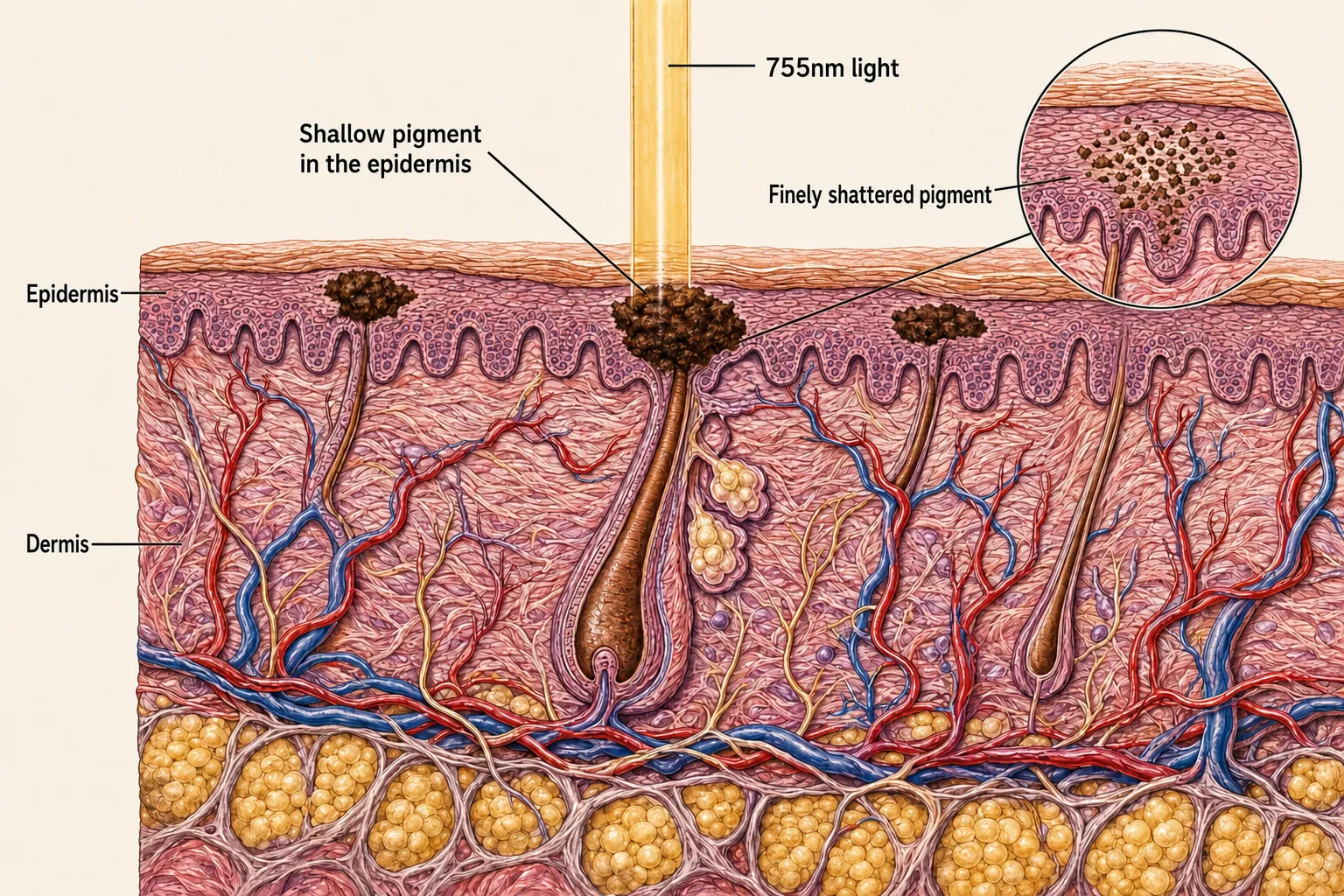
PicoSure is a laser that fires 755nm light in pulses lasting a trillionth of a second, shattering pigment into fine fragments. Wavelength is the value that describes a light's color — and 755nm is well absorbed by brown melanin, the pigment behind freckles and blemishes, so the energy lands directly on pigment seated shallow in the epidermis.
With pulses this short, heat has no time to spread to the surroundings. So rather than burning the pigment, the laser breaks it apart like grains of sand with an instantaneous impact — leaving the healthy skin around it less disturbed.
▲ The light lands on shallow pigment in the epidermis, and the pigment shatters finely in place
When to Consider It
- Freckles and blemishes show through even under makeup
- Your whole face looks duller once summer is over
- The same pigment has also appeared beyond your face — neck, backs of the hands, chest
- You want pigment cleared gradually, without a scabbing recovery period
The Pigment It Targets
| Target | What it is |
|---|---|
| Freckles | Small, distinct brown dots scattered shallow in the epidermis |
| Shallow blemishes | Brown spots seated in the epidermis with fairly clear borders |
| Overall dullness | Pigment laid faintly across the whole face rather than in one spot |
Not all pigment sits at the same depth. Pigment that reaches into the dermis with blurred borders is better handled by a longer wavelength, and a single sharply defined spot that stands out may be better served by removing just that spot. The difference is hard to tell by eye, so the scan confirms it before we decide.
Tattoo ink shatters by the same principle, but ink responds differently by color — so its sessions and plan are set separately from pigment care.
How It's Done
1. Cleansing and makeup removal Leftover makeup keeps the light from entering evenly, so the skin is cleansed first.
2. 3D MetaVu pigment analysis Photographs under several light sources show whether the pigment sits in the shallow layer or reaches deeper. The pigment you can see and the pigment the scan reveals can differ.
3. Treatment The 755nm laser is applied. With pigment lasers, building up in safe doses beats going hard in one pass — so we proceed at the intensity set at your assessment.
4. Soothing and guidance After soothing, we go over sun protection and other care.
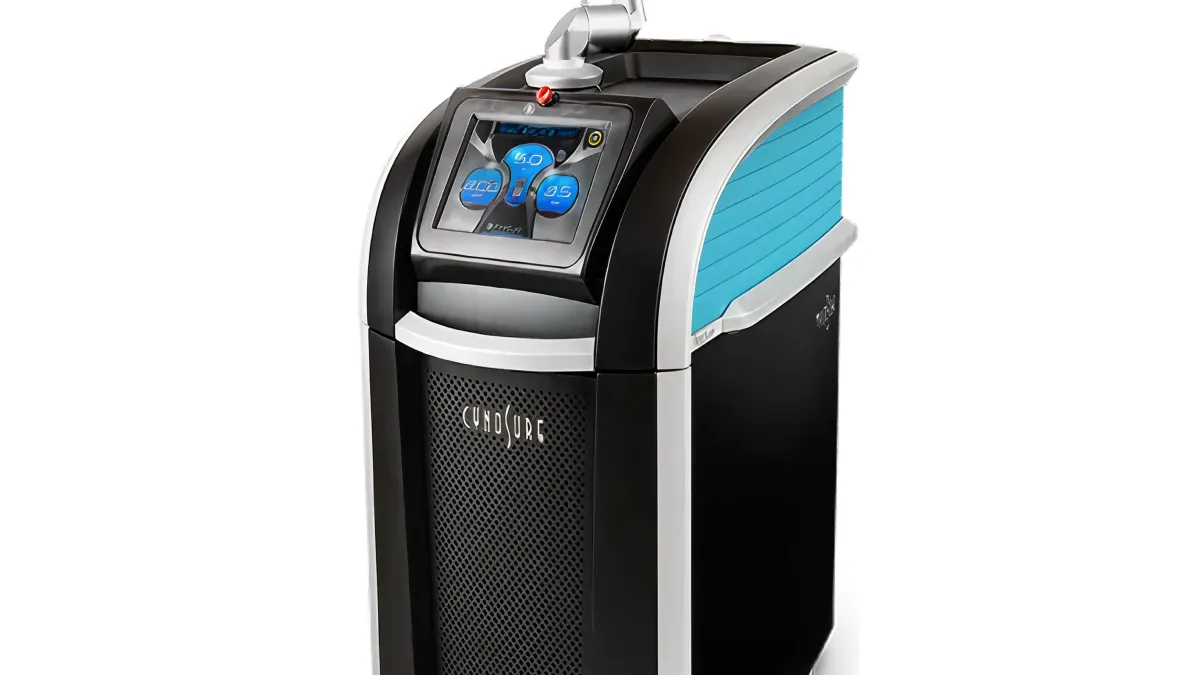
▲ PicoSure — a 755nm picosecond pigment laser
Results and Recovery
| Item | Details |
|---|---|
| Target | Brown melanin seated shallow in the epidermis |
| How it works | 755nm fired in trillionths of a second — shattering pigment by instantaneous impact, not heat |
| Areas | Face · body (neck, backs of the hands, chest) |
| Sessions and spacing | 1–2 weeks apart at first → 2–3 weeks as pigment fades → 3–4 weeks in maintenance |
| When results show | Sessions 1–3 bring a subtle brightening at most · fading becomes noticeable around session 5 (1–2 months in) · clear around session 10 |
| Pain | A light snap, like a rubber band flicked gently |
| Pain control | Performed with cooling that chills the treated area — no numbing by default · numbing cream applied on request |
| Downtime | No scabbing · cleansing and light makeup from the same day |
| Aftercare | Sunscreen and moisturizer — pigment darkens again easily under UV, so sun protection is a key part of the care |
The reason sessions are spaced comes down to clearance. Shattered pigment leaves in two ways: fragments in the epidermis ride out with the skin's natural shedding, and fragments that settle into the dermis are carried off through the lymphatic vessels (the body's waste-clearing channels). Only so much can leave at a time — shattering more doesn't make it fade faster.
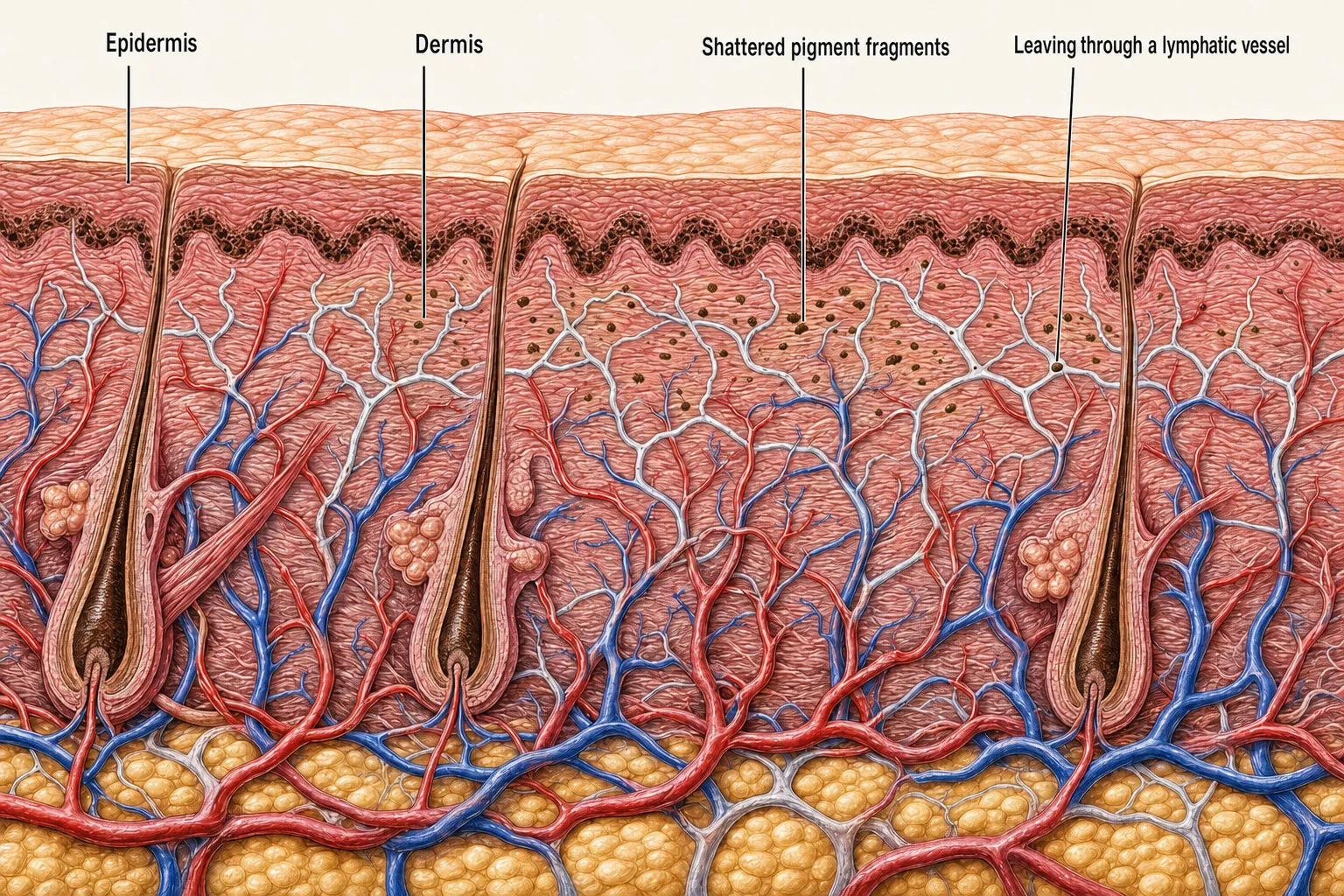
▲ Fragments that settle into the dermis leave through the fine, mesh-like lymphatic vessels — only so much clears at a time, which is why sessions are spaced
Depending on pigment depth, recovery pace, and UV exposure, the course can run to 15 sessions or more. If you want pores and texture addressed too, the same device takes a lens attachment that stimulates the dermis — a separate approach; we sort out which one fits at your consultation.
Expected Reactions and Possible Side Effects
Common, temporary reactions — part of the normal response:
- Faint redness that usually settles within a few hours
This treatment doesn't leave scabs.
Anything beyond this is uncommon. If a reaction lasts longer than expected or worsens, contact us and we'll check it with you.
What We Check Beforehand
If any of these apply to you, let us know during your consultation. We adjust the timing or lower the intensity.
- Recent strong sun exposure or tanning — we wait until the pigment settles
- Darker skin tones — pigment in the epidermis absorbs more energy, raising the risk of burns and marks, so we start at lower intensity
- Inflammation or wounds at the treatment site — we proceed once it has healed
- Medications that increase light sensitivity (such as some antibiotics or diuretics)
- A recent pigment treatment or peel — we space it out
- Pregnancy or breastfeeding
"I had a laser and more pigment came up" is usually new pigment made by irritation. The skin reads the stimulus as an attack and defends itself by producing more pigment — different from the original pigment returning. It fades with time, but working at lower intensity across spaced sessions is the safer course.
How PECHE Clinic Does It
We start from measurement, not the name of a treatment. The same brown spot calls for different approaches depending on whether it sits shallow in the epidermis or reaches into the dermis. A pigment scan under changing light sources shows the depth and distribution first — and we recommend this treatment when it fits. Sometimes the measurement says something else comes first, and we tell you so.
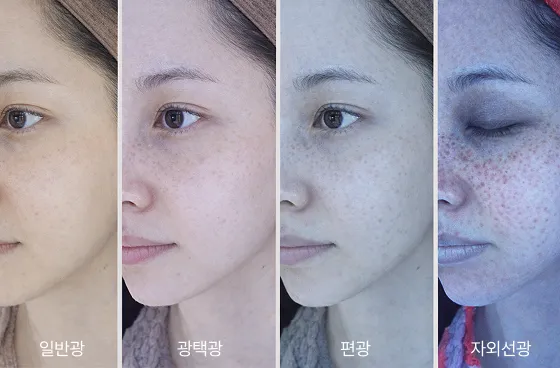
▲ We look at the measured screen together and decide which pigment to treat
We keep multiple wavelengths on hand, so the choice can match the depth. Shallow and deep pigment commonly coexist — and a single wavelength delivers energy to only one depth. We keep wavelengths for different depths available, and recommend the one that fits your assessment.
We treat by standards built from over 90,000 treatments. A pigment laser isn't a treatment that improves faster at higher intensity. Intensity is set by standards for skin tone and pigment depth, not by feel — and whichever physician treats you, the same standards apply.
The prep room is behind a glass wall, in full view. You can see the preparation and hygiene routine through the glass wall from the waiting area. The more sessions a treatment takes, the more it matters that each one is prepared the same way.

▲ The prep room, seen through the glass from the waiting area
We're honest about what to expect. This treatment isn't finished in a single session, and pigment can darken again under UV. We tell you first what it can and can't do — and we don't push same-day payment or session packages. You're welcome to come in just for a consultation.
Pricing
The cost of PicoSure Toning depends on the treatment area, how much of it is covered, and the session plan. We confirm your pigment's state in the consultation, then give you a quote.
Location
PECHE Clinic 3F, 364 Gangnam-daero, Gangnam-gu, Seoul Right in front of Gangnam Station, Exit 4
Early sessions come around every 1–2 weeks. The shorter the trip, the easier it is to keep that rhythm without missing a session.
FAQ
Q1. Who performs the treatment? A: PECHE physicians who all work to the same intensity standards, built from over 90,000 documented treatments. Intensity is set from the pigment depth and skin tone confirmed at your assessment, and even if your physician changes, the treatment stays within the same standards.
Q2. How do I know if my pigment is the kind this treats? A: Freckles and blemishes seated shallow in the epidermis, and overall facial dullness, are close to this treatment's target. Pigment with blurred borders reaching deeper is better handled by a different wavelength, though — and one or two sharply defined spots that stand out may better suit spot removal. The scan confirms the depth, and if this isn't the fit, we say so.
Q3. How many sessions will I need — and what if I stop partway? A: Typically, fading becomes noticeable around session 5 and clear around session 10, so this is a treatment carried across sessions. If you stop partway, the pigment already cleared doesn't come back — but stopping before the fading you aimed for leaves the result only partway there. It's better to set a target number of sessions at the start.
Q4. Can I get back to daily life right away? A: No scabs form, so cleansing and light makeup are fine from the same day. Any faint redness usually settles within a few hours.
Q5. How should I choose a clinic? A: Three things. First, whether they photograph under changing light sources and show you shallow versus deep pigment — since which kind you have decides the right wavelength. Second, whether they keep wavelengths for different depths when pigment is mixed. Third, whether the clinic is easy to reach — you'll be coming back every 1–2 weeks.