PicoLite Black Toning — PECHE Clinic, Gangnam Station
A dual-wavelength picosecond pigment laser — 1064nm for melasma reaching into the dermis, 532nm for shallow epidermal blemishes, each handled separately · Face and body · Right by Gangnam Station Exit 4
PicoLite Black Toning
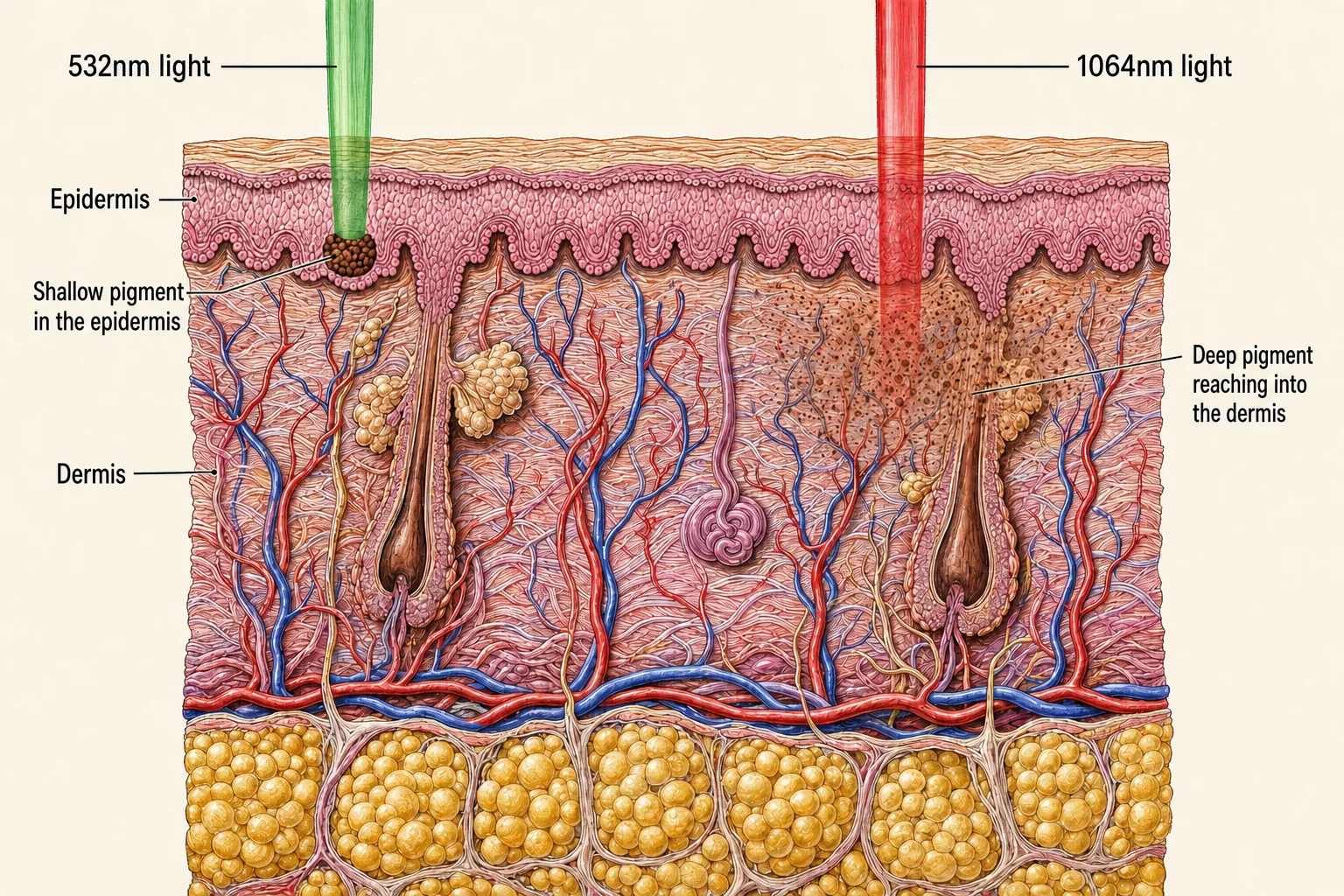
PicoLite Black is a pigment laser that emits light at two different wavelengths. Wavelength is the value that describes a light's color — and the longer it is, the deeper it travels into the skin. The shorter 532nm concentrates its energy on freckles and blemishes seated shallow in the epidermis; the longer 1064nm reaches down to the dermis, arriving at melasma that surface wavelengths struggled to touch.
Both wavelengths fire in trillionths of a second. At pulses this short, heat doesn't spread to the surroundings — only an instantaneous impact remains, so the pigment shatters while the tissue around it is less disturbed. That property matters when treating melasma, which is sensitive to heat.
▲ The short wavelength reaches the epidermis's shallow pigment; the long wavelength reaches pigment extending into the dermis
When to Consider It
- A hazy brown patch has spread wide and won't hide under makeup
- You've had several pigment treatments, yet that one patch stays
- Shallow blemishes and hazy patches are mixed on one face
- Your skin tone is on the darker side, and you worry a laser will leave marks
- You want pigment beyond the face treated too — neck, chest, backs of the hands
What Each Wavelength Handles
| Wavelength | Reaches | Handles |
|---|---|---|
| 532nm | The epidermis | Freckles · shallow blemishes with fairly clear borders |
| 1064nm | Down to the dermis | Pigment spread across the epidermis and dermis with blurred borders |
The two wavelengths aren't always used together. Adding a wavelength that isn't needed contributes nothing to the improvement and only adds irritation. Whether shallow pigment is the main issue, deep pigment is, or how the two are mixed — that's what decides which wavelength is used, and at what intensity.
Why 1064nm is considered first for darker skin tones is about absorption, not depth. The more pigment in the epidermis, the more a short wavelength is absorbed at the surface — reaching the actual target less, and burdening the epidermis more. 1064nm is absorbed comparatively less by the epidermis's pigment, so that burden is smaller.
How It's Done
1. Cleansing and makeup removal The skin is cleansed first, so leftover makeup doesn't block the light.
2. 3D MetaVu pigment analysis Photographs under several light sources show whether the pigment is shallow or deep, and how the two are mixed. This result is the basis for choosing the wavelength.
3. Treatment We apply the wavelength and intensity chosen at your assessment. Rather than treating hazy, spreading pigment with strong energy in one pass, we work at low intensity across sessions, watching how it responds.
4. Soothing and guidance After soothing, we go over sun protection and other care.
Results and Recovery
| Item | Details |
|---|---|
| Target | Shallow epidermal pigment (532nm) · pigment across the epidermis and dermis (1064nm) |
| How it works | Instantaneous impacts lasting trillionths of a second shatter the pigment — not a burning method |
| Areas | Face · body, such as the neck, chest, and backs of the hands |
| Sessions and spacing | 1–2 weeks apart at first → 2–3 weeks as pigment fades → 3–4 weeks in maintenance |
| When results show | Fading becomes noticeable around session 5 · clear around session 10 · deep, long-standing pigment can run longer |
| Pain | A light snap, like a rubber band flicked gently |
| Pain control | Performed with cooling that chills the treated area — no numbing by default · numbing cream applied on request |
| Downtime | No scabbing · cleansing and light makeup from the same day · faint redness usually settles within a few hours |
| Aftercare | Sunscreen and moisturizer |
The deeper the pigment, the more sessions it takes. Of the shattered pigment, the fragments that settle into the dermis are carried out of the body through the lymphatic vessels — and the deeper they start, the longer that path. Shattering a lot at once doesn't clear it faster; fragments left unprocessed become an irritant instead.
Care continues after the course. Hazy, spreading pigment has a way of darkening again under UV. To keep the results you finished with, sun protection matters as much as the treatment itself.
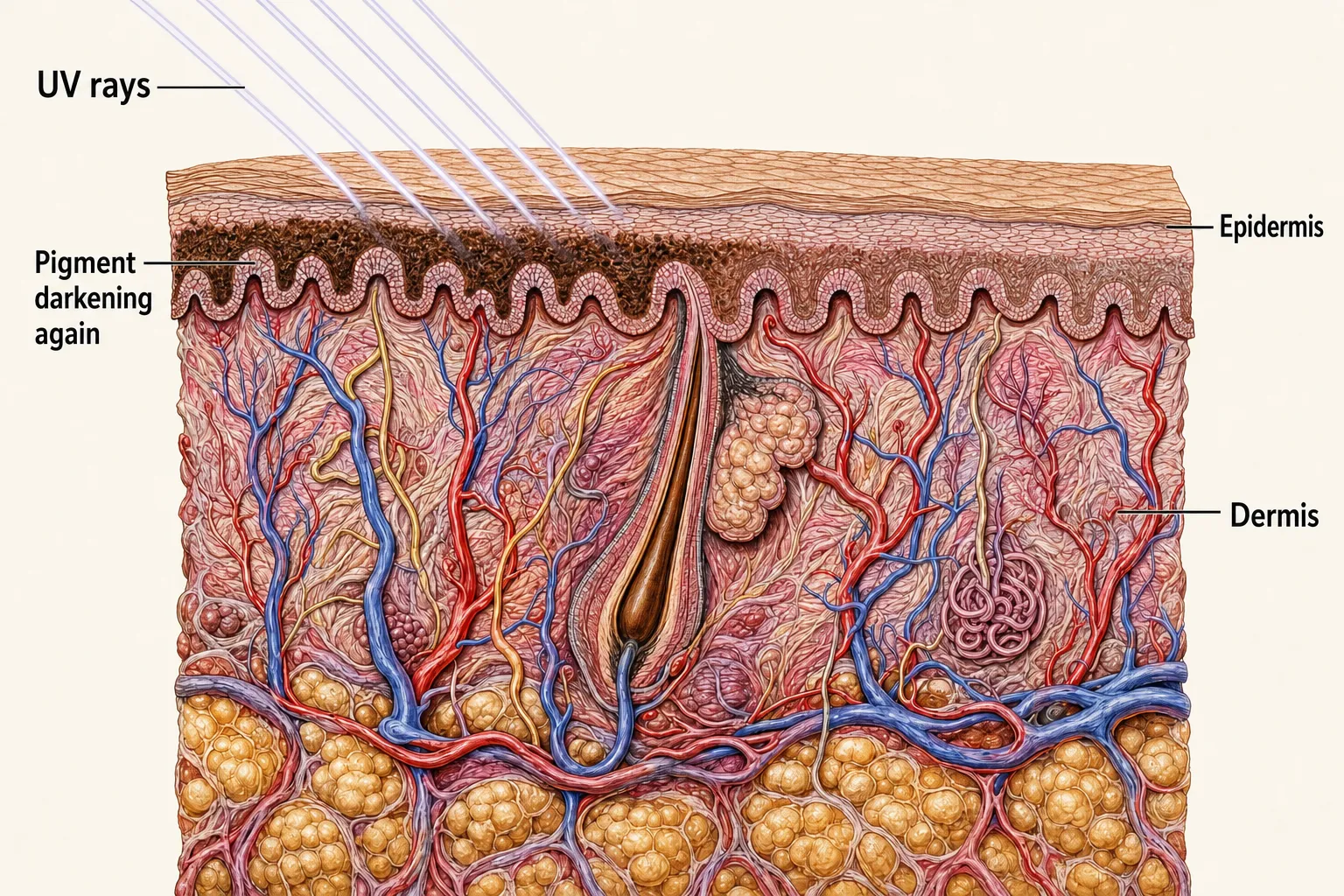
▲ Pigment darkens again where UV lands — which is why protection is still needed after the course ends
If you want scars or pores addressed too, the same device has a mode that splits the light into many points to stimulate the dermis — a separate approach; we decide which fits at the consultation.
Expected Reactions and Possible Side Effects
Common, temporary reactions — part of the normal response:
- Faint redness that usually settles within a few hours
This treatment doesn't leave scabs.
Anything beyond this is uncommon. If a reaction lasts longer than expected or worsens, contact us and we'll check it with you.
What We Check Beforehand
If any of these apply to you, let us know during your consultation. We adjust the timing or lower the intensity.
- Recent strong sun exposure or tanning — we wait until the pigment settles
- Inflammation or wounds at the treatment site — we proceed once it has healed
- Medications that increase light sensitivity (such as some antibiotics or diuretics)
- A recent pigment treatment or peel — we space it out
- Pregnancy or breastfeeding
- Pigment from another cause — if a medication or a skin condition is behind the darkening, managing that cause comes first
Pigment rising after a treatment is the skin defending itself against the stimulus by making more pigment. It's different from the original pigment returning, and it fades with time — but hazy, spreading pigment shows this reaction more readily, so going gently across spaced sessions is the safer course.
How PECHE Clinic Does It
Which wavelength to use is settled by measurement first. Shallow and deep pigment are commonly mixed, and they're hard to tell apart from the surface. Photographs under changing light sources separate the shallow from the deep — and we set the wavelength and intensity from that result.
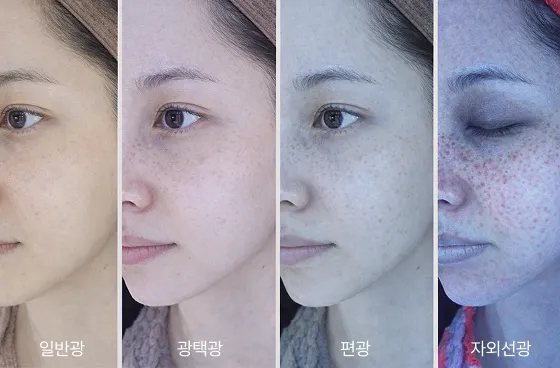
▲ We look at the measured screen together and decide which pigment to treat first
We don't propose raising the intensity to cut the session count. Firing hard can leave marks. Intensity is set to your skin tone and pigment depth by standards built from over 90,000 treatments — and whichever physician treats you, the same standards apply.
The prep room is behind a glass wall, in full view. You can see the preparation and hygiene routine through the glass wall from the waiting area.

▲ The prep room, seen through the glass from the waiting area
We tell you first what it can do — and what it can't. This treatment doesn't finish in one pass, and UV care has to continue after the course. We say that first, and we don't push same-day payment or session packages. You're welcome to come in just for a consultation.
Pricing
The cost of PicoLite Black Toning depends on the area, the range, and the session plan. We confirm your pigment's state in the consultation, then give you a quote.
Location
PECHE Clinic 3F, 364 Gangnam-daero, Gangnam-gu, Seoul Right in front of Gangnam Station, Exit 4
Early sessions come around every 1–2 weeks. The shorter the trip, the easier it is to keep that spacing.
FAQ
Q1. Who performs the treatment? A: PECHE physicians who all work to the same intensity standards, built from over 90,000 documented treatments. The wavelength and intensity are set from the pigment depth and skin tone confirmed at your assessment, and even if your physician changes, the treatment stays within the same standards.
Q2. I've had several pigment treatments and nothing changed. Why? A: If the wavelength of your past treatments was tuned to epidermal pigment, any pigment reaching into the dermis may have received less of the energy. That said, it's hard to conclude that changing the wavelength alone will solve it. The more accurate path is to confirm, through photographs under changing light sources, what depth your pigment sits at and how it's mixed — then redesign the wavelength, intensity, and sessions.
Q3. How many sessions will I need? A: Typically, fading becomes noticeable around session 5 and clear around session 10, with deep, long-standing pigment sometimes running longer. We set a target point when the course begins, then adjust spacing and intensity as it responds.
Q4. Can I get back to daily life right away? A: No scabs form, so cleansing and light makeup are fine from the same day, and any faint redness usually settles within a few hours.
Q5. How should I choose a clinic? A: Three things. First, whether they photograph under changing light sources, show you shallow versus deep pigment, and choose the wavelength on that basis. Second, whether they avoid proposing higher intensity to cut the session count — on hazy, spreading pigment, that approach can leave marks. Third, whether the clinic is easy to reach — you'll be coming back every 1–2 weeks.