Microneedling in Seoul: The Home Pen Stops at the Surface
One word covers two different things — how deep the needles reach, and who decides that depth
**Microneedling in Seoul means fine needles passing through the outer layer of skin and into the dermis.** The pens and rollers you use at home carry the same word, but the needles reach a different depth. - **What a home device handles** — it helps what you apply absorb better, and refines the texture of the surface - **What a clinic device handles** — the needles reach the dermis, leave a stimulus at that depth, and new collagen forms as the skin repairs - **Where that splits your concern** — enlarged pores and indented acne marks only change when new collagen forms in the dermis, so a depth that stays at the surface never reaches them **Who decides the depth is also different.** At home you decide by feel. At a clinic it follows criteria by area and skin condition, set after the doctor looks at your skin. On a device used without numbing, pain ends up setting the upper limit on depth.
"I already have a microneedling pen at home. Is paying for it at a clinic in Seoul actually different?"
Search microneedling and microneedling pen comes up right behind it. The people looking into the clinic version are the ones who already own a home device. The same word covers both, but one is already in your drawer and the other you pay for, so of course you want to know what separates them. Here is where the two part ways.
Is Microneedling in Seoul Different From a Home Pen?
The word microneedling points at two different things. What separates them is not the length of the needle but the depth the needle actually reaches.
A home device aims at a very shallow depth. Short needles open fine channels in the outermost layer of skin, and what you apply absorbs better through them. That is not to say it is useless. What this kind of device handles is clear — absorption of what you apply, and the texture of the surface. It is simply not the place where a concern that started deeper in the skin can be reached.
A clinic device sends the needle through the outer layer and into the dermis. The dermis is the layer where collagen sits. Holding the rim of an enlarged pore from outside, and filling in an indented mark, both happen here. A stimulus that stays in the outer layer never arrives at this layer.
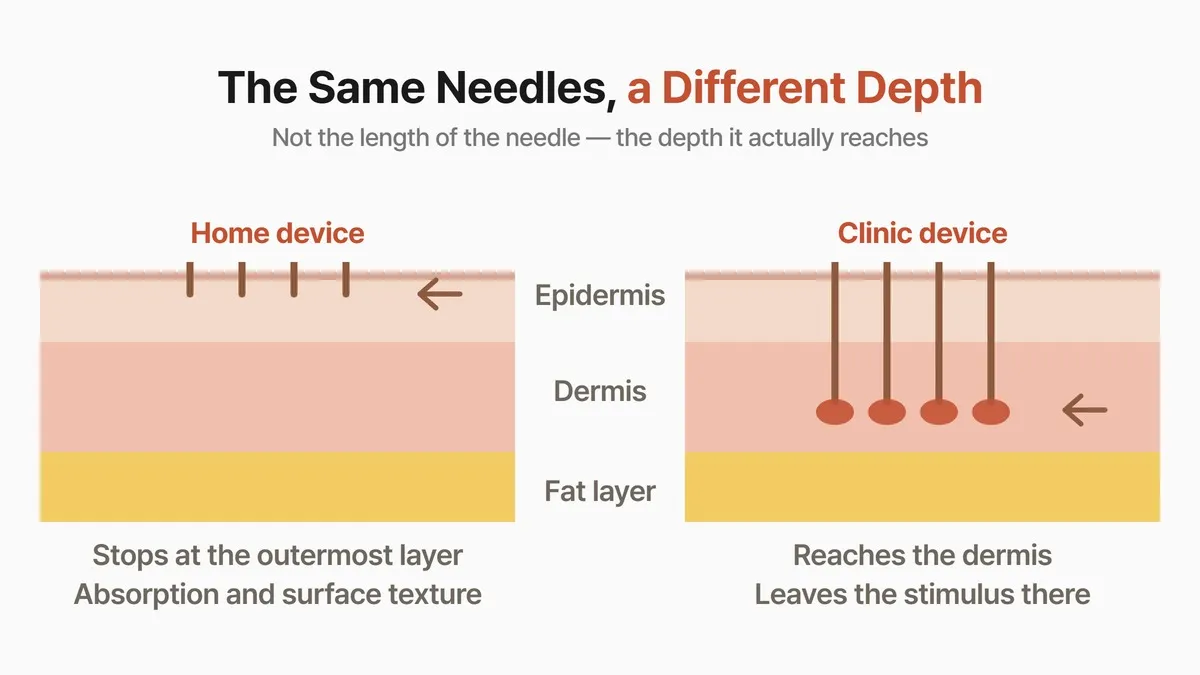
At Peche Clinic this treatment is done with Potenza. Fine needles go into the dermis, and radiofrequency heat is released from the needle tips themselves. This is the method usually called RF microneedling, and Potenza is the name of a device that uses it. Because the heat does not come from the surface of the skin, the epidermis is left alone while the stimulus sits only at the depth you want.
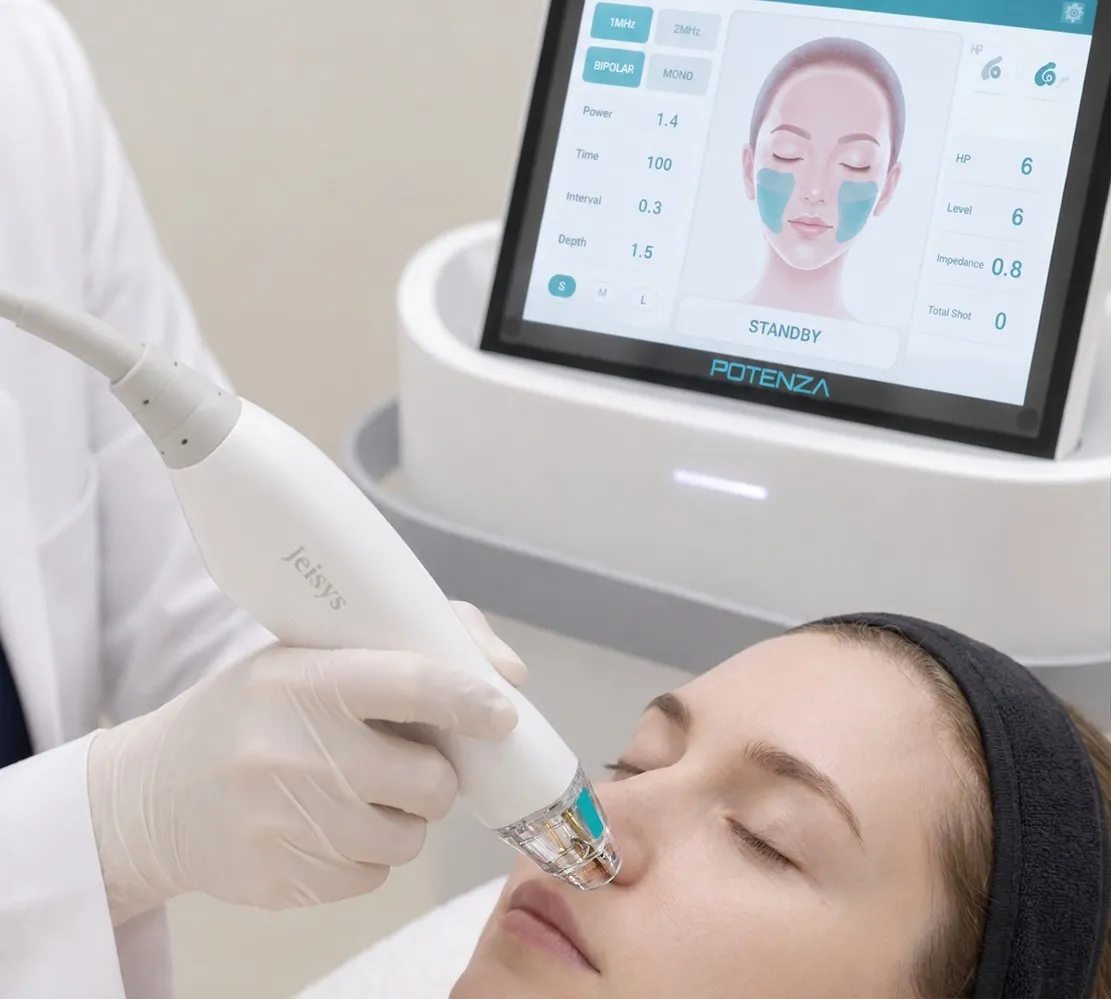
Going that deep needs numbing. A depth that takes the needle into the dermis is hard to sit through without it. At the clinic, numbing cream is applied and left for 20 minutes before the session starts. A home device has no such step, so at home your own pain threshold becomes the limit on depth.
What Can't Microneedling Do If It Stops at the Surface?
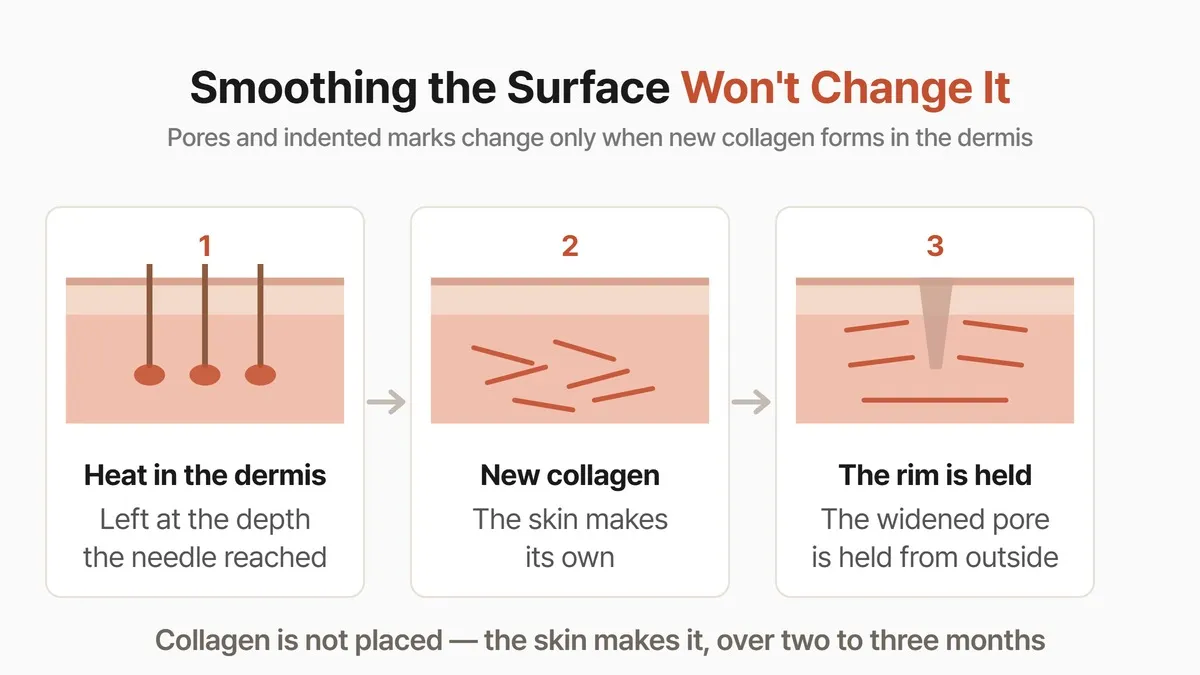
Enlarged pores and indented marks do not change by smoothing the surface.
One reason a pore stands out is that the collagen holding its rim has weakened and the opening has widened. An indented acne mark is a spot where the dermis underneath has sunk. In both cases new collagen has to form in the dermis before the rim of the pore is held from outside and the floor and edges of the indent fill in. A stimulus that stays in the epidermis does not get to that layer.
What the clinic device does ends at leaving a heat stimulus in the dermis. Collagen is not placed into the skin; the skin is prompted to make its own, so the change appears gradually over two to three months rather than right after the session. There is a limit to how much can be made at once, which is also why the sessions are spread out.
There are things this treatment cannot do either. It is not a lifting treatment for a sagging contour, and it cannot permanently change the pore size you were born with. Aging and oil production carry on, so reducing how enlarged the pores are and holding that for as long as possible is the realistic goal.
How Is Needle Depth Decided for Microneedling in Seoul?
Even with the same device, how deep the needles go and how strong the stimulus is will decide the result.
A comprehensive review of RF microneedling set out the skin concerns the method can be used for, and noted that no studies have yet compared specific devices head to head (1). A device name on its own does not settle the result. So it is more practical to start from "what does my skin need, and at what depth" than from "which device is it."
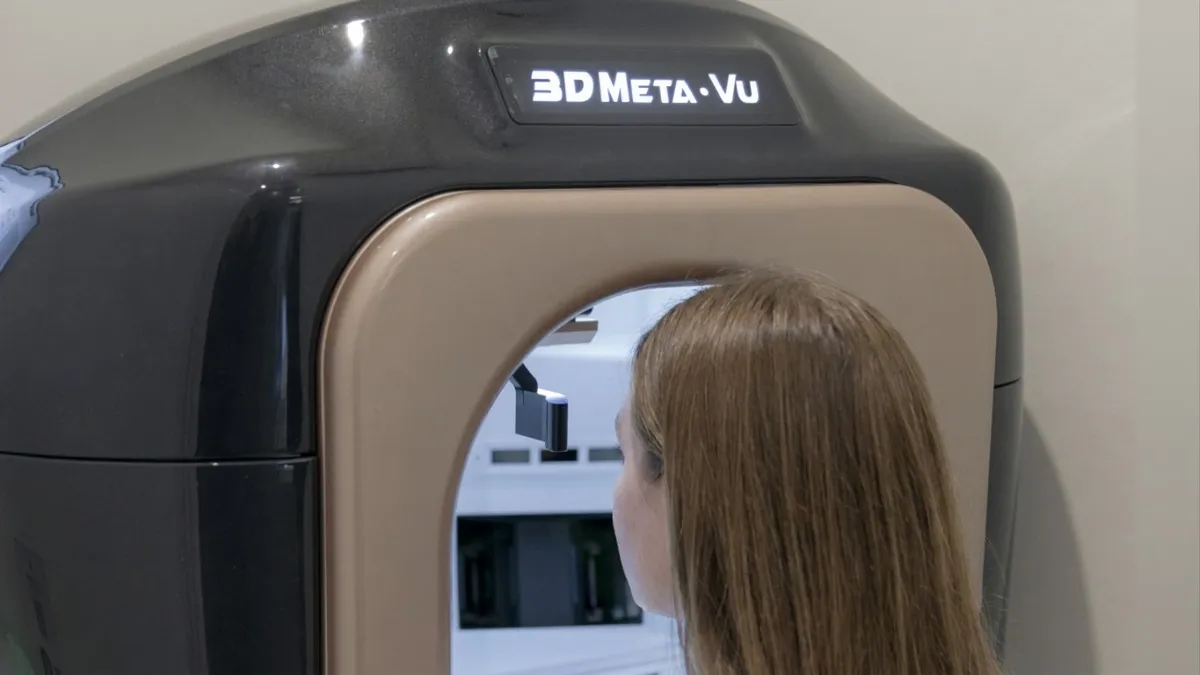
At Peche Clinic, needle depth and intensity follow criteria by area and skin condition, built from more than 90,000 treatments performed here. The same criteria apply whichever doctor takes your session, and we tell you the name of the doctor who will treat you beforehand. We take one 3D skin analysis scan to check pores, oil and texture under different light sources, go through the results with you to set the range and the intensity per area, and adjust during the session if you tell us how it feels.
The setup also splits by what is being treated. Pores spread over an area, indented marks and rough texture are treated with a multi-needle tip. Raised spots that come up one at a time are treated with a single needle placed only on that spot.
Sessions run 3 to 5 times at 3 to 4 week intervals, then spread further apart. Fitting the whole intensive run into one trip to Korea is not realistic, so how far we go this time depends on how long you are staying. Redness and swelling usually stay for 1 to 3 days after a session, so telling us your dates in advance makes the plan more accurate.
Can I Keep Using My Microneedling Pen at Home?
They handle different places, so the two can run alongside each other. There is just a window where they should not overlap.
Absorption and the texture of the surface are what daily care handles. Change at the depth of the dermis is what builds up over sessions. The clinic treatment does not replace what you were already doing at home, and the reverse is just as true. The layers they work on are not the same.
The window is right after a session. The channels the needles made take time to close, so washing with water comes 3 to 4 hours later, and cleansing and makeup from the next morning. Until the redness has settled and you can go back to saunas and sweaty exercise — 3 days to a week — you do not open fresh channels with a home device.
What goes on the skin while the channels are open is the same question at home and after a session. A product made to be applied to the skin is not necessarily made to go into it. An ampoule or oil you use every day can irritate skin it would not normally irritate, if it goes on before the channels the needles made have closed. What to put on right after a session is something the doctor goes over with you on the day, based on what was done.
It helps to bring up your home device in the consultation. It is checked for the same reason other recent treatments are. If you are prone to keloids — scars that heal raised — needle marks can heal that way too, and that is something we go over before starting as well.
4 Things to Sort Out Before Microneedling in Seoul
Sorting out these four beforehand makes the consultation go quickly.
1. Work out whether your concern is at the surface or in the dermis Is it that what you apply does not seem to sink in? Or is it pores and indented marks, where the skin underneath has sunk? This is what divides what you do at home from what you come in for.
2. Ask what the needle depth and intensity are based on If all you come away with is the name of the device, you have missed the part that matters. Check whether there are criteria that change the depth by area, and whether they will adjust if you say how it feels during the session.
3. Have the things you need to tell us ready Electronic devices inside your body, metal implants in the face, a tendency to keloids, medication you are taking, treatments you have had recently. If you have been treating yourself with a home device, that is worth mentioning too.
4. Send your dates and your flight home The intensive run sits at 3 to 4 week intervals, so one trip will not cover all of it, and redness stays for a few days after a session. Knowing your schedule lets us decide together how far to go this time.
If you are still at the stage of choosing where to go in Seoul, 6 Things to Check Before Booking a Skin Clinic in Seoul covers that side.
Peche Clinic is a one-minute walk from Exit 4 of Gangnam Station, on Subway Line 2 and the Shinbundang Line. We are open until 9 PM on weekdays and 6 PM on weekends and public holidays. The preparation area is glass-walled, so from the waiting room you can watch the setup and the hygiene handling for yourself, and we use authentic tips only. English-speaking staff are on site, and inquiries and bookings are handled through WhatsApp. Our consultations draw on more than 90,000 treatments performed here.
FAQ
Q: How is microneedling in Seoul different from the pen I have at home?
A: The depth the needles reach. A home device works at a very shallow depth, aimed at how well what you apply absorbs and at the texture of the surface. A clinic device takes the needle into the dermis and leaves the stimulus at that depth. Going deeper needs numbing, so on a device with no numbing step, pain ends up setting the limit on depth.
Q: Will microneedling in Seoul make my pores smaller?
A: Enlarged pores can become less noticeable, because new collagen in the dermis holds the rim of the pore from outside. It is not a treatment that permanently changes the pore size you were born with, so after the intensive run we keep it up with maintenance sessions.
Q: Can a home microneedling device do anything for indented acne marks?
A: An indented mark is a spot where the dermis has sunk, so it fills in only when new collagen forms at the floor and around it. A depth that stays at the surface does not reach that layer. Absorption and surface texture, on the other hand, are exactly what a home device handles.
Q: Who decides the needle depth for microneedling in Seoul?
A: It follows the area and your skin condition. Peche Clinic works to criteria per area built from more than 90,000 treatments performed here, so the same criteria apply whichever doctor takes your session, and we adjust the intensity if you tell us how it feels during the session.
Q: Does microneedling in Seoul hurt?
A: Numbing cream is applied and left for 20 minutes before the session starts. Several fine needles land at once, which feels like a hot stamp being pressed down, and straight after there is a moment of heat spreading inside the skin. Tell us how it feels and we adjust the intensity.
Q: How many microneedling sessions do I need in Seoul?
A: 3 to 5 sessions at 3 to 4 week intervals, then spread further apart. Collagen is not placed into the skin; the skin is prompted to make its own, and there is a limit to how much can be made at once, which is why the sessions are split up.
Q: What do I need to tell the clinic before microneedling in Seoul?
A: Electronic devices inside the body, such as a pacemaker, and metal implants in the face are checked beforehand, because the method sends current through tissue. A tendency to keloids, medication you are taking, treatments you have had recently, and any self-treatment with a home device are all worth telling us. If you have a cold sore at the mouth or widespread pustular acne, we adjust the timing.
This content is provided for informational medical purposes only. Results and side effects may vary depending on the individual. Please consult a medical professional for an accurate diagnosis and treatment plan.
Some images were generated using AI to assist comprehension and may differ from actual procedure results.