Exosomes in Seoul: Celexo Black Label Is for Skin, Not Hair
The same material is used on hair and on skin — what the skin side is aimed at, and how it gets in
"When I search for exosomes, hair loss comes up first. What I want in Seoul is for my skin — are they the same thing?"
This is the first thing people run into when they look exosomes up. The word that most often follows exosomes really is hair, and stem cell comes next. The confusion comes from one material being used for different purposes, so that has to be separated first. Here is how it breaks down.
How Does an Exosome Treatment in Seoul Differ From the Hair Version?
The material is the same family. What it targets and where it goes are different.
Exosome is not the name of a particular treatment. It is the name of a material — a small vesicle that cells release, carrying signaling material such as growth factors. When that vesicle reaches another cell and passes on its signal, cell activity related to repair is regulated.
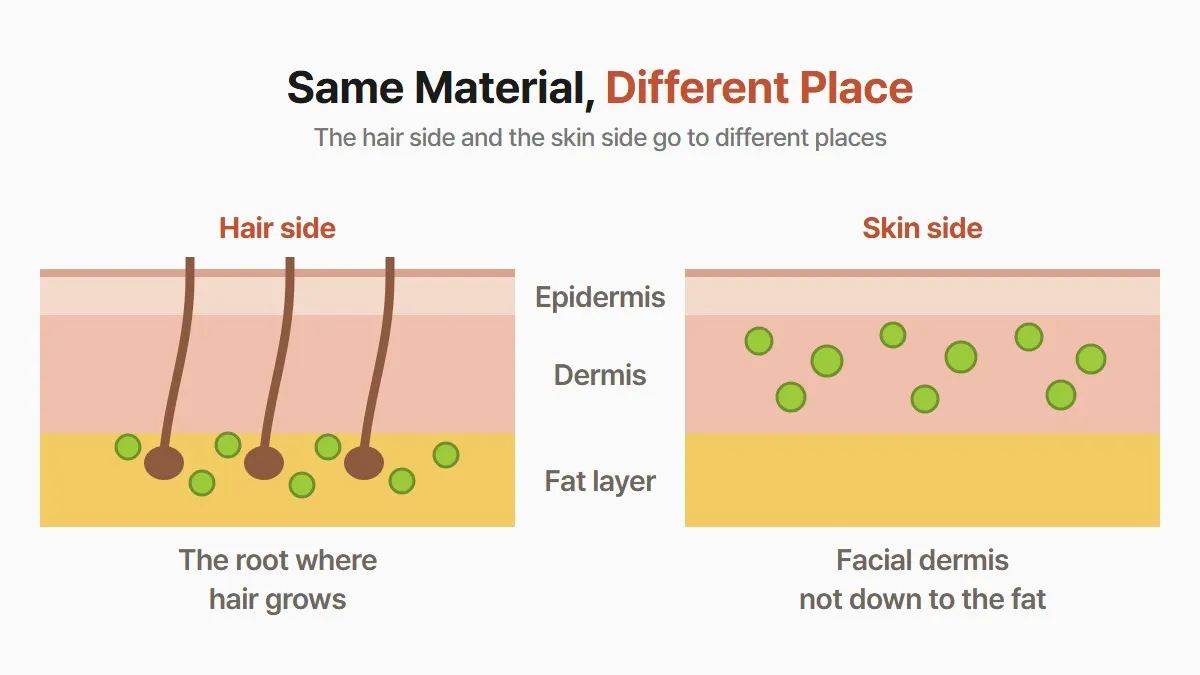
Because of that property, research and treatment have developed along two separate tracks. There is a review covering both skin rejuvenation and hair regrowth from stem cell-derived exosomes (Norouzi et al., Regen Ther, 2024), which gives a sense of how actively both sides are being worked on. But the hair side targets the root where hair grows, and the skin side targets the facial dermis. Where it goes, and what change is expected, are different.
The Celexo Black Label used at Peche Clinic is the skin side. It addresses fine lines and firmness, skin that flushes easily, and a weakened skin barrier. Hair is not its purpose. Treat it as a separate branch from the hair treatments you saw in the search results.
Exosome products look numerous because what cell or plant they were obtained from differs by product. Celexo Black Label is a combination type: exosomes obtained from human stem cells plus two plant-derived exosomes (ginseng and cica, from centella). The manufacturer describes the recovery of the basement membrane — the thin layer that joins the epidermis and the dermis — as one of this product's three roles.
Does an Exosome Treatment Put Stem Cells Into My Skin?
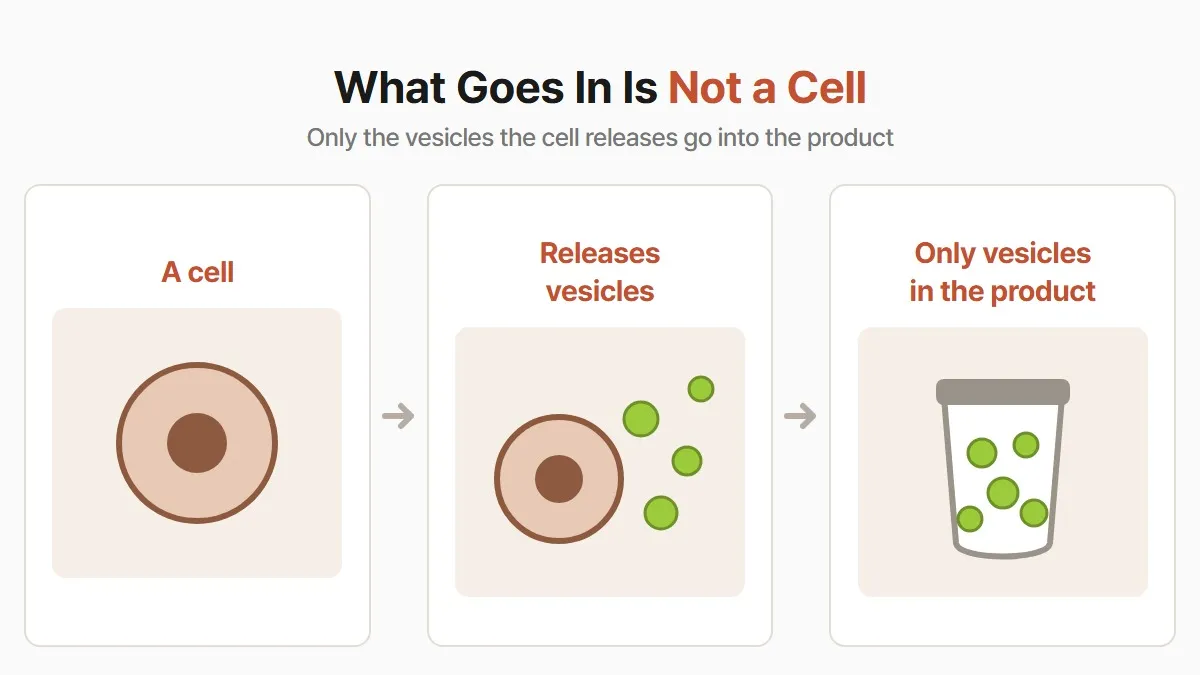
No. What is used is not cells but the vesicles cells release.
Exosomes and stem cells are often taken to be the same thing, and products that source their material from stem cells make that more likely. But what goes in is not a living cell. It is a signaling vesicle the cell produced and released, and it is not alive in itself.
The distinction matters because the nature of the treatment is entirely different. A treatment that uses cells taken from your own body has a separate collection step; an exosome skin booster uses what is in the product, so nothing is taken from your body. For people coming on a trip, that difference affects the schedule too.
The form of the product follows from the same thing. Celexo Black Label keeps a freeze-dried powder and the solution that dissolves it in separate vials, mixed right before the treatment. A powder holds the material more stably than a dissolved liquid does.
Does an Applied Exosome Actually Reach Into the Skin?
Not by applying alone. A channel is made for it.
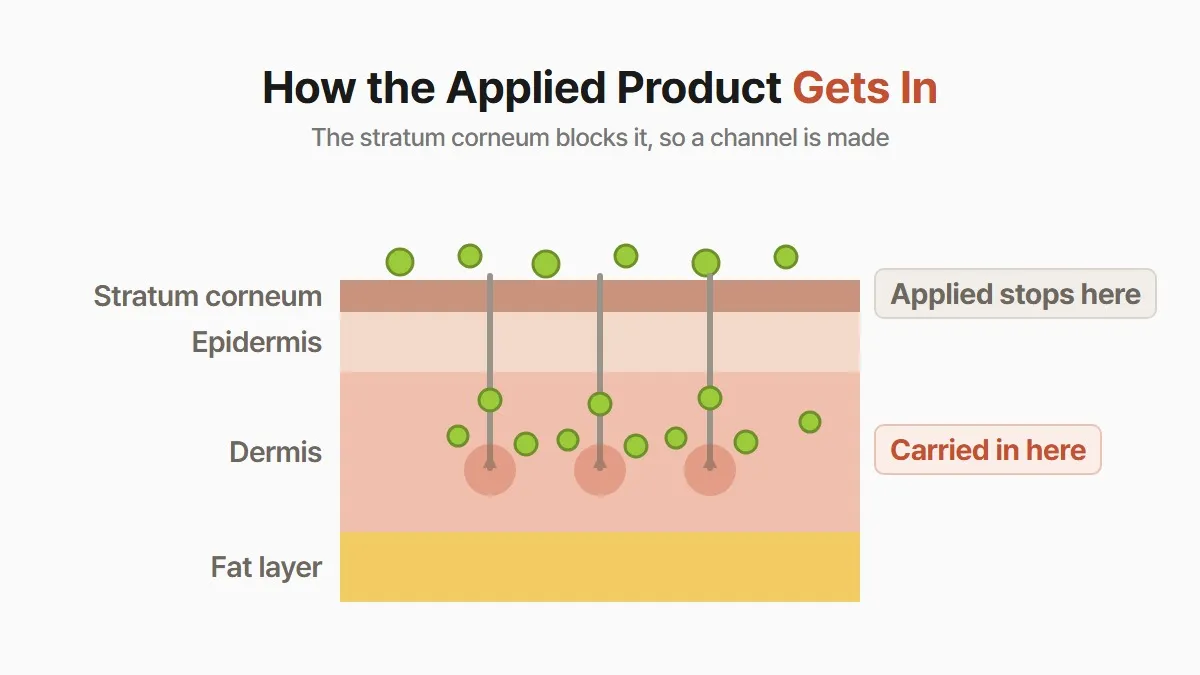
There is a reason exosomes come up alongside microneedling in searches. The stratum corneum, the outermost layer, is a wall against outside substances, so applying alone does not get exosomes down to the dermis. Exosomes are therefore paired with a method of delivery.
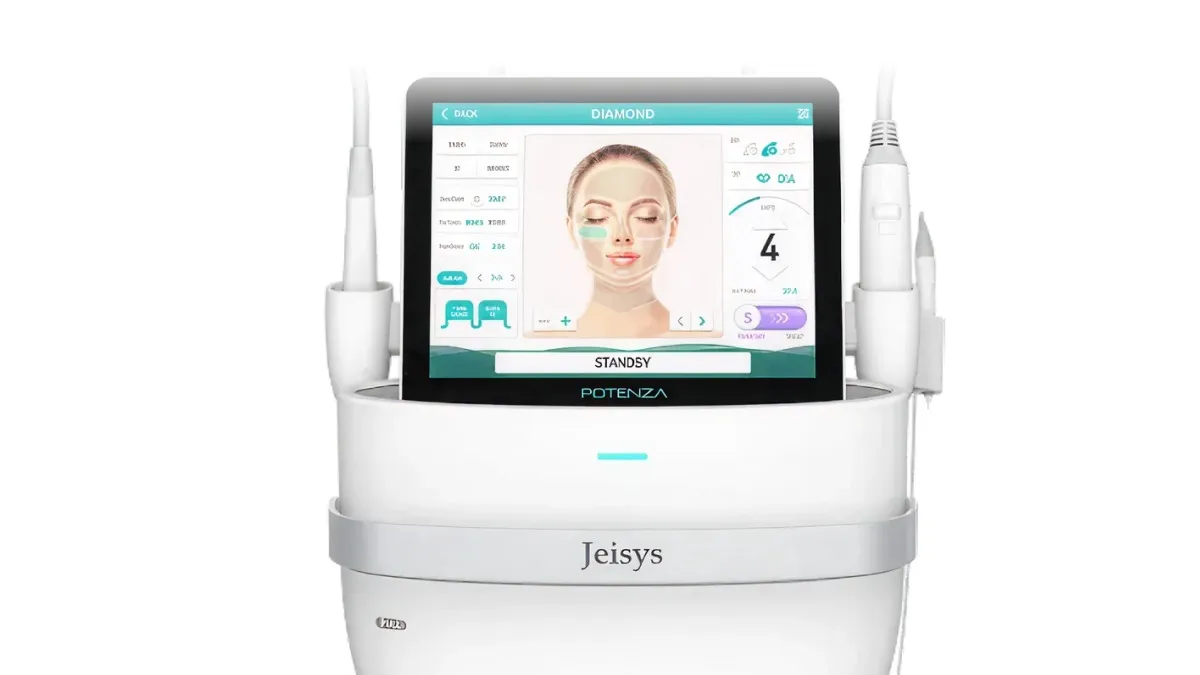
At Peche Clinic this is the pumping tip on Potenza, an RF microneedling device. Several very fine needles enter to the upper and middle depth of the dermis and open a channel briefly, and as the needles withdraw, air pressure pushes the applied material in through that channel. The manufacturer describes an air chamber inside the tip as what creates the pressure. The material stays in the dermis and does not go down into the fat.
Gentle radiofrequency heat also comes from the needle tips. While the heated spot repairs, the cells that make collagen produce new collagen. Because it is a tip that adds material delivery to RF heat-based renewal, it works at a shallower depth with gentler energy than methods used deeper.
What it feels like is a brief sting as the fine needles go in and out, and a stamping pressure as the material is pushed in. Numbing cream is applied and left to take effect before starting, but it reduces sensation only near the surface, so the deeper pressure can remain. Tell us how it feels and the intensity is adjusted area by area.
How a topical product and what a clinic places differ is a pattern that repeats with other ingredients too. How an ampoule sold under the same name differs from the clinic injection is covered in Rejuran in Seoul: The Ampoule and the Injection Differ.
When Do Exosome Results Start to Show?
It appears gradually from two to three weeks, and new collagen takes two to three months to build.
An exosome is not a material that fills. It is a signal. Change begins only after the cells have had time to receive that signal and make new proteins. Collagen formed by the heat at the needle tips takes longer still. It is a treatment you have done in Seoul and notice once you are home.
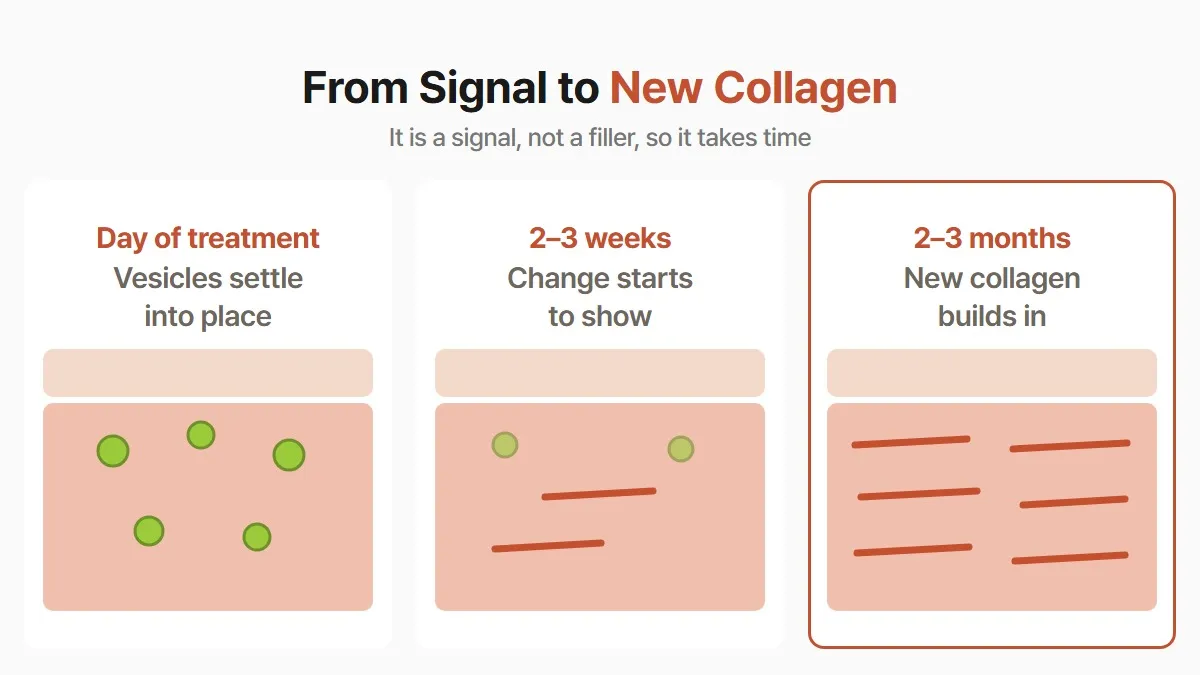
There is a limit to how much can be made at one time, so it is divided into sessions. The usual pattern is three sessions four weeks apart — at three to four week intervals — then continuing every three to six months. On a schedule with only one trip to Korea, that interval is hard to follow as written. The plan is to have one session on this trip and add to it on a later one.
What you actually see is a change in texture, in luminosity and in fine lines. Right afterwards the face can look red from the needle marks and the heat, and that usually settles within a day or two. You can wash with water after three to four hours, once the channels the needles made have closed, and wear makeup from the next morning.
What it does not do is just as clear. It is not a treatment that fills a hollow or lifts a sagging contour. If deep, firm scarring or enlarged pores is the main concern, a method that goes deeper with the needles and stronger with the heat is the one that fits in principle.
4 Things to Sort Out Before an Exosome Treatment in Seoul
Sorting out these four beforehand makes the consultation go quickly.
1. Tell us whether you mean the skin side or the hair side The same word is used on both, so it has to be separated at the start. What Peche Clinic handles is the skin side.
2. Come with the concern one step more specific Fine lines and firmness, flushing easily, or a barrier weak enough that skincare stings. The intensity of the same treatment changes with this.
3. There are a few things to tell us in advance Anesthetic allergy, electronic devices inside the body or metal implants in the face, cold sores, recent tanning, a tendency to keloid scarring, and any sensitivity to plant ingredients such as ginseng or centella. These are checked beforehand because current passes through the tissue.
4. Send your dates and your flight home Because the change appears after you are home, your schedule affects what to do first on this trip.
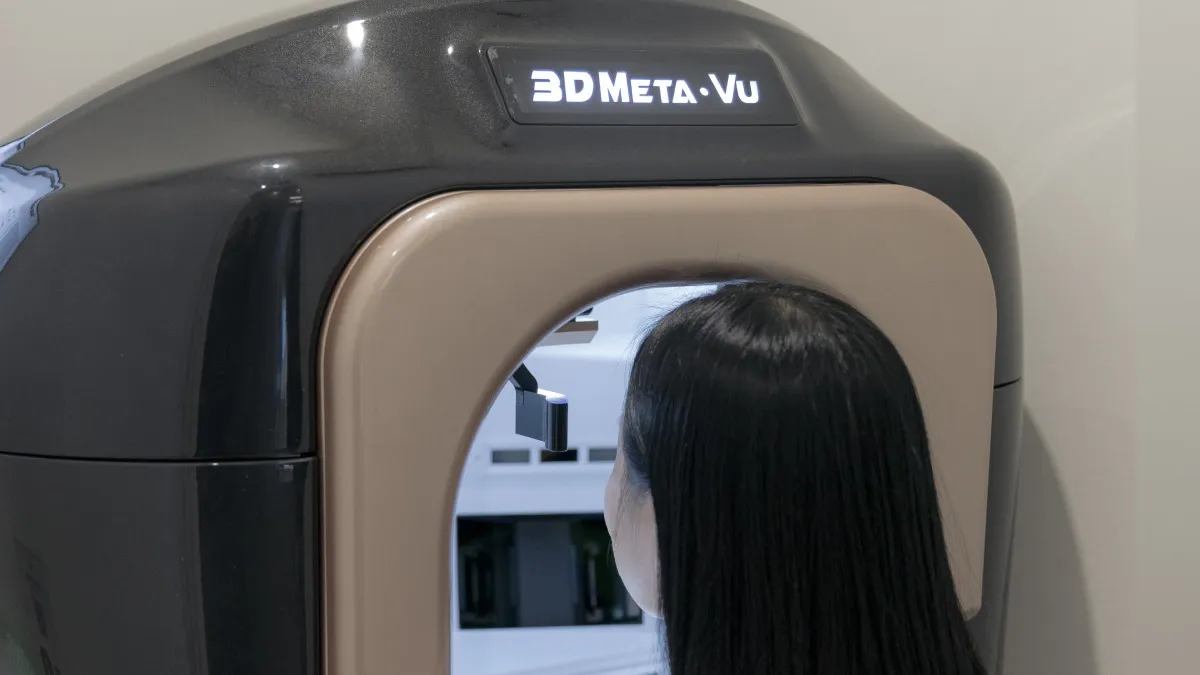
Peche Clinic is a one-minute walk from Exit 4 of Gangnam Station, on Subway Line 2 and the Shinbundang Line. We are open until 9 PM on weekdays and 6 PM on weekends and public holidays. Before treatment, 3D skin analysis captures pores, texture, lines and redness, and we look at the results together before the doctor checks your skin directly and sets the intensity. We use authentic products only, and the preparation is visible from the waiting area through a glass wall. Payment is by card on the day of treatment, and we give you an itemized receipt afterwards. English-speaking staff are on site, so inquiries and bookings are handled in your own language through WhatsApp. Our consultations draw on more than 90,000 treatments performed here.
FAQ
Q: Is an exosome treatment in Seoul for hair loss? A: Exosome is the name of a material, so it is used on the hair side and on the skin side. The Celexo Black Label used at Peche Clinic is the skin side, addressing fine lines, firmness and reactive skin. Hair is not its purpose.
Q: Does an exosome treatment put stem cells into my body? A: No. What goes in is not a living cell but a signaling vesicle the cell released. There is no step where cells are taken from your body either. Whether you have reacted to human-derived or plant-derived ingredients before is checked before treatment.
Q: Are exosomes in Seoul given as an injection? A: It is not a method that fills by injecting. It is applied to the face, then carried into the dermis through very fine channels made by the pumping tip on an RF microneedling device. The material stays in the dermis and does not go down into the fat.
Q: Can an exosome skincare product give me the same result? A: Applying alone leaves the stratum corneum in the way, so it is hard for it to reach the dermis. Being carried in through a channel and sitting on the surface are not the same layer. The same ingredient name on a label gives a different result at a different depth.
Q: When do exosome results start to show in Seoul? A: It appears gradually from two to three weeks, and new collagen formed by the heat at the needle tips takes two to three months to build. Because it shows over time rather than right afterwards, you have it done in Seoul and notice it once you are home.
Q: Is one exosome session enough? A: There is a limit to how much can be made at one time, so three sessions at three to four week intervals is the baseline. On a schedule with only one trip, the plan is to have one session now and add to it on a later trip. How far a single session can go is worth settling in the consultation beforehand.
Q: Can exosomes fill a hollow area? A: No. It is not a treatment that fills volume or lifts a sagging contour. It signals cells and works on the texture and firmness of the skin. If a hollow is the concern, a different method fits.
Q: Can I fly home right after an exosome treatment in Seoul? A: The redness right afterwards usually settles within a day or two. Saunas, hot baths and workouts that make you sweat are best put off for three days to a week. Send us your flight date and the treatments you want on WhatsApp and we will plan around your schedule.